
Compare models
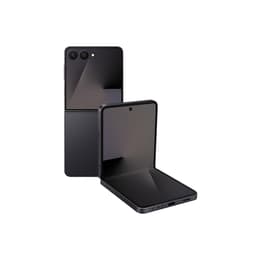
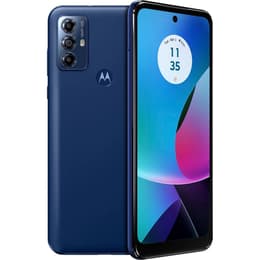
Galaxy Z Flip7 • Unlocked vs Motorola Moto G Play (2023) • Unlocked
- 1-year warranty
- Free standard shipping
- Free 30-day returns
Differences at a glance
The Samsung Galaxy Z Flip7 (2025) and the Motorola Moto G Play (2023) are two distinct smartphones designed for entirely different mobile experiences, pairing an advanced folding flagship architecture with an entry-level traditional candybar format. While the Galaxy Z Flip7 features an innovative dual-screen foldable layout running Android with custom overlays, the Motorola Moto G Play delivers a straightforward, standard smartphone experience geared toward foundational daily tasks. Choosing between these devices involves weighing cutting-edge form factors against simple, reliable utility.
Available Models
Color
Storage
Scores
Durability
When examining hardware longevity and software support lifecycles, these two devices reflect contrasting tiers of market placement and release timelines.
- Release and Software Support: The Galaxy Z Flip7 arrives with extended multi-year software maintenance commitments, whereas the Motorola Moto G Play (2023) operates on a more concise update timeline reflecting its entry-level classification.
- Build Integrity and Maintenance: The Galaxy Z Flip7 utilizes sophisticated folding hinge mechanisms and protective glass layers requiring careful handling, while the Moto G Play features a rigid plastic body that withstands everyday bumps with straightforward durability.
- Expected Lifespan: Users can anticipate prolonged software relevance from the foldable flagship, while the entry-level Motorola model suits shorter upgrade cycles or secondary device roles.
Release Year
2025
2022
Last OS Compatibility
Yes
No
OS
Android
Android
Foldable
Yes
No
Performance
Day-to-day speed, memory allocation, and energy management differ substantially based on the internal architecture of each handset.
- Multitasking and Responsiveness: The Galaxy Z Flip7 handles heavy applications, demanding mobile games, and intensive background tasks smoothly, whereas the Moto G Play (2023) manages essential functions like web browsing and messaging reliably without heavy multi-window capabilities.
- Storage Configurations: The Samsung device offers expansive internal capacity tiers for large media libraries, while the Motorola model provides modest onboard storage paired with expandable memory card support.
- Battery Behavior: The Galaxy Z Flip7 balances a high-density power cell with efficient processing for full-day typical usage, while the Moto G Play's modest hardware draw often yields reliable endurance for basic daily communication.
Screen quality
Visual output and display engineering represent the most dramatic point of divergence between a premium foldable and an entry-level standard screen.
- Display Technology: The Galaxy Z Flip7 features a vibrant folding organic light-emitting diode panel alongside a functional outer cover screen, while the Moto G Play employs a standard liquid crystal display panel with basic resolution metrics.
- Brightness and Outdoor Clarity: The Samsung model achieves high peak luminance levels for clear visibility under direct sunlight, whereas the Motorola display functions best in indoor or shaded environments.
- Refresh Rate and Smoothness: The Galaxy Z Flip7 incorporates a high refresh rate for fluid scrolling and animations, contrasting with the standard refresh rate found on the Motorola entry-level screen.
Resolution
1080 x 2520
720 x 1600
Screen type
Foldable Dynamic LTPO AMOLED 2X
IPS LCD
Audiovisual
Optics, video recording capability, and multimedia output cater to varied content creation and consumption preferences.
- Camera Systems: The Galaxy Z Flip7 equips multiple high-resolution lenses including wide and ultra-wide options, complemented by flexible angles enabled by its folding design, while the Moto G Play utilizes a simplified single or dual rear sensor array for basic snapshots.
- Low-Light and Video: The Samsung handset processes challenging lighting conditions with advanced software support, whereas the Motorola model performs adequately in bright daylight settings.
- Audio and Media Output: Stereo speaker configurations on the flagship provide immersive media playback, compared to the single loudspeaker setup on the budget-friendly alternative.
Miscellaneous
Connectivity standards, physical dimensions, and daily ergonomics define how each phone feels and connects in real-world scenarios.
- Connectivity Standards: The Galaxy Z Flip7 supports advanced modern cellular bands and high-speed wireless protocols, while the Moto G Play focuses on standard fourth-generation network connectivity.
- Physical Form Factor: The Samsung device collapses into a compact square shape for effortless pocket transport, whereas the Motorola device maintains a traditional, elongated rigid slab profile.
- Authentication Methods: The foldable integrates biometric security via side-mounted fingerprint sensors and facial recognition, matching the rear-mounted fingerprint scanner found on the Motorola device.
Weight
3 oz
8 oz
Screen size (inches)
6.9
6.5
Network
5G
LTE
SIM card
Physical SIM + eSIM
Physical SIM
Carrier compatibility
Unlocked
Unlocked
Connector
USB-C
USB-C + Jack 3.5mm
What the community thinks
User feedback from online communities highlights distinct operational divides between these two options. Owners of the Galaxy Z Flip7 frequently praise its compact folded portability, vibrant displays, and versatile camera angles, though some note that foldable screen creases require mindful care. Conversely, users of the Motorola Moto G Play value its straightforward handling, dependable basic calling functions, and physical durability, while noting limitations in processing speed and screen brightness.
Users prioritizing advanced photography, high-end performance, and innovative pocketable designs will find the Galaxy Z Flip7 well-suited to their needs. Meanwhile, users prioritizing a simple, no-frills communication tool for basic daily tasks may lean toward the Motorola Moto G Play (2023). For those exploring sustainable purchasing routes, choosing a quality-assured refurbished option provides an eco-friendly alternative that extends device lifecycles without requiring brand-new manufacturing resources.