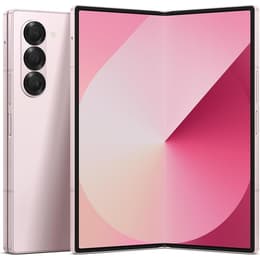
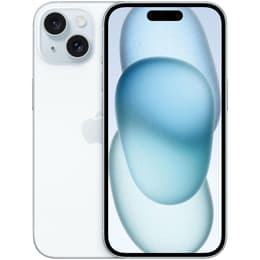

Galaxy Z Fold6 • Unlocked vs iPhone 15 • Unlocked

Galaxy Z Fold6 • Unlocked
Starting at

Refurbished price:$549.99

Versus $1,499.00 new

See options
iPhone 15 • Unlocked
Starting at

Refurbished price:$359.99

Versus $729.00 new

See options

Ratings

The Samsung Galaxy Z Fold6, a foldable smartphone released in July 2024, and the Apple iPhone 15, a traditional slab smartphone launched in September 2023, represent distinct approaches to mobile technology. While the iPhone 15 offers a refined conventional smartphone experience with Apple's iOS ecosystem, the Galaxy Z Fold6 provides a versatile, expansive screen experience powered by Android. Key differentiators lie in their form factors, display technologies, and operating system philosophies, catering to different user preferences.

Scores

Durability

When considering the long-term usability of these devices, both offer robust software support and build quality, though their inherent designs present different durability considerations.

  • Software Longevity: The Galaxy Z Fold6 is expected to receive seven years of software updates, including major Android versions and security patches, offering extended functional life. The iPhone 15 is guaranteed a minimum of five years of software support, encompassing iOS updates and security patches, with Apple historically providing updates beyond this stated minimum. [3, 20, 29, 32, 40]
  • Physical Durability: The iPhone 15 features a Ceramic Shield front cover and an IP68 rating for water and dust resistance, contributing to its resilience in everyday use. [7, 28, 33] The Galaxy Z Fold6, with its foldable design, has an IP48 rating, indicating water resistance and protection against solid objects larger than 1mm. [2, 26, 47] While its hinge is designed for 200,000 folds, some extreme tests have noted potential dust ingress. [47, 48] Samsung also offers a 'Galaxy Z Assurance' program for screen protector replacements and discounted repairs for the Fold6. [2]
  • Practical Lifespan: Both devices are built with high-quality materials designed for sustained use. The Z Fold6's folding mechanism introduces a unique point of consideration for long-term mechanical integrity, while the iPhone 15's traditional design benefits from a more established durability profile for its form factor.

Release Year

2024

2023

Last OS Compatibility

Yes

Yes

OS

Android

iOS

Foldable

Yes

No

Performance

Both the Galaxy Z Fold6 and the iPhone 15 deliver high-level performance suitable for demanding applications and multitasking, though they achieve this with different underlying architectures.

  • Processing Power: The Galaxy Z Fold6 is equipped with a current-generation processor designed for intensive tasks, including advanced AI features and seamless transitions between its multiple displays. [9, 12, 23] The iPhone 15 utilizes a powerful processor from the previous year's Pro models, providing smooth operation across applications, responsive gaming, and efficient handling of complex computations. [4, 13, 28]
  • Multitasking and Responsiveness: The Galaxy Z Fold6, with its larger amount of system memory, is well-suited for extensive multitasking, running multiple applications simultaneously on its expansive inner screen without noticeable slowdowns. [9, 12] The iPhone 15, while having less system memory, is optimized by its operating system to manage applications efficiently, ensuring a fluid user experience for typical daily tasks and gaming. [4, 14]
  • Storage Options: The Galaxy Z Fold6 offers storage configurations up to 1 terabyte, providing ample space for large files, numerous applications, and extensive media libraries. [9, 12] The iPhone 15 is available with storage options up to 512 gigabytes, which is sufficient for most users' needs, though it offers less maximum capacity than the foldable device. [4, 7]

Memory (GB)

12 GB

6 GB

Screen quality

The display experience is a primary distinguishing factor between these two smartphones, with the Galaxy Z Fold6 offering a unique dual-screen setup and the iPhone 15 providing a high-quality traditional display.

  • Display Technology and Size: The Galaxy Z Fold6 features two Dynamic AMOLED 2X displays: a 6.3-inch cover screen and a 7.6-inch main foldable screen when unfolded. [12] This allows for a tablet-like experience. The iPhone 15 has a single 6.1-inch Super Retina XDR OLED display. [7, 8] Both technologies deliver deep blacks and vibrant colors.
  • Resolution and Clarity: The Galaxy Z Fold6's main display offers a resolution of 2160 x 1856 pixels, providing a sharp and detailed viewing experience across its larger surface. [9] The iPhone 15's display has a resolution of 2556 x 1179 pixels, resulting in a pixel density that ensures crisp text and clear images on its more compact screen. [7, 8]
  • Brightness and Refresh Rate: The Galaxy Z Fold6's displays feature an adaptive refresh rate of up to 120Hz, contributing to smoother scrolling and more fluid animations, and can reach a peak brightness of up to 2,600 nits for excellent outdoor visibility. [12, 32] The iPhone 15's display operates at a 60Hz refresh rate but offers a high peak brightness of up to 2,000 nits for outdoor use, ensuring good visibility in bright conditions. [8, 13]

Resolution

1856 x 2160

1179 x 2556

Screen type

Foldable Dynamic LTPO AMOLED 2X

Super Retina XDR OLED

Audiovisual

Both devices offer capable camera systems designed to capture high-quality images and videos, though they differ in their hardware configurations and computational photography approaches.

  • Rear Camera System: The Galaxy Z Fold6 features a triple-camera setup on the rear, including a 50-megapixel wide-angle lens, a 12-megapixel ultra-wide lens, and a 10-megapixel telephoto lens with 3x optical zoom. [1, 12, 15] The iPhone 15 has a dual-camera system with a 48-megapixel main sensor that defaults to 24-megapixel images and can achieve 2x optical zoom through sensor cropping, alongside a 12-megapixel ultra-wide lens. [7, 10, 16, 37]
  • Photography Performance: The Galaxy Z Fold6 generally performs well in bright conditions, with its AI features enhancing post-processing. Its telephoto lens is noted for good performance among foldables, though the ultra-wide can show noise in low light. [5, 24, 30] The iPhone 15's main camera excels in detail and low-light performance, producing high-quality images, but its ultra-wide camera is considered less robust, and it lacks a dedicated telephoto lens. [6, 18, 19, 36]
  • Video and Front Cameras: Both phones support 4K video recording at various frame rates. The Galaxy Z Fold6 includes a 10-megapixel front camera on its cover screen and a 4-megapixel under-display camera on the main screen. [12, 15] The iPhone 15 features a 12-megapixel TrueDepth front camera with autofocus, capable of high-quality selfies and video calls. [7, 10, 28]

Main camera

50 megapixels

48 megapixels

Front camera

4 megapixels

12 megapixels

Miscellaneous

Beyond core features, several practical elements contribute to the overall user experience and differentiate these two devices.

  • Connectivity and Ports: Both the Galaxy Z Fold6 and iPhone 15 support 5G cellular connectivity, Wi-Fi 6, and Bluetooth 5.3 for modern wireless communication. [7, 9, 10] Both devices have adopted USB-C ports for charging and data transfer. However, the iPhone 15's USB-C port operates at USB 2.0 speeds, while the Galaxy Z Fold6 likely supports faster data transfer rates. [8, 33]
  • Biometrics and Sensors: The iPhone 15 relies on Face ID for secure authentication and includes a range of sensors for features like Crash Detection and Emergency SOS via Satellite. [7, 10, 14] The Galaxy Z Fold6 typically features a side-mounted fingerprint sensor for biometric security and supports the S Pen Pro and S Pen Fold Edition for enhanced productivity, though it does not have an integrated stylus slot. [12]
  • Design and Handling: The Galaxy Z Fold6 is a lighter and thinner foldable than its predecessors, weighing 239 grams, and offers a unique form factor that transforms from a compact phone to a larger tablet. [9, 26] The iPhone 15, weighing 171 grams, maintains a traditional slab design with a comfortable, refined build and a Dynamic Island feature that integrates alerts and activities into the display. [7, 13, 33]

Weight

8 oz

171 oz

Screen size (inches)

7.6

6.1

Network

5G

5G

SIM card

Physical SIM + eSIM

eSIM

Carrier compatibility

Unlocked

Unlocked

The Samsung Galaxy Z Fold6 and iPhone 15 cater to distinct user needs, each excelling in different areas. Users often praise the Galaxy Z Fold6 for its innovative foldable design, offering a large, immersive screen for productivity and media consumption, along with its refined build and extensive software support. [1, 23, 32] Criticisms sometimes point to its camera performance not matching the absolute best traditional smartphones and concerns about hinge durability in extreme conditions. [2, 30, 43]

The iPhone 15 is frequently lauded for its robust camera system, bright and vibrant display with the Dynamic Island, and consistent performance within the iOS ecosystem. [13, 19, 22, 35] Common criticisms include its 60Hz display refresh rate and the absence of a dedicated telephoto lens. [13, 36]

For individuals prioritizing a versatile, large-screen experience for multitasking, content creation, or immersive media, the Galaxy Z Fold6 presents a compelling option. Its ability to transform from a standard phone to a tablet-like device offers unique utility. Conversely, users who prefer a more traditional, compact smartphone with a highly optimized operating system, excellent primary camera capabilities, and a strong ecosystem will find the iPhone 15 well-suited to their needs. Both devices represent quality choices, and considering refurbished options for either model can be an eco-friendly alternative for acquiring these advanced technologies.

See all articles

Our recent comparisons