
Google Pixel 6a • Unlocked vs iPhone 11 Pro • Unlocked

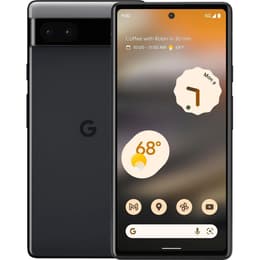
Google Pixel 6a • Unlocked
Starting at

Refurbished price:$141.00

Versus $399.00 new

See options
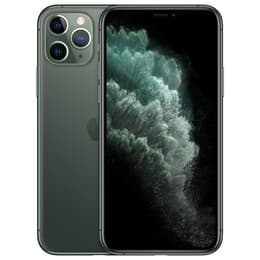
iPhone 11 Pro • Unlocked
Starting at

Refurbished price:$200.00

Versus $749.00 new

See options

Ratings

The Google Pixel 6A, released in July 2022, and the iPhone 11 Pro, launched in September 2019, represent distinct approaches to smartphone design and functionality from their respective manufacturers. While the Pixel 6A operates on Android and emphasizes computational photography and a modern processor, the iPhone 11 Pro runs on iOS, offering a premium build and a versatile triple-camera system. These devices cater to users with differing priorities in terms of operating system preference, camera capabilities, and overall user experience.

Scores

Durability

When considering the practical lifespan of these devices, several factors come into play, including their release timelines, software support, and repairability.

  • Release Timeline: The Google Pixel 6A was released in July 2022, making it a newer device compared to the iPhone 11 Pro, which launched in September 2019. This difference in release date impacts their remaining software support windows. [1, 2, 18]
  • Software Longevity: The Pixel 6A is expected to receive Android OS updates until at least July 2025 and security updates until at least July 2027, with some sources indicating five years of OS and security updates from its release. [8, 13, 41, 45] The iPhone 11 Pro, having launched earlier, typically receives iOS updates for approximately five to six years from its release, meaning its major OS update cycle is nearing its end, though it may still receive security patches. [3]
  • Repairability: The Google Pixel 6A has received a repairability score of 7 out of 10, with its battery being relatively easy to remove and the display attached with clips rather than excessive adhesive. [5, 11, 16, 20, 30] The iPhone 11 Pro, while not having a widely published repairability score in the same format, generally presents more challenges for third-party repairs due to its construction.

Release Year

2022

2019

Last OS Compatibility

Yes

Yes

OS

Android

iOS

Foldable

No

No

Performance

The performance of a smartphone is crucial for daily tasks, from navigating applications to managing multiple processes simultaneously.

  • System Responsiveness: The Google Pixel 6A is powered by a processor designed by Google, which enables smooth operation for everyday applications and efficient handling of demanding tasks. [1, 12, 15] The iPhone 11 Pro features a powerful chip from its release year, providing a fluid user experience and robust performance for a wide range of applications and multitasking. [3, 10, 21]
  • Multitasking Capabilities: With 6 GB of RAM, the Pixel 6A capably manages multiple applications running in the background, allowing for seamless transitions between tasks. [1, 12, 15] The iPhone 11 Pro comes with 4 GB of RAM, which, combined with iOS optimization, ensures efficient multitasking and app management. [3, 10, 21]
  • Storage Options: The Pixel 6A offers 128 GB of internal storage, which is non-expandable. [1, 12, 15] The iPhone 11 Pro provides more flexibility with storage options, available in 64 GB, 256 GB, and 512 GB configurations. [3, 10]
  • Battery Behavior: The Pixel 6A is equipped with a 4410 mAh battery, generally providing a full day of use for many users, though some report slower charging speeds. [1, 12, 24, 25, 31] The iPhone 11 Pro, with a 3046 mAh battery, was notable for its excellent battery endurance at its launch, often lasting more than a day even with heavy usage. [2, 10, 33, 40, 42, 44]

Memory (GB)

6 GB

4 GB

Screen quality

The display is a primary interface for smartphone interaction, and both devices offer distinct visual experiences.

  • Display Technology and Clarity: Both the Google Pixel 6A and the iPhone 11 Pro feature OLED displays, which are known for producing deep blacks and vibrant colors. [1, 3, 4, 10, 18, 21, 23, 28, 29] The Pixel 6A has a 6.1-inch screen with a resolution of 2400 x 1080 pixels, resulting in a pixel density of approximately 429 ppi. [1, 18, 23] The iPhone 11 Pro has a slightly smaller 5.8-inch Super Retina XDR OLED display with a resolution of 2436 x 1125 pixels, offering a higher pixel density of 458 ppi. [3, 4, 10, 21, 28]
  • Brightness and Outdoor Visibility: The iPhone 11 Pro's display offers a typical maximum brightness of 800 nits, with a peak brightness of 1200 nits for HDR content, contributing to good visibility in various lighting conditions, including bright outdoor environments. [3, 4] While the Pixel 6A's display supports HDR, specific typical and peak brightness figures are less emphasized in general specifications, but it provides adequate brightness for most uses. [1, 18]
  • Refresh Rate and Smoothness: The Google Pixel 6A features a standard 60Hz refresh rate, which provides a smooth experience for typical smartphone interactions. [25, 29, 31] The iPhone 11 Pro also operates at a 60Hz refresh rate, delivering consistent visual fluidity within the iOS environment.

Resolution

1080 x 2400

1125 x 2436

Screen type

OLED

Super Retina XDR OLED

Audiovisual

Both smartphones offer capable camera systems, each with its own strengths in capturing photos and videos.

  • Rear Camera System: The Google Pixel 6A features a dual-camera setup on the rear, consisting of a 12.2 MP main wide-angle lens with optical image stabilization (OIS) and a 12 MP ultrawide lens with a 114-degree field of view. [1, 7, 17, 22, 26, 35] The iPhone 11 Pro boasts a triple-camera system, including three 12 MP lenses: an ultrawide with a 120-degree field of view, a wide-angle with OIS, and a telephoto lens with OIS, offering 2x optical zoom. [4, 9, 19, 21, 32, 38, 39]
  • Photography Performance: The Pixel 6A leverages Google's computational photography for features like Night Sight, Portrait Mode, Real Tone, and Magic Eraser, which enhance image quality, especially in challenging conditions and for specific effects. [7, 26] The iPhone 11 Pro also excels in photography with features like Night mode for low-light, Deep Fusion for enhanced detail, and Smart HDR for improved dynamic range. [4, 9, 19, 32, 38, 39]
  • Video Recording and Front Camera: Both devices are capable of recording 4K video at 30 or 60 frames per second with their main rear cameras, and both offer cinematic video stabilization. [1, 4, 7, 19, 21, 26, 32] For selfies, the Pixel 6A has an 8 MP front camera, while the iPhone 11 Pro features a higher-resolution 12 MP front camera that can also record 4K video. [1, 4, 7, 21, 26, 32]

Main camera

12.2 megapixels

12 megapixels

Front camera

8 megapixels

12 megapixels

Miscellaneous

Beyond core features, several practical elements contribute to the overall usability and experience of these smartphones.

  • Connectivity and Ports: The Google Pixel 6A supports 5G connectivity, Wi-Fi 6 and 6E, and Bluetooth 5.2, offering modern wireless standards. It uses a USB-C port for charging and data transfer. [1, 15, 22] The iPhone 11 Pro supports Gigabit-class LTE, Wi-Fi 6, and Bluetooth 5.0, and utilizes Apple's proprietary Lightning port. [3, 21]
  • Biometric Security: The Pixel 6A incorporates an in-display fingerprint sensor for secure unlocking and authentication. [12, 15, 22, 23, 25] The iPhone 11 Pro relies on Face ID, Apple's facial recognition technology, for biometric security. [3]
  • Build Materials and Durability: The Pixel 6A features a plastic back, which contributes to its lighter weight, and has an IP67 rating for dust and water resistance. [1, 5] The iPhone 11 Pro boasts a more premium construction with a stainless steel frame and a glass back, along with an IP68 rating for enhanced dust and water resistance. [2, 3]
  • Dimensions and Handling: The Pixel 6A measures 152.2 x 71.8 x 8.7 mm and weighs 178 grams. [1] The iPhone 11 Pro is slightly more compact at 144 x 71.4 x 8.1 mm and weighs 188 grams, offering a dense feel in hand. [2, 3, 14, 21]

Weight

6 oz

7 oz

Screen size (inches)

6.1

5.8

Network

5G

LTE

SIM card

Physical SIM + eSIM

Physical SIM + eSIM

Carrier compatibility

Unlocked

Unlocked

User feedback for the Google Pixel 6A often highlights its compact size, smooth performance for daily use, and its camera's ability to produce excellent photos, especially considering its positioning. [25, 31, 34, 37] Some users have noted the 60Hz display as a point of consideration, though many find it fluid enough for their needs, and there have been occasional reports of slower charging or signal inconsistencies. [25, 31, 34, 36] The in-display fingerprint sensor has received mixed reviews regarding its consistency. [25, 36]

The iPhone 11 Pro is frequently praised for its exceptional battery life, which was a significant improvement for its generation, often lasting well over a day. [2, 33, 40, 42, 44] Its triple-camera system, particularly the introduction of Night mode and Deep Fusion, was well-received for its versatility and image quality. [9, 19, 33, 39] Users also appreciate its premium build quality and the overall fluid iOS experience. Some users found its weight noticeable due to the stainless steel frame. [33, 42]

Users prioritizing a more recent Android experience with Google's advanced computational photography features and a slightly better repairability score may find the Pixel 6A well-suited to their needs. Conversely, users who value a premium build, a dedicated telephoto camera, and the long-standing stability and ecosystem of iOS, coupled with historically strong battery performance, may lean towards the iPhone 11 Pro. Both devices offer compelling features, and choosing between them often comes down to individual preference for operating system, specific camera capabilities, and design aesthetics. For those seeking a quality-assured refurbished option, both models are available, providing an eco-friendly alternative to purchasing new devices.

See all articles

Our recent comparisons