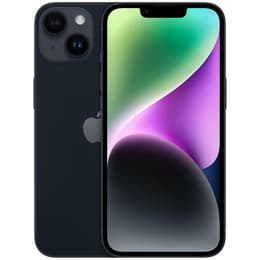

Google Pixel 7 Pro • Unlocked vs iPhone 14 • Locked T-Mobile

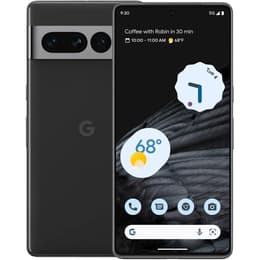
Google Pixel 7 Pro • Unlocked
Starting at

Refurbished price:$221.00

Versus $899.99 new

See options
iPhone 14 • Locked T-Mobile
Starting at

Refurbished price:$239.00

Versus $599.00 new

See options

Ratings

The Google Pixel 7 Pro, an Android smartphone, was released in October 2022, while the Apple iPhone 14, running iOS, launched in September 2022. Both devices offer distinct user experiences, primarily differing in their operating systems and hardware philosophies. The Pixel 7 Pro emphasizes advanced computational photography and a high-refresh-rate display, whereas the iPhone 14 focuses on a streamlined user interface and robust ecosystem integration.

Scores

Durability

When considering the long-term usability of these devices, their release timelines and software support are key factors.

  • Software Longevity: The Google Pixel 7 Pro is expected to receive five years of OS and security updates from its release date, offering extended software support. The iPhone 14 typically receives iOS updates for approximately five to six years from its launch, providing a comparable, if slightly longer, update window.
  • Repairability: The Pixel 7 Pro received a repairability score of 5.5 out of 10, with screen replacements being relatively straightforward, but battery replacements and charging port repairs proving more complex due to strong adhesives and soldered components. The iPhone 14 initially received a higher repairability score due to an internal redesign making the back glass easier to replace, but this was later downgraded to 4 out of 10 by iFixit due to software-based part-pairing requirements that complicate independent repairs.
  • Practical Lifespan: Both devices are built with durable materials and IP68 water and dust resistance, suggesting a robust physical lifespan. However, the Pixel 7 Pro's longer guaranteed software support could translate to a slightly extended practical usability period for users who prioritize the latest software features and security patches.

Release Year

2022

2022

Last OS Compatibility

Yes

Yes

OS

Android

iOS

Foldable

No

No

Performance

The performance of a smartphone is crucial for daily tasks, from app usage to demanding multimedia editing.

  • Processing Power: The Google Pixel 7 Pro features a processor designed for advanced AI and machine learning tasks, contributing to smooth app loading and efficient handling of complex operations. The iPhone 14 is equipped with a powerful processor that ensures fast app loading times, fluid multitasking, and responsive navigation.
  • Multitasking and Responsiveness: With 12GB of RAM, the Pixel 7 Pro is well-suited for extensive multitasking and keeping numerous applications open simultaneously without performance degradation. The iPhone 14, with 6GB of RAM, also provides a responsive experience for typical daily use and multitasking, though the Pixel offers more headroom for very demanding workflows.
  • Storage Options: Both devices offer internal storage options of 128GB, 256GB, and 512GB, catering to various user needs for apps, photos, and videos. Neither device supports expandable storage.
  • Battery Behavior: The Pixel 7 Pro houses a 5000 mAh battery, with real-world usage often yielding around 5-6 hours of screen-on time, though heavy camera use or high screen brightness can lead to faster depletion. The iPhone 14, with a 3279 mAh battery, generally provides all-day power for most users, typically ending a busy day with 10-15% charge remaining.

Memory (GB)

8 GB

6 GB

Screen quality

The display is a primary interface for any smartphone, and both devices offer high-quality viewing experiences with distinct characteristics.

  • Display Technology and Resolution: The Google Pixel 7 Pro features a 6.7-inch LTPO AMOLED display with a sharp 3120x1440 pixel resolution, resulting in a high pixel density for clear visuals. The iPhone 14 comes with a 6.1-inch Super Retina XDR OLED display, offering a 2532x1170 pixel resolution and a pixel density of 460 ppi.
  • Refresh Rate and Smoothness: The Pixel 7 Pro boasts an adaptive refresh rate that can scale from 10Hz to 120Hz, providing very smooth scrolling and animations while optimizing power consumption. The iPhone 14 features a standard 60Hz refresh rate, which offers a consistent visual experience but lacks the fluidity of higher refresh rate displays.
  • Brightness and Clarity: The Pixel 7 Pro can reach a peak brightness of 1500 nits, ensuring good visibility even in bright outdoor conditions. The iPhone 14 offers a typical maximum brightness of 800 nits and a peak HDR brightness of 1200 nits, providing clear viewing for most environments. Both displays support HDR content for enhanced contrast and color.

Resolution

1440 x 3120

1170 x 2532

Screen type

LTPO AMOLED

Super Retina XDR OLED

Audiovisual

Both smartphones are recognized for their camera capabilities, though they approach photography with different hardware and software strengths.

  • Rear Camera Systems: The Google Pixel 7 Pro features a versatile triple-camera setup, including a 50MP main sensor with optical image stabilization (OIS), a 48MP telephoto lens offering 5x optical zoom and up to 30x Super Res Zoom with OIS, and a 12MP ultrawide lens with a wide field of view. The iPhone 14 is equipped with a dual-camera system, comprising a 12MP main sensor with sensor-shift OIS and a 12MP ultrawide lens.
  • Photography Performance: The Pixel 7 Pro excels in computational photography, producing detailed images with accurate colors and strong low-light performance across its multiple lenses. The iPhone 14 delivers consistent and vibrant photos in various lighting conditions, with notable improvements in low-light capture compared to its predecessors.
  • Video Recording and Front Camera: Both devices offer high-quality video recording. The Pixel 7 Pro supports 4K video recording at 30fps and features a 10.8MP front camera. The iPhone 14 supports 4K Dolby Vision HDR recording and includes a 12MP TrueDepth front camera with autofocus, enhancing selfie quality and video calls.
  • Audio Experience: Both phones include stereo speakers for media consumption. The Pixel 7 Pro also features noise-canceling microphones for clear audio during calls and recordings.

Main camera

50 megapixels

12 megapixels

Front camera

10.8 megapixels

12 megapixels

Miscellaneous

Beyond core features, several practical elements contribute to the overall user experience and device utility.

  • Connectivity: Both the Pixel 7 Pro and iPhone 14 support 5G connectivity, enabling fast mobile data speeds. They also support modern Wi-Fi standards and Bluetooth for wireless accessories.
  • Ports and Biometrics: The Pixel 7 Pro utilizes a USB-C port for charging and data transfer, and includes an in-display fingerprint sensor along with facial scanning for security. The iPhone 14 uses a Lightning port and relies on Face ID for secure authentication. Neither device features a traditional 3.5mm headphone jack.
  • Design and Handling: The Pixel 7 Pro has dimensions of 162.9 x 76.6 x 8.9 mm and weighs 212 grams, offering a larger form factor. The iPhone 14 is more compact at 146.7 x 71.5 x 7.8 mm and lighter at 172 grams, making it potentially easier for one-handed use. Both devices feature a glass back and aluminum frame, contributing to a premium feel.
  • Durability Features: The Pixel 7 Pro's display is protected by Gorilla Glass Victus. The iPhone 14 features a Ceramic Shield front cover, which Apple states offers enhanced drop performance.

Weight

7 oz

6 oz

Screen size (inches)

6.7

6.1

Network

5G

5G

SIM card

Physical SIM + eSIM

eSIM

Carrier compatibility

Unlocked

T-Mobile

Users often praise the Google Pixel 7 Pro for its exceptional camera capabilities, particularly its zoom and computational photography features, and its vibrant, high-refresh-rate display. Some common criticisms include varied battery life depending on usage intensity, especially with heavy camera use or high screen brightness, and its repairability challenges.

The iPhone 14 is frequently lauded for its consistent performance, reliable camera system, and the seamless integration within the Apple ecosystem. However, some users have noted that its battery life, while generally good for a full day, can degrade faster than expected for some individuals. The standard 60Hz display is also a point of comparison for users accustomed to higher refresh rates on other devices.

Users prioritizing a large, high-resolution, and high-refresh-rate display, coupled with advanced photography features and a pure Android experience, may find the Google Pixel 7 Pro well-suited to their needs. Its extended software support also appeals to those seeking long-term updates.

Conversely, users who value a compact design, consistent performance, a robust app ecosystem, and strong video capabilities might lean towards the iPhone 14. Its straightforward user experience and strong security features are also significant draws.

For those considering either device, exploring quality-assured refurbished options can provide an eco-friendly alternative, allowing access to these advanced technologies while making a sustainable choice.


See all articles

Our recent comparisons