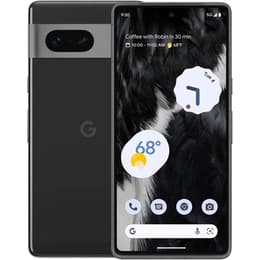
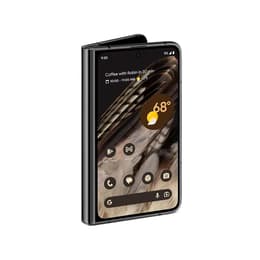

Google Pixel 7 • Unlocked vs Google Pixel Fold • Unlocked

Google Pixel 7 • Unlocked
Starting at

Refurbished price:$185.99

Versus $599.99 new

See options
Google Pixel Fold • Unlocked
Starting at

Refurbished price:$590.00

Versus $1,799.00 new

See options

Ratings

The Google Pixel 7, released in October 2022, is a traditional smartphone offering a compact design and a focus on camera capabilities and software experience. In contrast, the Google Pixel Fold, launched in June 2023, introduces a foldable form factor, transforming from a standard smartphone into a larger tablet-like display. Both devices operate on the Android platform, but their distinct designs cater to different user preferences for screen size and portability.

Scores

Durability

When considering the practical lifespan of these devices, several factors contribute to their longevity, including software support and physical resilience.

  • Release Timeline: The Pixel 7 was released in October 2022, while the Pixel Fold followed in June 2023. This means the Pixel Fold is a newer device, inherently offering a slightly longer period before it reaches the end of its software support cycle.
  • Software Support: Both the Pixel 7 and Pixel Fold are guaranteed to receive five years of OS and security updates from their respective release dates. This means the Pixel 7 will receive updates until at least October 2027, and the Pixel Fold until at least June 2028, ensuring a consistent and secure software experience for an extended period.
  • Physical Durability: The Pixel 7 features Gorilla Glass Victus on both its front and back, providing a good level of scratch and drop resistance. The Pixel Fold, as a foldable device, incorporates a Gorilla Glass Victus cover display and back, but its inner folding screen uses ultra-thin glass with a protective plastic layer. Google has highlighted the Pixel Fold's hinge as particularly durable. However, early reports for foldable devices, including the Pixel Fold, sometimes mention concerns regarding the resilience of the inner display.

Release Year

2022

2023

Last OS Compatibility

Yes

Yes

OS

Android

Android

Foldable

No

Yes

Performance

Both the Google Pixel 7 and Pixel Fold are powered by the same generation of internal processing hardware, leading to similar performance characteristics in many real-world scenarios.

  • Processor Capabilities: Both devices utilize Google's Tensor G2 processor, which is designed to handle everyday tasks, demanding applications, and multitasking smoothly. This processor is optimized for machine learning and artificial intelligence tasks, enhancing features like voice commands and image processing.
  • System Responsiveness: Users can expect a fluid and responsive experience across both models for general navigation, app launching, and web browsing. While benchmark scores may not always place these devices at the very top compared to some competitors, their real-world performance is often described as fast and smooth.
  • Memory and Storage: The Pixel 7 comes with 8GB of RAM, while the Pixel Fold features 12GB of RAM. The additional RAM in the Pixel Fold can provide a slight advantage in managing a larger number of open applications, especially when utilizing its larger internal display for multitasking. Both offer storage options of 128GB and 256GB, with the Pixel Fold also having a 512GB option.

Memory (GB)

8 GB

12 GB

Screen quality

The display experience is a primary differentiator between these two Pixel devices, offering distinct approaches to screen size and form factor.

  • Display Technology and Clarity: The Pixel 7 features a 6.3-inch OLED display with a resolution of 2400 x 1080 pixels, resulting in a sharp 416 pixels per inch (ppi). The Pixel Fold offers two OLED displays: a 5.8-inch cover display with a 2092 x 1080 resolution (408 ppi) and a larger 7.6-inch internal folding display with a 2208 x 1840 resolution (380 ppi). Both devices provide vibrant colors and deep blacks characteristic of OLED technology.
  • Refresh Rate and Smoothness: The Pixel 7 has a 90Hz refresh rate, offering a smooth scrolling experience. The Pixel Fold's cover and internal displays both feature a 120Hz refresh rate, which provides an even more fluid visual experience, particularly noticeable during fast-paced content or scrolling.
  • Brightness and Viewing Experience: Both devices offer good brightness levels for outdoor visibility, with the Pixel 7 reaching up to 1400 nits peak brightness and the Pixel Fold's cover display up to 1550 nits. The Pixel Fold's larger internal screen provides an expansive canvas for media consumption and productivity, while the Pixel 7 offers a more traditional, compact smartphone screen.

Resolution

1080 x 2400

1840 x 2208

Screen type

AMOLED

Foldable OLED

Audiovisual

Both Pixel devices leverage Google's renowned computational photography, but their camera hardware configurations have some notable differences.

  • Rear Camera Systems: The Pixel 7 features a dual-camera setup with a 50MP main sensor and a 12MP ultrawide sensor. The Pixel Fold offers a triple-camera system, including a 48MP main sensor, a 10.8MP ultrawide sensor, and a 10.8MP telephoto lens with 5x optical zoom. The inclusion of a dedicated telephoto lens on the Pixel Fold provides greater versatility for zoomed-in shots.
  • Photography Performance: Both phones excel in everyday photography, producing images with good detail, dynamic range, and accurate color reproduction, especially in well-lit conditions. Google's Night Sight feature enhances low-light performance on both. The Pixel Fold's telephoto lens offers a distinct advantage for capturing distant subjects with clarity.
  • Video and Selfie Capabilities: Both devices support 4K video recording at 30 or 60 frames per second. For selfies, the Pixel 7 has a 10.8MP front camera. The Pixel Fold has two front-facing cameras: a 9.5MP on the cover display and an 8MP on the inner folding display, offering flexibility for video calls and self-portraits in different configurations.

Main camera

50 megapixels

48 megapixels

Front camera

10.8 megapixels

8 megapixels

Miscellaneous

Beyond the core features, several practical elements contribute to the overall user experience and handling of these devices.

  • Connectivity and Ports: Both the Pixel 7 and Pixel Fold support 5G connectivity, Wi-Fi 6E, and Bluetooth 5.2, ensuring fast wireless communication. They both utilize a USB-C port for charging and data transfer.
  • Biometric Security: The Pixel 7 features an under-display optical fingerprint sensor for secure unlocking. The Pixel Fold integrates its fingerprint sensor into the side power button, which some users find to be a faster and more intuitive placement. Both devices also offer face recognition for unlocking.
  • Physical Design and Handling: The Pixel 7 is a more traditional smartphone, measuring 155.6 x 73.2 x 8.7 mm and weighing 197g, making it relatively compact and easy to handle with one hand. The Pixel Fold, when folded, measures 139.7 x 79.5 x 12.1 mm and weighs 283g, making it thicker and heavier than the Pixel 7. When unfolded, it becomes a much thinner (5.8 mm) and wider device (139.7 x 158.7 mm), offering a tablet-like experience.

Weight

6 oz

7 oz

Screen size (inches)

6.3

7.6

Network

5G

5G

SIM card

Physical SIM + eSIM

Physical SIM + eSIM

Carrier compatibility

Unlocked

Unlocked

The Google Pixel 7 and Google Pixel Fold offer distinct smartphone experiences, each with its own set of advantages tailored to different user needs. Users often praise the Pixel 7 for its consistent and reliable camera performance, smooth software experience, and comfortable, traditional form factor. Some common criticisms for the Pixel 7 have included mixed reports on battery life for heavy users.

The Pixel Fold is frequently lauded for its innovative foldable design, providing a large internal display for enhanced productivity and media consumption, alongside a capable camera system that includes a telephoto lens. However, user feedback sometimes points to its increased weight and thickness when folded, as well as the visible crease and bezels on the inner display.

Users prioritizing a compact, lightweight device with a strong camera and a straightforward smartphone experience may find the Pixel 7 to be a suitable choice. Those who value a versatile device that can transform into a larger screen for multitasking, reading, or entertainment, and are comfortable with a heavier, thicker form factor, might lean towards the Pixel Fold. Both devices benefit from Google's software ecosystem and commitment to long-term updates. For those seeking an eco-friendly alternative, both models are available as quality-assured refurbished options, extending their lifecycle and reducing electronic waste.
See all articles

Our recent comparisons