
Google Pixel 7 • Unlocked vs iPhone 14 Plus • Locked T-Mobile

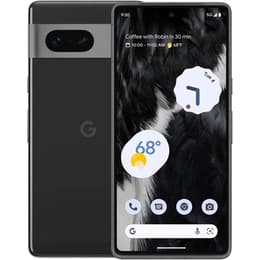
Google Pixel 7 • Unlocked
Starting at

Refurbished price:$185.99

Versus $599.99 new

See options
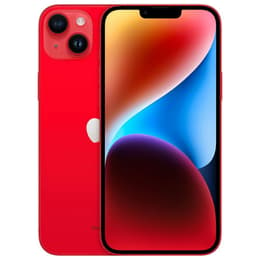
iPhone 14 Plus • Locked T-Mobile
Starting at

Refurbished price:$344.23

Versus $699.00 new

See options

Ratings

The Google Pixel 7, an Android smartphone released in October 2022, and the iPhone 14 Plus, an iOS smartphone launched in October 2022, offer distinct approaches to the modern mobile experience. While both devices provide robust performance and capable camera systems, they differ significantly in their operating systems, display characteristics, and overall design philosophy. This comparison aims to highlight these practical differences to help users make an informed decision.

Scores

Durability

When considering the long-term usability of a smartphone, factors like software support, physical resilience, and ease of repair play a crucial role.

  • Release Timeline and Software Support: Both devices were released in late 2022. The Google Pixel 7 is guaranteed to receive five years of OS updates and five years of security updates from its release, meaning OS updates until at least October 2025 and security updates until October 2027, with OS updates expected until Android 18 around 2027. The iPhone 14 Plus, running iOS, typically receives major iOS updates for approximately 5-6 years from its release, suggesting a similar or slightly longer period of core OS updates compared to the Pixel 7.
  • Physical Durability: The iPhone 14 Plus features a Ceramic Shield front and an aluminum design, along with an IP68 rating for dust and water resistance. The Pixel 7 also boasts an IP68 rating and is protected by Corning Gorilla Glass Victus on its display. Both offer a good level of protection against everyday elements.
  • Repairability: The Google Pixel 7 has been noted as relatively repairable, though some components like the USB-C port are soldered, and the battery can be challenging to remove, earning it a repairability score of 6 out of 10. The iPhone 14 Plus, like its standard counterpart, features an internal redesign that makes it easier to fix compared to previous generations.

Release Year

2022

2022

Last OS Compatibility

Yes

Yes

OS

Android

iOS

Foldable

No

No

Performance

The performance of a smartphone impacts everything from app responsiveness to multitasking capabilities and gaming experiences.

  • Storage and Multitasking: Both devices offer multiple internal storage configurations, typically ranging from 128GB to 512GB. The iPhone 14 Plus comes with 6GB of RAM, facilitating smooth multitasking. The Pixel 7 features 8GB of RAM, which contributes to its ability to manage numerous applications simultaneously without significant slowdowns.
  • Battery Behavior: The iPhone 14 Plus, with its 4325 mAh battery, generally offers extended battery life, often lasting over a day with some real-world tests showing over 12 hours of screen-on time. The Google Pixel 7, with its 4355 mAh battery, generally provides reliable all-day power for moderate use, though heavy users might find themselves seeking a charger by late evening. Some users have reported that the Pixel 7's battery life can be mediocre and that the device may experience heating under strenuous use.
  • Overall System Responsiveness: The Pixel 7 utilizes a processor designed for machine learning tasks, which enhances features like faster Night Sight processing and Photo Unblur. This results in a fluid experience for everyday tasks and gaming. The iPhone 14 Plus is equipped with a powerful processor that ensures smooth operation across applications and games, maintaining responsiveness even with demanding tasks.

Memory (GB)

8 GB

6 GB

Screen quality

The display is a primary interface for smartphone interaction, and differences in technology, resolution, and refresh rate can significantly affect the user experience.

  • Display Technology and Clarity: The Google Pixel 7 features a 6.3-inch AMOLED display with a resolution of 2400x1080 pixels, resulting in a pixel density of 416 ppi. The iPhone 14 Plus offers a larger 6.7-inch Super Retina XDR OLED display with a resolution of 2778x1284 pixels, providing a pixel density of 458 ppi. Both OLED panels deliver vibrant colors and deep blacks.
  • Brightness and Refresh Rate: The Pixel 7's display has a 90Hz refresh rate, providing a smoother scrolling experience compared to a 60Hz display. It can reach up to 1000 nits in normal use and a peak brightness of 1400 nits. The iPhone 14 Plus has a standard 60Hz refresh rate, with typical brightness up to 800 nits and peak brightness up to 1200 nits for HDR content.
  • Screen Size and Viewing Experience: The iPhone 14 Plus offers a larger screen, which can enhance the viewing experience for media consumption and multitasking. The Pixel 7's slightly smaller display makes it more compact and potentially easier for one-handed use.

Resolution

1080 x 2400

1284 x 2778

Screen type

AMOLED

Super Retina XDR OLED

Audiovisual

Camera capabilities are a key differentiator for modern smartphones, influencing how users capture and share their experiences.

  • Camera System Capabilities: The Google Pixel 7 features a dual-camera system with a 50MP main sensor and a 12MP ultrawide lens, complemented by a 10.8MP front camera. The iPhone 14 Plus also has a dual-camera setup, consisting of a 12MP main camera and a 12MP ultrawide lens, alongside a 12MP TrueDepth front camera. Neither device includes a dedicated telephoto lens in their standard configurations.
  • Photography Performance: The Pixel 7 is renowned for its computational photography, offering features like 8x Super Res Zoom (digital), faster Night Sight processing, and Real Tone for accurate skin tones. It excels in low-light environments and produces images with strong contrast. The iPhone 14 Plus utilizes Apple's Photonic Engine to improve low-light performance and offers sensor-shift optical image stabilization (OIS) on its main camera. It provides a reliable and consistent photography experience, with some users noting more vivid blues in certain scenarios.
  • Video Recording and Audio: Both devices are capable of recording video at up to 4K resolution at 60 frames per second. The Pixel 7 includes features like Cinematic Blur for video. User feedback suggests that the Pixel 7's speakers can sometimes be average or muddy.

Main camera

50 megapixels

12 megapixels

Front camera

10.8 megapixels

12 megapixels

Miscellaneous

Beyond core performance and display, several practical elements contribute to the overall user experience and daily functionality of a smartphone.

  • Connectivity and Ports: Both the Google Pixel 7 and iPhone 14 Plus support 5G cellular networks, along with modern Wi-Fi standards and Bluetooth for wireless connectivity. The Pixel 7 features a USB-C port for charging and data transfer. In contrast, the iPhone 14 Plus utilizes Apple's proprietary Lightning port.
  • Biometric Security: The Google Pixel 7 incorporates an under-display optical fingerprint scanner for secure unlocking, in addition to face unlock. However, some users have reported inconsistencies with the Pixel 7's fingerprint sensor. The iPhone 14 Plus relies exclusively on Face ID for biometric authentication, utilizing its advanced TrueDepth camera system.
  • Physical Characteristics: The Pixel 7 measures 155.6 x 73.2 x 8.7 mm and weighs 197g, featuring a design with Gorilla Glass Victus on the front and back, and an aluminum frame. The iPhone 14 Plus is larger at 160.8 x 78.1 x 7.8 mm and slightly heavier at 203g, offering a bigger screen experience in an aluminum and glass design with a Ceramic Shield front.

Weight

6 oz

7 oz

Screen size (inches)

6.3

6.7

Network

5G

5G

SIM card

Physical SIM + eSIM

eSIM

Carrier compatibility

Unlocked

T-Mobile

The Google Pixel 7 and iPhone 14 Plus, both released in late 2022, cater to different user preferences while offering robust smartphone experiences. User feedback often praises the Pixel 7 for its exceptional camera capabilities, particularly its computational photography features, and its smooth Android interface. Conversely, common criticisms for the Pixel 7 include an inconsistent fingerprint scanner, battery life that may not satisfy heavy users, and occasional reports of heating or muddy speaker quality.

The iPhone 14 Plus is frequently lauded for its outstanding battery life, its larger display, and the seamless integration within the iOS ecosystem, providing a consistently smooth performance. However, some users note its 60Hz display refresh rate as a drawback compared to competitors, and its minimal upgrades over the previous generation have been a point of discussion.

Users prioritizing advanced computational photography, a pure Android experience, and a slightly more compact form factor may find the Google Pixel 7 well-suited to their needs. On the other hand, users who value extended battery life, a larger display for media consumption, and the integrated iOS ecosystem will likely lean towards the iPhone 14 Plus. Both devices represent solid choices, and considering a quality-assured refurbished option can be an eco-friendly alternative for either model.

See all articles

Our recent comparisons