
Google Pixel 8 Pro • Unlocked vs iPhone 14 Plus • Locked T-Mobile

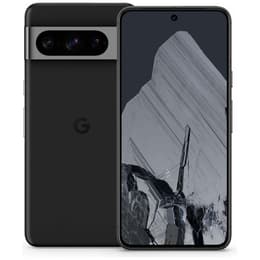
Google Pixel 8 Pro • Unlocked
Starting at

Refurbished price:$296.00

Versus $899.99 new

See options
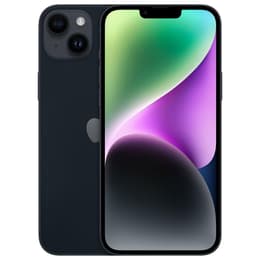
iPhone 14 Plus • Locked T-Mobile
Starting at

Refurbished price:$344.23

Versus $699.00 new

See options

Ratings

The Google Pixel 8 Pro, released in October 2023, and the iPhone 14 Plus, launched in October 2022, represent distinct approaches to the large-screen smartphone experience. While both devices offer expansive displays and robust feature sets, they differ significantly in their operating systems, camera philosophies, and overall user ecosystems. The Pixel 8 Pro operates on Android, emphasizing advanced computational photography and AI-driven features, whereas the iPhone 14 Plus runs on iOS, focusing on a streamlined user experience and strong integration within Apple's ecosystem.

Scores

Durability

When considering the long-term usability of these devices, several factors contribute to their expected lifespan, including software support and physical resilience.

  • Software Longevity: The Google Pixel 8 Pro is notable for its commitment to extended software support, offering seven years of OS upgrades and security updates from its release. In contrast, the iPhone 14 Plus, released a year earlier, typically receives iOS updates for approximately five to six years from its launch date, meaning the Pixel 8 Pro is expected to receive updates for a longer period.
  • Physical Durability: Both devices feature robust builds designed to withstand daily use. The Pixel 8 Pro incorporates Corning Gorilla Glass Victus 2 on both the front and back, along with an aluminum frame, and has shown improved resilience in bend tests compared to its predecessor. The iPhone 14 Plus features Ceramic Shield on the front and a glass back, also with an aluminum frame. Both phones carry an IP68 rating for dust and water resistance, indicating they can withstand immersion in water.
  • Repairability: While specific repairability scores can vary, both devices are designed with modern smartphone construction, which can present challenges for user-led repairs. The Pixel 8 Pro's screen has shown resistance to scratches up to level six on the Mohs scale, with deeper grooves appearing at level seven.

Release Year

2023

2022

Last OS Compatibility

Yes

Yes

OS

Android

iOS

Foldable

No

No

Performance

The performance of a smartphone is crucial for handling everyday tasks, demanding applications, and multitasking efficiently. Both the Pixel 8 Pro and iPhone 14 Plus deliver smooth experiences, though they achieve this through different hardware and software optimizations.

  • Processing Power: The Google Pixel 8 Pro is powered by a processor optimized for AI and efficiency, which translates to smooth handling of resource-intensive tasks and quick app loading. Users report a snappy and fluid interface, with most applications opening instantly. The iPhone 14 Plus utilizes a processor known for its strong performance, ensuring applications run smoothly and multitasking is responsive.
  • Multitasking and Responsiveness: The Pixel 8 Pro generally offers a very smooth daily experience, capable of managing intensive workloads like video calls and gaming without significant lag or overheating. However, some users have noted occasional app reloading in the background, suggesting varying RAM management experiences. The iPhone 14 Plus, with its integrated hardware and software, provides a consistently fluid experience across applications, making it well-suited for users who frequently switch between tasks.
  • Storage Options: The Pixel 8 Pro is available with storage capacities including 128GB, 256GB, 512GB, and a 1TB option in some regions. The iPhone 14 Plus offers storage configurations of 128GB, 256GB, and 512GB.
  • Battery Behavior: The Pixel 8 Pro features a 5050 mAh battery, generally providing all-day power for typical usage, though some users have expressed that while good, it's not always exceptional compared to some competitors. The iPhone 14 Plus, with its 4323 mAh battery, is frequently praised for its long-lasting battery life, with many users reporting it comfortably lasts a full day, even with heavy use.

Memory (GB)

12 GB

6 GB

Screen quality

The display is a primary interface for smartphone interaction, and both devices offer large, high-quality screens, though with distinct characteristics that impact the viewing experience.

  • Display Technology and Clarity: The Google Pixel 8 Pro features a 6.7-inch LTPO OLED 'Super Actua' display with a resolution of 2992 x 1344 pixels, resulting in a sharp image. The iPhone 14 Plus also has a 6.7-inch Super Retina XDR OLED display, offering a resolution of 2778 x 1284 pixels, which provides clear visuals.
  • Brightness and Outdoor Visibility: The Pixel 8 Pro's display can reach a peak brightness of up to 2,400 nits, with 1,600 nits for HDR content, making it highly visible even in direct sunlight. The iPhone 14 Plus offers 800 nits of typical brightness and a peak HDR brightness of 1,200 nits, which is generally sufficient for outdoor use.
  • Refresh Rate and Smoothness: A key difference lies in the refresh rate. The Pixel 8 Pro boasts an adaptive refresh rate that can dynamically adjust from 1Hz to 120Hz, contributing to smoother scrolling and animations. The iPhone 14 Plus, however, is limited to a 60Hz refresh rate, which some users accustomed to higher refresh rates might notice as less fluid.
  • Design and Viewing Experience: The Pixel 8 Pro features a flat display, a change from previous curved Pixel models, which some users prefer for reduced glare and accidental touches. The iPhone 14 Plus maintains a traditional notch design at the top of its display.

Resolution

1344 x 2992

1284 x 2778

Screen type

LTPO OLED

Super Retina XDR OLED

Audiovisual

Both the Google Pixel 8 Pro and the iPhone 14 Plus offer capable camera systems, but they approach photography with different strengths, particularly in computational processing and hardware.

  • Camera System Configuration: The Google Pixel 8 Pro features a versatile triple-camera setup, including a 50 MP main sensor, a 48 MP ultrawide lens with autofocus, and a 48 MP telephoto lens capable of 5x optical zoom. The iPhone 14 Plus comes with a dual-camera system, comprising a 12 MP main camera with sensor-shift optical image stabilization and a 12 MP ultrawide camera.
  • Photography Performance: The Pixel 8 Pro is highly regarded for its computational photography, delivering detailed and clear photos with excellent low-light performance and features like Magic Editor and Best Take. Its Pro mode allows for manual controls and 50MP shooting. The iPhone 14 Plus offers strong everyday photography, with improved low-light performance over previous non-Pro models due to a larger sensor and faster aperture on its main camera.
  • Video Recording Capabilities: The Pixel 8 Pro records video at up to 4K resolution at 60 frames per second, with improved video quality compared to its predecessors. The iPhone 14 Plus also supports video recording up to 4K at 60 frames per second and includes features like Cinematic Mode and Action Mode for stabilized video.
  • Audio Quality: Both devices offer good microphone quality for calls and video recording. The iPhone 14 Plus's microphone has been noted for handling loud environments well, keeping voices clear. The Pixel 8 Pro also provides good audio capture for video.

Main camera

50 megapixels

12 megapixels

Front camera

10.5 megapixels

12 megapixels

Miscellaneous

Beyond core features, several practical elements contribute to the overall user experience and daily functionality of these smartphones.

  • Connectivity Standards: The Google Pixel 8 Pro supports Wi-Fi 7, offering the latest in wireless connectivity speeds and efficiency. The iPhone 14 Plus supports Wi-Fi 6. Both devices offer 5G cellular connectivity and Bluetooth 5.3.
  • Charging Ports and Biometrics: The Pixel 8 Pro features a USB-C 3.2 port for charging and data transfer. It includes both an under-display fingerprint sensor and face unlock for biometric security. The iPhone 14 Plus utilizes a Lightning port. For security, it relies on Face ID.
  • Physical Characteristics: The Pixel 8 Pro measures 162.9 x 76.5 x 8.8 mm and weighs 213 grams. The iPhone 14 Plus is slightly lighter and thinner at 160.8 x 78.1 x 7.8 mm and 203 grams. These differences can impact how each device feels in hand and pocket.
  • Additional Features: The Pixel 8 Pro includes a Titan M2 security coprocessor for enhanced security. The iPhone 14 Plus introduced satellite connectivity for emergency services in areas without cellular coverage.

Weight

7 oz

7 oz

Screen size (inches)

6.7

6.7

Network

5G

5G

SIM card

Physical SIM + eSIM

eSIM

Carrier compatibility

Unlocked

T-Mobile

Connector

USB-C

Lightning

User sentiment from online forums like Reddit highlights distinct strengths and areas for consideration for both the Google Pixel 8 Pro and the iPhone 14 Plus. For the Pixel 8 Pro, common praise centers on its exceptional camera capabilities, particularly its computational photography and AI features, which users find deliver impressive photos. The bright, flat display and the promise of seven years of software updates are also frequently mentioned as significant advantages. However, some users have noted concerns regarding battery life, which, while generally good, may not always match the endurance of some competitors, and occasional performance hiccups or heating under heavy load.

The iPhone 14 Plus is consistently lauded for its excellent battery life, with many users reporting it easily lasts a full day. Its large display is also a major draw for those seeking an expansive viewing experience without the 'Pro' features. Criticisms often revolve around the 60Hz refresh rate, which some users find less fluid compared to devices with higher refresh rates, and the continued use of the notch design. Some users also feel the camera, while good, isn't as groundbreaking as expected compared to other flagships.

Users prioritizing cutting-edge camera technology, advanced AI features, and a longer software support window may find the Google Pixel 8 Pro well-suited to their needs. Conversely, users who value exceptional battery life, a consistently smooth and familiar operating system, and a large display within an established ecosystem may lean toward the iPhone 14 Plus. Both devices offer compelling experiences, and choosing between them often comes down to individual preferences for operating system, camera priorities, and long-term software commitment. For those seeking a quality-assured refurbished option, both models are available, offering a sustainable choice for consumers.

See all articles

Our recent comparisons