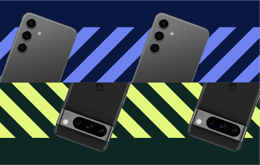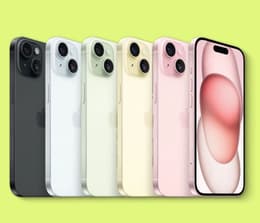
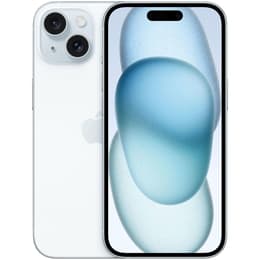

Google Pixel 8 Pro • Unlocked vs iPhone 15 • Locked T-Mobile

Google Pixel 8 Pro • Unlocked
Starting at

Refurbished price:$296.00

Versus $899.99 new

See options
iPhone 15 • Locked T-Mobile
Starting at

Refurbished price:$379.00

Versus $699.00 new

See options

Ratings

The Google Pixel 8 Pro, released in October 2023, and the iPhone 15, launched in September 2023, represent flagship smartphones from their respective ecosystems. While both devices offer advanced mobile experiences, they differ significantly in their operating system philosophies and hardware approaches. The Pixel 8 Pro runs on Android, emphasizing AI-driven features and extensive software support, whereas the iPhone 15 operates on iOS, focusing on a streamlined user experience and integration within Apple's ecosystem. Key distinctions emerge in their display technology, camera capabilities, and long-term software commitment.

Scores

Durability

The longevity of a smartphone is influenced by its release timeline, software support, and repairability. Both devices offer robust build quality, but their software update policies present a notable difference.

  • Software Support: The Google Pixel 8 Pro is notable for its commitment to seven years of OS upgrades, security updates, and Feature Drops, extending support until 2030. This makes it a sustainable choice for users prioritizing long-term software relevance. The iPhone 15 is guaranteed a minimum of five years of software support, including security updates, from its release date. Historically, Apple has often provided iOS updates beyond this minimum, but the stated guarantee is five years.
  • Repairability: The iPhone 15 initially received a repairability score of 4 out of 10, which was later promoted to 7 out of 10, indicating improvements in ease of repair. The Google Pixel 8 Pro has been noted to have a repairability score of 4.0 out of 10, with some components like the battery and soldered charging port posing challenges for repair. Google does provide free service manuals and OEM replacement parts, which can aid in repairs.
  • Practical Lifespan: Given their respective software support commitments, the Pixel 8 Pro offers a longer guaranteed period of up-to-date software and security, potentially extending its practical usability for a longer duration compared to the iPhone 15's minimum guarantee.

Release Year

2023

2023

Last OS Compatibility

Yes

Yes

OS

Android

iOS

Foldable

No

No

Performance

Both the Google Pixel 8 Pro and the iPhone 15 are equipped with powerful internal components designed for smooth operation, but they approach performance with different architectural designs.

  • Processing Power: The Google Pixel 8 Pro utilizes a current-generation processor that handles demanding applications, complex AI tasks, and multitasking efficiently, providing a responsive user experience. The iPhone 15 features a powerful processor that delivers smooth performance for everyday tasks, gaming, and content creation, ensuring applications launch quickly and run without interruption.
  • Multitasking and Responsiveness: The Pixel 8 Pro typically includes a larger amount of RAM, which can contribute to maintaining more applications in memory simultaneously, leading to seamless transitions between tasks. The iPhone 15, while having less RAM, is optimized to manage its resources effectively, providing a fluid and responsive experience even with multiple apps open.
  • Storage Options: Both devices offer various internal storage configurations to suit different user needs. The Pixel 8 Pro is available with options up to 1TB in some regions, while the iPhone 15 offers up to 512GB of internal storage.
  • Battery Behavior: The Pixel 8 Pro is equipped with a larger battery capacity, designed to provide extended usage, with Google suggesting it can last beyond 24 hours on a single charge. The iPhone 15 features a battery optimized for its ecosystem, offering reliable power for a full day of typical use.

Memory (GB)

12 GB

6 GB

Screen quality

The visual experience on both devices is delivered through high-quality displays, though with distinct characteristics in size, technology, and refresh rates.

  • Display Technology and Size: The Google Pixel 8 Pro features a 6.7-inch LTPO AMOLED display, referred to as an Actua display, offering vibrant colors and deep blacks. The iPhone 15 comes with a 6.1-inch Super Retina XDR OLED display, also known for its excellent color reproduction and contrast.
  • Resolution and Clarity: The Pixel 8 Pro provides a resolution of 2992x1344 pixels, resulting in sharp and detailed visuals. The iPhone 15 offers a resolution of 2556x1179 pixels, delivering clear and crisp images.
  • Brightness Levels: For outdoor visibility and HDR content, the Pixel 8 Pro can reach a peak brightness of up to 2400 nits, with 1600 nits for HDR content. The iPhone 15 also offers impressive brightness, peaking at 2000 nits for outdoor use and HDR content.
  • Refresh Rate and Smoothness: The Pixel 8 Pro boasts a variable refresh rate of up to 120Hz, capable of scaling down to 1Hz for power efficiency, which contributes to smoother scrolling and more fluid animations. The iPhone 15 maintains a standard 60Hz refresh rate, providing a consistent visual experience for most daily interactions.

Resolution

1344 x 2992

1179 x 2556

Screen type

LTPO OLED

Super Retina XDR OLED

Audiovisual

Both smartphones are equipped with advanced camera systems designed to capture high-quality photos and videos, but they feature different sensor configurations and processing approaches.

  • Rear Camera System: The Google Pixel 8 Pro features a versatile triple-camera setup, including a 50MP main sensor, a 48MP ultrawide lens, and a 48MP telephoto lens with 5x optical zoom, offering flexibility for various photographic scenarios. The iPhone 15 comes with a dual-camera system, comprising a 48MP main sensor and a 12MP ultrawide lens, capable of capturing detailed images with good dynamic range.
  • Photography Performance: The Pixel 8 Pro leverages its advanced computational photography and AI capabilities to enhance image quality, particularly in challenging lighting conditions and for features like Magic Eraser. The iPhone 15 also excels in everyday photography, producing consistent and natural-looking photos, with improvements in low-light performance and detail capture.
  • Video Recording: Both devices support 4K video recording at various frame rates, offering high-quality video capture. The Pixel 8 Pro provides options for 24, 30, or 60 FPS. The iPhone 15 supports 4K at 24, 25, 30, or 60 FPS, with features like Cinematic mode for depth-of-field effects.
  • Front Camera and Audio: The Pixel 8 Pro includes an 11MP front camera, suitable for selfies and video calls. The iPhone 15 features a 12MP front camera with autofocus, designed for clear self-portraits and video conferencing. Both phones offer stereo speakers for an immersive audio experience and capable microphones for calls and recordings.

Main camera

50 megapixels

48 megapixels

Front camera

10.5 megapixels

12 megapixels

Miscellaneous

Beyond core performance and display, several practical elements contribute to the overall user experience of these devices, including connectivity, physical design, and unique features.

  • Connectivity and Ports: Both the Pixel 8 Pro and iPhone 15 support 5G connectivity, Wi-Fi 6, and Bluetooth 5.3 for fast wireless communication. A notable difference is the USB-C port; while both have it, the iPhone 15's USB-C port operates at USB 2.0 speeds, whereas the Pixel 8 Pro's USB-C port typically offers faster data transfer capabilities.
  • Biometric Security and Sensors: The Pixel 8 Pro features an under-display fingerprint scanner and Face Unlock, enhanced by a dedicated security coprocessor. The iPhone 15 relies primarily on Face ID for secure authentication. Both devices include a range of sensors such as accelerometers, gyroscopes, and barometers.
  • Design and Durability: The Pixel 8 Pro has dimensions of 162.6 x 76.5 x 8.8mm and weighs 213 grams, featuring a glass back and aluminum frame. The iPhone 15 is more compact at 147.6 x 71.6 x 7.8mm and lighter at 171 grams, with an aluminum design, Ceramic Shield front, and color-infused glass back. Both devices carry an IP68 rating for dust and water resistance.
  • Unique Features: The Pixel 8 Pro emphasizes AI-driven functionalities, including advanced call screening and photo editing tools. The iPhone 15 incorporates the Dynamic Island for interactive alerts and activities, and offers Emergency SOS via satellite.

Weight

7 oz

171 oz

Screen size (inches)

6.7

6.1

Network

5G

5G

SIM card

Physical SIM + eSIM

eSIM

Carrier compatibility

Unlocked

T-Mobile

Connector

USB-C

USB-C (USB 2)

Users often praise the Google Pixel 8 Pro for its exceptional camera performance, particularly its computational photography features and AI enhancements that simplify complex editing tasks. Its long-term software support commitment is also a significant advantage, appealing to those who prefer to keep their devices for an extended period. Some common criticisms have included its repairability score and initial reports of thermal management under heavy load, though these are often addressed through software updates.

The iPhone 15 is frequently lauded for its consistent performance, the intuitive nature of iOS, and the integration of features like the Dynamic Island into the user experience. Its compact size and premium build materials are also often highlighted positively. Early user feedback mentioned some overheating concerns, which Apple later attributed to software and app optimizations.

Users prioritizing a highly customizable Android experience with cutting-edge AI features and a commitment to extended software updates may find the Google Pixel 8 Pro well-suited to their needs. Conversely, individuals who value a streamlined, user-friendly interface, strong ecosystem integration, and a more compact design might lean towards the iPhone 15. Both devices offer robust performance and camera capabilities, making the choice often dependent on personal preference for operating system and specific feature priorities. For those considering either device, exploring quality-assured refurbished options can provide an eco-friendly alternative.

See all articles

Our recent comparisons