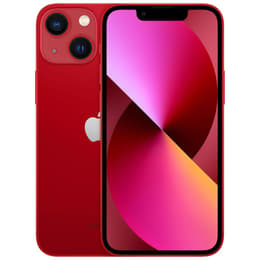

Google Pixel 8 Pro • Unlocked vs iPhone 13 mini • Unlocked

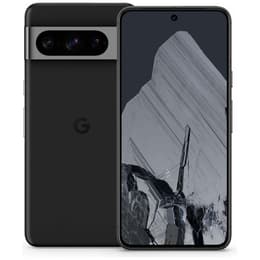
Google Pixel 8 Pro • Unlocked
Starting at

Refurbished price:$296.00

Versus $899.99 new

See options
iPhone 13 mini • Unlocked
Starting at

Refurbished price:$219.00

Versus $699.00 new

See options

Ratings

The Google Pixel 8 Pro, released in October 2023, and the iPhone 13 Mini, launched in September 2021, represent distinct approaches to smartphone design and user experience. While the Pixel 8 Pro offers a large display and advanced computational features running on Android, the iPhone 13 Mini provides a compact form factor within the iOS ecosystem. These devices cater to different user preferences, primarily differing in their physical size, camera capabilities, and long-term software support.

Scores

Durability

The longevity of a smartphone is influenced by its release timeline, software support, and physical resilience. The Google Pixel 8 Pro, being a more recent device, benefits from a significantly longer promised software update window compared to the iPhone 13 Mini.

  • Release Timeline: The Pixel 8 Pro was released in October 2023, making it a newer device. The iPhone 13 Mini was released in September 2021.
  • OS Support Duration: Google has committed to providing seven years of operating system and security updates for the Pixel 8 Pro, extending its functional lifespan considerably. The iPhone 13 Mini, while known for Apple's consistent software support, typically receives updates for about five to six years from its release.
  • Physical Durability: Both devices feature robust construction. The Pixel 8 Pro utilizes Corning Gorilla Glass Victus 2 for its display, while the iPhone 13 Mini features a Ceramic Shield front cover, both offering enhanced drop protection. Both also carry an IP68 rating for dust and water resistance, allowing submersion up to 6 meters for 30 minutes.

Release Year

2023

2021

Last OS Compatibility

Yes

Yes

OS

Android

iOS

Foldable

No

No

Performance

Performance in modern smartphones is about more than just raw speed; it encompasses how smoothly the device handles daily tasks, demanding applications, and multitasking. Both the Pixel 8 Pro and iPhone 13 Mini offer capable performance for their respective ecosystems.

  • Everyday Responsiveness: The Pixel 8 Pro is powered by a current-generation processor designed to handle demanding apps and multitasking smoothly, with a focus on on-device artificial intelligence tasks. The iPhone 13 Mini, featuring an earlier generation processor, still delivers a highly responsive experience for general use, app loading, and gaming due to its optimized software and hardware integration.
  • Multitasking and Storage: The Pixel 8 Pro typically comes with more RAM, which can be beneficial for keeping many applications open simultaneously without needing to reload them. Both devices offer various internal storage options, allowing users to choose based on their needs for apps, photos, and videos.
  • Battery Behavior: Users of the iPhone 13 Mini often report that its battery can last through a full day of moderate use, a notable improvement over its predecessor. The Pixel 8 Pro's larger battery capacity generally provides ample power for a full day, though heavy use, especially with cellular connectivity, can lead to more frequent charging for some users.

Memory (GB)

12 GB

4 GB

Screen quality

The display is a primary interface for smartphone interaction, and both devices offer high-quality viewing experiences, albeit with significant differences in size and technology.

  • Display Technology and Clarity: The Pixel 8 Pro features a large 6.7-inch LTPO OLED display with a high resolution, providing sharp images and vibrant colors. The iPhone 13 Mini sports a more compact 5.4-inch Super Retina XDR OLED display, which, despite its smaller size, offers excellent pixel density and clarity for its form factor.
  • Brightness and Refresh Rate: The Pixel 8 Pro's display can reach very high peak brightness levels, enhancing visibility in bright outdoor conditions and improving HDR content viewing. It also features a variable refresh rate up to 120Hz, contributing to smoother scrolling and more fluid animations. The iPhone 13 Mini offers good typical and peak brightness for an enjoyable viewing experience, but its display has a standard 60Hz refresh rate.
  • Viewing Experience: The larger screen of the Pixel 8 Pro is well-suited for media consumption, gaming, and productivity tasks, offering an expansive visual area. The iPhone 13 Mini's smaller screen prioritizes one-handed usability and portability, making it ideal for users who prefer a more discreet device.

Resolution

1344 x 2992

1080 x 2340

Screen type

LTPO OLED

Super Retina XDR OLED

Audiovisual

Both the Google Pixel 8 Pro and the iPhone 13 Mini are recognized for their capable camera systems, each excelling in different aspects of mobile photography and videography.

  • Camera System Capabilities: The Pixel 8 Pro features a versatile triple-camera setup, including a high-resolution main sensor, an ultrawide lens, and a telephoto lens with optical zoom, offering a broad range of photographic options. The iPhone 13 Mini comes with a dual-camera system, comprising a wide and an ultrawide lens, known for its consistent image quality and ease of use.
  • Photography Performance: The Pixel 8 Pro leverages advanced computational photography and AI features to enhance image quality, particularly in challenging lighting conditions and for specialized editing. The iPhone 13 Mini also utilizes computational photography, delivering detailed photos with accurate color reproduction and good low-light performance for its class.
  • Video Recording and Audio: Both devices are capable of recording high-quality video, with the Pixel 8 Pro offering advanced video features and controls. The iPhone 13 Mini includes features like Cinematic Mode, which provides a shallow depth of field effect in videos. Both phones provide clear audio recording and stereo speaker output for media consumption.

Main camera

50 megapixels

12 megapixels

Front camera

10.5 megapixels

12 megapixels

Miscellaneous

Beyond core features, several practical elements contribute to the overall user experience, from connectivity to physical design.

  • Connectivity Options: The Pixel 8 Pro supports the latest Wi-Fi 7 standard and Bluetooth 5.3, offering faster and more efficient wireless connections. The iPhone 13 Mini supports Wi-Fi 6 and Bluetooth 5.0. Both devices are 5G capable, ensuring access to modern cellular networks.
  • Port Types and Biometrics: The Pixel 8 Pro uses a USB-C port for charging and data transfer, a widely adopted standard. The iPhone 13 Mini features Apple's proprietary Lightning port. For security, the Pixel 8 Pro includes an under-display fingerprint sensor and face unlock, while the iPhone 13 Mini relies on Face ID for biometric authentication.
  • Dimensions and Handling: The Pixel 8 Pro is a larger and heavier device, measuring 162.6 x 76.5 x 8.8 mm and weighing 213 grams, which might appeal to users who prefer a substantial feel and larger screen. The iPhone 13 Mini is significantly more compact and lighter at 131.5 x 64.2 x 7.65 mm and 141 grams, making it ideal for one-handed use and easy pocketability. The Pixel 8 Pro also includes a unique temperature sensor.

Weight

7 oz

5000 oz

Screen size (inches)

6.7

5.4

Network

5G

5G

SIM card

Physical SIM + eSIM

Physical SIM + eSIM

Carrier compatibility

Unlocked

Unlocked

Connector

USB-C

Lightning

The Google Pixel 8 Pro and iPhone 13 Mini cater to distinct user preferences, making the choice between them largely dependent on individual priorities. User feedback often praises the Pixel 8 Pro for its advanced camera system, particularly its computational photography and AI-driven features, as well as its long-term software support commitment. Some users, however, note its larger size and occasional reports of cellular connectivity issues. The iPhone 13 Mini is frequently lauded for its compact size, making it a preferred option for those seeking a powerful smartphone that is easy to handle with one hand. Its consistent performance and integration within the iOS ecosystem are also strong points, though its smaller screen and 60Hz refresh rate are sometimes mentioned as limitations.

Users prioritizing a large, high-refresh-rate display, a versatile camera system with advanced AI capabilities, and an extended software update lifespan may find the Google Pixel 8 Pro well-suited to their needs. Conversely, individuals who value a highly compact device, exceptional one-handed usability, and the established iOS experience will likely lean towards the iPhone 13 Mini. Both devices offer a quality smartphone experience, and considering a quality-assured refurbished option for either model can be a sustainable choice for consumers.
See all articles

Our recent comparisons