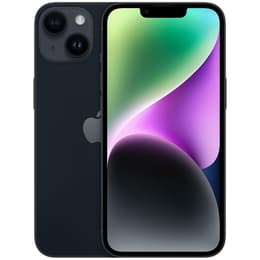
Google Pixel 8 • Unlocked vs iPhone 14 • Locked Verizon

Google Pixel 8 • Unlocked
Starting at

Refurbished price:$254.00

Versus $699.99 new

See options
iPhone 14 • Locked Verizon
Starting at

Refurbished price:$299.00

Versus $599.00 new

See options

Ratings

The Google Pixel 8, released in October 2023, and the iPhone 14, launched in September 2022, represent distinct approaches to the modern smartphone experience. While both devices offer robust performance and advanced camera systems, they differ significantly in their operating systems and core philosophies. The Pixel 8 runs on Google's Android platform, emphasizing artificial intelligence and deep software integration, whereas the iPhone 14 operates on Apple's iOS, known for its streamlined ecosystem and user-friendly interface.

Scores

Durability

When considering the long-term usability of these devices, their release timelines and software support are key factors.

  • Software Longevity: The Google Pixel 8 stands out with an impressive commitment to seven years of OS and security updates from its October 2023 release, offering extended software longevity. The iPhone 14, released in September 2022, typically receives iOS updates for approximately five to six years from its launch date, providing a slightly shorter, though still substantial, support period.
  • Repairability: The Pixel 8 initially received a repairability score of 7 out of 10, with its screen being relatively easy to remove. However, some components, like the battery, can be challenging to replace due to adhesive, and the main board is soldered to the charging port. The iPhone 14 initially garnered praise for its internal redesign, making back glass replacement more accessible, and received an initial repairability score of 7 out of 10. However, this score was later downgraded to 4 out of 10 due to Apple's parts pairing policies and software authentication requirements for repairs, which can complicate independent repairs.
  • Practical Lifespan: Both devices are built to last, featuring durable materials and IP68 water and dust resistance. The Pixel 8's longer software support suggests a potentially longer practical lifespan for users who prioritize up-to-date software features and security.

Release Year

2023

2022

Last OS Compatibility

Yes

Yes

OS

Android

iOS

Foldable

No

No

Performance

The performance of a smartphone is crucial for daily tasks, from browsing to demanding applications.

  • Processing Power: The Google Pixel 8 is equipped with a current-generation processor designed by Google, which efficiently handles demanding applications and multitasking. The iPhone 14 utilizes a powerful processor that was previously featured in the iPhone 13 Pro models, providing smooth performance for everyday use and gaming.
  • System Responsiveness: Both devices offer a highly responsive user experience. The Pixel 8, with its 8GB of RAM, ensures smooth transitions between apps and efficient multitasking. The iPhone 14, featuring 6GB of RAM, also maintains excellent system fluidity, allowing users to switch between applications without significant delays.
  • Battery Behavior: The Pixel 8 typically offers 8-10 hours of screen time with mixed usage, and its adaptive battery feature learns user habits to optimize power consumption. For heavy users, it might require a quick charge during the day. The iPhone 14 generally provides solid battery life that can last a full day for most users, with some tests showing around 9 hours of continuous web surfing.

Memory (GB)

8 GB

6 GB

Screen quality

The display is a primary interface for any smartphone, influencing the overall user experience.

  • Display Technology and Clarity: The Google Pixel 8 features a 6.2-inch OLED display with a resolution of 1080x2400 pixels, offering clear and vibrant visuals. The iPhone 14 comes with a 6.1-inch Super Retina XDR OLED display, providing a resolution of 2532x1170 pixels and a pixel density of approximately 460 PPI, resulting in sharp images and deep blacks.
  • Brightness and Refresh Rate: The Pixel 8 boasts an adaptive refresh rate of up to 120Hz, which contributes to smoother scrolling and a more fluid visual experience, along with a peak brightness of 2000 nits for excellent outdoor visibility. The iPhone 14 has a standard 60Hz refresh rate, which is consistent but less fluid than higher refresh rate displays. It offers a typical brightness of 800 nits and a peak brightness of 1200 nits.
  • Viewing Experience: Both phones provide an immersive viewing experience with their OLED panels. The Pixel 8's higher refresh rate offers a noticeable advantage in smoothness, particularly during fast-paced content or scrolling. The iPhone 14's display, while at 60Hz, is praised for its color accuracy and overall visual quality.

Resolution

1080 x 2400

1170 x 2532

Screen type

OLED

Super Retina XDR OLED

Audiovisual

Both smartphones offer advanced camera systems designed to capture high-quality photos and videos.

  • Camera System Capabilities: The Google Pixel 8 features a dual-camera setup on the rear, including a 50-megapixel main camera and a 12-megapixel ultrawide lens. The iPhone 14 also has a dual-camera system with a 12-megapixel main camera with a larger sensor and a 12-megapixel ultrawide camera.
  • Photography Performance: The Pixel 8 is known for its computational photography, producing great pictures with strong AI post-processing, and offers improved low-light performance. The iPhone 14 delivers good exposure, natural color reproduction, and fast, accurate autofocus. Its Photonic Engine enhances low-light performance.
  • Video Recording and Audio: The iPhone 14 excels in video recording, offering features like Action mode for enhanced stabilization and 4K Cinematic mode. Its video quality is noted for good exposure and effective stabilization. The Pixel 8 also records high-quality video, and both phones provide clear microphone quality for calls and recordings, along with capable speaker output for media consumption.

Main camera

50 megapixels

12 megapixels

Front camera

10.5 megapixels

12 megapixels

Miscellaneous

Beyond core features, several practical elements contribute to the daily usability of these devices.

  • Connectivity: Both the Google Pixel 8 and iPhone 14 support 5G connectivity, ensuring fast mobile data speeds. They also include modern Wi-Fi standards and Bluetooth for wireless connections to accessories and networks.
  • Ports and Biometrics: The Pixel 8 uses a USB-C port for charging and data transfer. It features an in-display fingerprint sensor and Face Unlock for secure authentication. The iPhone 14 continues to use Apple's Lightning port. For biometrics, it relies solely on Face ID for secure unlocking and payments.
  • Design and Handling: The Pixel 8 has dimensions of 150.50 x 70.80 x 8.90mm and weighs 187 grams, offering a comfortable in-hand feel. The iPhone 14 is slightly more compact and lighter, measuring 146.70 x 71.50 x 7.80mm and weighing 172 grams. Both devices feature a glass body and are rated IP68 for dust and water resistance.

Weight

7 oz

6 oz

Screen size (inches)

6.2

6.1

Network

5G

5G

SIM card

Physical SIM + eSIM

eSIM

Carrier compatibility

Unlocked

Verizon

Connector

USB-C

Lightning

The Google Pixel 8 and iPhone 14 each present a compelling package, catering to different user preferences and priorities. Users often praise the Pixel 8 for its exceptional camera capabilities, particularly its advanced computational photography and AI-driven features, which consistently produce high-quality images. Its long-term software support commitment is also a significant advantage for those who keep their devices for many years. However, some users have expressed concerns about its battery life, describing it as average, and a few have reported minor build quality issues.

The iPhone 14 is frequently lauded for its smooth and reliable performance, the robust iOS ecosystem, and its strong video recording capabilities, including features like Action mode. Its display is also consistently praised for its clarity and vibrant colors. On the other hand, some users note that its 60Hz refresh rate feels less fluid compared to devices with higher refresh rates, and the repairability has been a point of contention due to parts pairing requirements.

Users prioritizing cutting-edge camera technology, extensive software support, and a highly integrated AI experience may find the Google Pixel 8 well-suited to their needs. Conversely, individuals who value a consistently smooth operating system, a strong ecosystem of apps and services, and excellent video capabilities might lean towards the iPhone 14. Both devices offer a quality-assured refurbished option, providing an eco-friendly alternative for consumers seeking reliable technology.
See all articles

Our recent comparisons