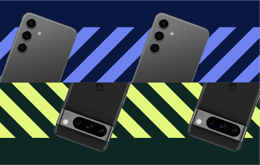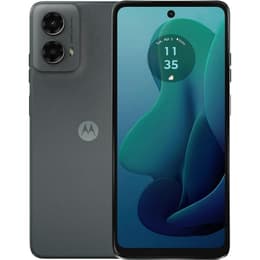

Google Pixel 8 • Unlocked vs Motorola Moto G (2024) • Unlocked

Google Pixel 8 • Unlocked
Starting at

Refurbished price:$245.00

Versus $899.99 new

See options
Motorola Moto G (2024) • Unlocked
Starting at

Refurbished price:$107.00

Versus $186.99 new

See options

Ratings

The Google Pixel 8 (released October 2023) and the Motorola Moto G 2024 (released March 2024) are both Android smartphones, yet they cater to different user expectations and priorities. While the Pixel 8 emphasizes advanced computational photography and long-term software support, the Moto G 2024 focuses on core smartphone functionalities with a large display and extended battery life. Both devices run on the Android operating system, offering a familiar user experience with distinct approaches to features and performance.

Scores

Durability

When considering the long-term usability of these devices, their release timelines and software support policies are key differentiators.

  • Release Timeline & OS Support: The Google Pixel 8, launched in late 2023, benefits from an industry-leading commitment of seven years of OS and security updates, extending its software longevity until at least October 2030. This ensures access to the latest Android features and security patches for an extended period. In contrast, the Motorola Moto G 2024, released in early 2024, typically receives one major Android OS update and three years of security updates, which is a more common policy for its category.
  • Practical Lifespan & Durability: The Pixel 8 features a robust build with Corning Gorilla Glass Victus on both the front and back, complemented by an aluminum frame and IP68 dust and water resistance, suggesting a higher degree of physical resilience. The Moto G 2024 offers a water-repellent design and Gorilla Glass 3 for screen protection, along with a silicone polymer back and plastic frame. Users prioritizing extended software support and enhanced physical durability may find the Pixel 8 a more suitable long-term investment.

Release Year

2023

2024

Last OS Compatibility

Yes

Yes

OS

Android

Android

Foldable

No

No

Performance

The performance capabilities of these two smartphones vary significantly, impacting how smoothly they handle daily tasks and more demanding applications.

  • Processor Capabilities & Responsiveness: The Google Pixel 8 is powered by a current-generation processor designed for efficient handling of demanding applications, complex AI features, and smooth multitasking. Users report that it offers decent performance for everyday use, with a responsive touchscreen. The Motorola Moto G 2024 utilizes a processor that capably manages basic daily tasks and routine app usage. However, some users have noted that its performance can feel sluggish, particularly when switching between multiple applications or engaging in more intensive activities, indicating that its 4GB of RAM can be stretched to its limits.
  • Storage Options: The Pixel 8 comes with internal storage options of 128GB or 256GB, without expandable storage. The Moto G 2024 offers 128GB of internal storage and includes a dedicated microSDXC slot, providing flexibility for users who need to expand their storage capacity for photos, videos, and apps.
  • Battery Behavior: The Pixel 8 is equipped with a 4575 mAh battery, which users generally describe as providing good, but not exceptional, battery life, typically lasting a full day with mixed usage. It supports 27W wired and 18W wireless charging. The Moto G 2024 features a larger 5000 mAh battery, consistently delivering excellent battery life that can extend beyond a full day even with heavy use. It supports 18W wired charging but lacks wireless charging capabilities.

Memory (GB)

8 GB

4 GB

Screen quality

The visual experience offered by these devices differs considerably due to their distinct display technologies and specifications.

  • Display Technology & Clarity: The Google Pixel 8 features a 6.2-inch OLED display, known for its deep blacks, vibrant colors, and excellent contrast. It offers a resolution of 1080 x 2400 pixels, resulting in sharp and clear visuals with a pixel density of approximately 428 ppi. The Motorola Moto G 2024 comes with a larger 6.6-inch IPS LCD screen, which provides a good viewing experience indoors. However, its 720 x 1612 pixel resolution results in a lower pixel density of around 267 ppi, meaning text and images may appear less sharp compared to the Pixel 8.
  • Brightness & Refresh Rate: The Pixel 8's display boasts impressive brightness levels, reaching up to 1400 nits in high brightness mode and a peak of 2000 nits, ensuring excellent visibility even in direct sunlight. It also features a dynamic 120Hz refresh rate for smooth scrolling and animations. The Moto G 2024 also offers a 120Hz refresh rate, contributing to a fluid user interface. However, its peak brightness is considerably lower, around 430 nits, which can make outdoor visibility challenging in bright conditions.

Resolution

1080 x 2400

720 x 1612

Screen type

OLED

IPS LCD

Audiovisual

Both smartphones offer camera systems capable of capturing everyday moments, but with differing levels of detail, features, and low-light performance.

  • Rear Camera System: The Google Pixel 8 is equipped with a dual-camera setup, featuring a 50 MP main sensor with optical image stabilization (OIS) and a 12 MP ultrawide sensor with autofocus. Its camera system is highly praised for producing images with natural colors, excellent exposure, and good detail across various lighting conditions, including strong low-light performance. The Motorola Moto G 2024 also has a dual-camera system, comprising a 50 MP main sensor with PDAF and a 2 MP macro lens. It captures crisp and vibrant photos in good lighting, with the macro lens adding versatility. However, its low-light performance is generally considered less refined, and overall camera quality is seen as average for its category.
  • Video Recording & Additional Features: The Pixel 8 supports video recording up to 4K at 60 frames per second and includes advanced features like Audio Magic Eraser for background noise reduction. Its computational photography capabilities enhance image quality significantly. The Moto G 2024 records video at 1080p at 30 frames per second. While it offers decent video for casual use, it lacks the advanced stabilization and computational features found in the Pixel 8. The Pixel 8 also features a 10.5 MP ultrawide front camera, while the Moto G 2024 has an 8 MP wide front camera.

Main camera

50 megapixels

50 megapixels

Front camera

10.5 megapixels

8 megapixels

Miscellaneous

Beyond core specifications, several practical elements contribute to the overall user experience and daily convenience of these devices.

  • Connectivity & Ports: Both phones support 5G connectivity, ensuring access to faster mobile data speeds. The Pixel 8 supports Wi-Fi 7, offering advanced wireless networking capabilities, while the Moto G 2024 supports Wi-Fi 5 (802.11ac). Both include Bluetooth 5.3 and NFC for contactless payments and pairing. The Pixel 8 features a USB Type-C 3.2 port, while the Moto G 2024 uses a USB Type-C port and notably retains a 3.5mm headphone jack, which the Pixel 8 omits.
  • Biometric Security & Build: The Pixel 8 incorporates an optical under-display fingerprint sensor and secure Face Unlock, suitable for payments. The Moto G 2024 features a side-mounted fingerprint sensor. In terms of build, the Pixel 8 has a premium feel with glass and aluminum, while the Moto G 2024 uses a combination of glass, silicone polymer (eco-leather), and plastic, offering a distinct tactile experience.
  • Dimensions & Handling: The Pixel 8 is a more compact device, weighing 187g with dimensions of 150.5 x 70.8 x 8.9 mm, making it comfortable for one-handed use. The Moto G 2024 is slightly larger and heavier at 194g and 164.4 x 75 x 8.2 mm, which might appeal to users preferring a larger screen footprint.

Weight

7 oz

7 oz

Screen size (inches)

6.1

6.6

Network

5G

5G

SIM card

Physical SIM + eSIM

Physical SIM

Carrier compatibility

Unlocked

Unlocked

Connector

USB-C

USB-C

The Google Pixel 8 and Motorola Moto G 2024 offer distinct propositions for smartphone users. The Pixel 8 is frequently praised for its exceptional camera capabilities, particularly its computational photography features that deliver high-quality images and videos. Users also appreciate its long-term software support, ensuring the device remains updated and secure for many years. Its vibrant OLED display and compact, premium build are also common points of positive feedback. Some criticisms include an occasionally inconsistent optical fingerprint reader and reports of the device warming up during intensive use.

The Motorola Moto G 2024 is often lauded for its impressive battery life, capable of lasting well over a day even with heavy usage, and its inclusion of a 3.5mm headphone jack. Its clean, near-stock Android software experience and expandable storage are also frequently highlighted as positives. However, common criticisms revolve around its lower-resolution LCD display, which can struggle with outdoor visibility, and its performance, which some users find sluggish, especially when multitasking. Its camera system, while decent in good lighting, is generally considered average.

Users prioritizing a top-tier camera experience, long-term software updates, and a compact, premium design will find the Google Pixel 8 well-suited to their needs. It is ideal for those who value advanced features and a consistently smooth software experience. Conversely, individuals who prioritize extended battery life, expandable storage, and a larger screen for media consumption, and who are content with solid everyday performance and a more basic camera system, may lean toward the Motorola Moto G 2024. Both devices are available as quality-assured refurbished options, providing an eco-friendly alternative for consumers looking to make sustainable choices.

See all articles

Our recent comparisons