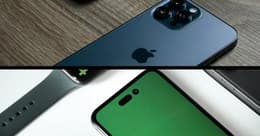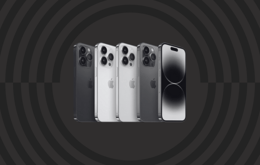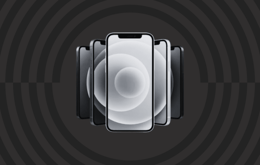
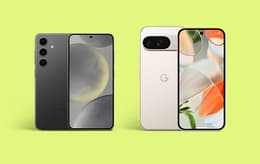
Google Pixel 9 Pro XL • Unlocked vs iPhone 14 • Unlocked

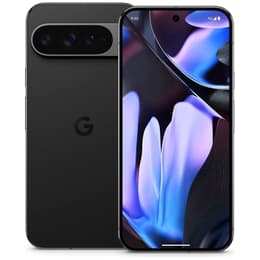
Google Pixel 9 Pro XL • Unlocked
Starting at

Refurbished price:$435.86

Versus $1,099.00 new

See options
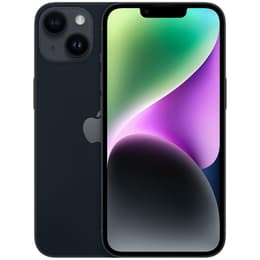
iPhone 14 • Unlocked
Starting at

Refurbished price:$256.00

Versus $629.00 new

See options

Ratings

The Google Pixel 9 Pro XL, released in August 2024, and the iPhone 14, launched in September 2022, represent distinct approaches to the premium smartphone experience. While the Pixel 9 Pro XL operates on Android 15 with a focus on advanced AI integration and a larger form factor, the iPhone 14 runs on iOS 16 (at launch) and emphasizes a streamlined user experience within Apple's ecosystem. These devices offer different strengths in terms of their display technology, camera capabilities, and software philosophies.

Scores

Durability

When considering the long-term usability of these devices, their release timelines and software support policies are key differentiators.

  • Release Timeline: The Google Pixel 9 Pro XL was released in August 2024, making it a newer device compared to the iPhone 14, which launched in September 2022. This difference in release date inherently provides the Pixel 9 Pro XL with a longer potential lifespan for receiving the latest software features and security updates.
  • Software Longevity: Google has committed to providing seven years of software updates for the Pixel 9 Pro XL, extending its support until Android 22. In contrast, Apple typically offers 5-7 years of major iOS updates for its iPhones, with the iPhone 14 expected to receive updates until approximately 2028 or 2029.
  • Repairability: The iPhone 14 initially received a favorable repairability assessment due to its internal redesign allowing easier access to components, but this score was later downgraded due to software restrictions on part pairing. The Pixel 9 Pro XL features a dual-entry design, which can simplify some repairs, but strong adhesives and screen fragility can still pose challenges for independent repairs.

Release Year

2024

2022

Last OS Compatibility

Yes

Yes

OS

Android

iOS

Foldable

No

No

Performance

Both smartphones are designed to handle daily tasks efficiently, but they differ in their underlying hardware and how they manage demanding applications.

  • Processing Power: The Pixel 9 Pro XL is equipped with Google's Tensor G4 processor, which is optimized for AI-driven tasks and provides smooth performance for multitasking and running various applications. The iPhone 14 utilizes Apple's A15 Bionic chip, known for its consistent and responsive performance across iOS applications and gaming.
  • Memory and Storage: The Pixel 9 Pro XL offers a substantial 16GB of RAM, contributing to its ability to keep many applications open simultaneously without slowdowns. The iPhone 14 comes with 6GB of RAM, which is sufficient for smooth operation within the iOS environment. Both devices offer various storage configurations, typically ranging from 128GB to 512GB, with the Pixel 9 Pro XL also offering a 1TB option.
  • Battery Behavior: The Pixel 9 Pro XL features a 5060 mAh battery, with user reports often indicating excellent endurance that can last beyond a full day of heavy use. The iPhone 14 has an estimated 3279 mAh battery, providing solid all-day usage for many users, though some have noted varying battery degradation over time.

Memory (GB)

16 GB

6 GB

Screen quality

The visual experience on these devices is shaped by their display technologies and specifications, impacting clarity, brightness, and smoothness.

  • Display Technology and Size: The Google Pixel 9 Pro XL features a larger 6.8-inch LTPO OLED display, offering more screen real estate for content consumption and productivity. The iPhone 14 comes with a 6.1-inch Super Retina XDR OLED display, providing a more compact form factor. Both OLED panels deliver deep blacks and vibrant colors.
  • Resolution and Brightness: The Pixel 9 Pro XL boasts a resolution of 2992x1344 pixels, resulting in a high pixel density for sharp visuals. It offers up to 2050 nits of HDR brightness and a peak brightness of 3000 nits, ensuring excellent visibility even in bright outdoor conditions. The iPhone 14 has a resolution of 2532x1170 pixels and a typical brightness of 800 nits, with a peak HDR brightness of 1200 nits.
  • Refresh Rate: The Pixel 9 Pro XL supports a 120Hz adaptive refresh rate, which contributes to smoother scrolling and more fluid animations. The iPhone 14 features a standard 60Hz refresh rate.

Resolution

1344 x 2992

1170 x 2532

Screen type

LTPO OLED

Super Retina XDR OLED

Audiovisual

Both smartphones offer capable camera systems, but they approach photography and videography with different hardware and software philosophies.

  • Rear Camera Systems: The Google Pixel 9 Pro XL is equipped with a versatile triple-camera setup, including a 50MP main sensor, a 48MP ultrawide lens, and a 48MP telephoto lens capable of 5x optical zoom and up to 30x Super Res Zoom. The iPhone 14 features an advanced dual-camera system with a 12MP main sensor and a 12MP ultrawide lens.
  • Photography Features: The Pixel 9 Pro XL leverages Google's computational photography with AI enhancements like Night Sight for improved low-light performance and Super Res Zoom for enhanced digital zoom. The iPhone 14 offers features like Cinematic Mode for video and Deep Fusion for detailed photos. Both devices deliver strong everyday photography results.
  • Video Recording and Front Camera: The Pixel 9 Pro XL supports 8K video recording and includes a 42MP front camera with autofocus. The iPhone 14 records 4K Dolby Vision HDR video and has a 12MP front camera.

Main camera

50 megapixels

12 megapixels

Front camera

42 megapixels

12 megapixels

Miscellaneous

Beyond core specifications, several practical elements contribute to the overall user experience and daily functionality of these devices.

  • Connectivity and Ports: Both the Pixel 9 Pro XL and the iPhone 14 support 5G connectivity for fast mobile data. The Pixel 9 Pro XL features a USB-C port, while the iPhone 14 uses a Lightning port.
  • Biometric Security: The Pixel 9 Pro XL incorporates an ultrasonic under-display fingerprint sensor for secure unlocking. The iPhone 14 relies on Face ID for facial recognition.
  • Build and Durability: The Pixel 9 Pro XL has an IP68 rating for water and dust resistance and features a durable build with a mid-plate for structural rigidity. The iPhone 14 also carries an IP68 rating and features a Ceramic Shield front cover for enhanced durability. The Pixel 9 Pro XL is larger and heavier at 162.8 x 76.6 x 8.5 mm and 221g, compared to the iPhone 14's 146.70 x 71.50 x 7.80 mm and 172g.

Weight

8 oz

6 oz

Screen size (inches)

6.8

6.1

Network

5G

5G

SIM card

Physical SIM + eSIM

eSIM

Carrier compatibility

Unlocked

Unlocked

User sentiment for the Google Pixel 9 Pro XL often highlights its exceptional battery life, advanced AI capabilities, and the versatility of its camera system, particularly the telephoto lens. Some users have noted that while the processor performs well in daily use, it may not always benchmark as highly as some competitors, and there have been occasional reports of battery degradation after software updates. The integration of Gemini AI is seen as promising, though some users have experienced minor software glitches or app optimization differences compared to iOS.

For the iPhone 14, users frequently praise its consistent and smooth performance, the reliability of iOS, and the quality of its dual-camera system for everyday photography and video. Common criticisms have included the standard 60Hz refresh rate display, which some find less fluid than higher refresh rate screens on other devices, and concerns about battery health degradation over time for some users.

Users prioritizing a larger display, extended software support, and advanced computational photography with a strong telephoto lens may find the Google Pixel 9 Pro XL well-suited to their needs. Its focus on AI features and a long update commitment makes it appealing for those seeking a future-ready Android experience. Conversely, users who value a more compact design, the consistent performance and ecosystem of iOS, and a proven track record of software stability might lean towards the iPhone 14. Both devices, when considered as quality-assured refurbished options, offer an eco-friendly alternative for consumers looking to make informed and sustainable choices.

See all articles

Our recent comparisons