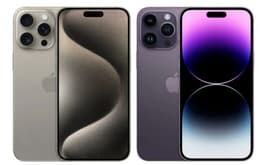
Google Pixel 9 Pro XL • Unlocked vs iPhone 14 Plus • Locked T-Mobile

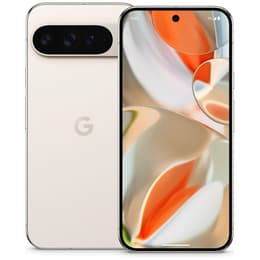
Google Pixel 9 Pro XL • Unlocked
Starting at

Refurbished price:$435.86

Versus $1,099.00 new

See options
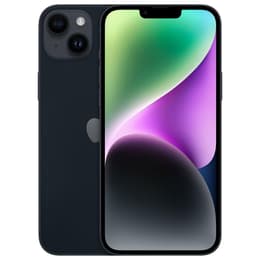
iPhone 14 Plus • Locked T-Mobile
Starting at

Refurbished price:$344.23

Versus $699.00 new

See options

Ratings

The Google Pixel 9 Pro XL (released in August 2024) and the iPhone 14 Plus (released in October 2022) represent distinct approaches to large-screen smartphones from their respective manufacturers. While both devices offer expansive displays and robust performance, the Pixel 9 Pro XL emphasizes advanced AI capabilities and a versatile camera system, whereas the iPhone 14 Plus focuses on a streamlined user experience and strong battery endurance. Both operate on their proprietary ecosystems, Android for the Pixel and iOS for the iPhone, offering different software philosophies and feature sets.

Scores

Durability

When considering the long-term usability of these devices, their release timelines and software support policies are key factors.

  • Release Timeline: The Google Pixel 9 Pro XL, launched in August 2024, is a newer device compared to the iPhone 14 Plus, which debuted in October 2022. This difference in release date inherently provides the Pixel with a longer potential lifespan for receiving the latest software features and security updates.
  • OS Support Duration: Google has committed to providing seven years of operating system and security updates for the Pixel 9 Pro XL, extending its software longevity significantly. The iPhone 14 Plus typically receives iOS updates for approximately five to six years from its release, meaning its software support will conclude sooner than that of the Pixel 9 Pro XL.
  • Durability Features: Both devices offer a high level of physical resilience. The iPhone 14 Plus features a Ceramic Shield front cover and an IP68 rating for water and dust resistance, allowing submersion up to 6 meters for 30 minutes. The Pixel 9 Pro XL also boasts an IP68 rating for dust and water resistance, capable of withstanding submersion up to 1.5 meters for 30 minutes, and its display is protected by Gorilla Glass Victus 2.

Release Year

2024

2022

Last OS Compatibility

Yes

Yes

OS

Android

iOS

Foldable

No

No

Performance

The performance of a smartphone is crucial for daily tasks, from navigating applications to demanding multimedia use.

  • Processing Power: The Google Pixel 9 Pro XL is equipped with the Tensor G4 processor and 16GB of RAM, designed to handle intensive applications, advanced AI features, and extensive multitasking smoothly. The iPhone 14 Plus utilizes the A15 Bionic chip with a 5-core GPU and 6GB of RAM, providing responsive performance for everyday usage, gaming, and video editing.
  • System Responsiveness: Users of the Pixel 9 Pro XL can expect a fluid experience, particularly with AI-driven tasks and complex computations, benefiting from its dedicated processing power and ample RAM. The iPhone 14 Plus delivers consistent and efficient performance across its iOS ecosystem, ensuring applications launch quickly and run without significant delays.
  • Storage Options: Both devices offer various storage configurations to suit different user needs. The Pixel 9 Pro XL is available with 128GB, 256GB, 512GB, and 1TB storage options. The iPhone 14 Plus also comes in 128GB, 256GB, and 512GB capacities.

Memory (GB)

16 GB

6 GB

Screen quality

The display is a primary interface for smartphone interaction, and both devices offer large, vibrant viewing experiences with distinct characteristics.

  • Display Technology and Size: The Google Pixel 9 Pro XL features a 6.8-inch QHD+ LTPO OLED display, offering sharp visuals and dynamic color reproduction. The iPhone 14 Plus comes with a 6.7-inch Super Retina XDR OLED display, known for its deep blacks and vibrant colors.
  • Refresh Rate and Brightness: The Pixel 9 Pro XL's display supports an adaptive refresh rate ranging from 1Hz to 120Hz, contributing to smoother scrolling and more fluid animations, and can reach a peak brightness of 3000 nits for excellent outdoor visibility. In contrast, the iPhone 14 Plus has a fixed 60Hz refresh rate and a typical brightness of 800 nits, with a peak HDR brightness of 1200 nits.
  • Clarity and Viewing Experience: Both screens provide high pixel densities, ensuring text and images appear clear and detailed. The larger size of both displays enhances the viewing experience for multimedia content and multitasking, though the Pixel's higher resolution and adaptive refresh rate may offer a more refined visual fluidity.

Resolution

1344 x 2992

1284 x 2778

Screen type

LTPO OLED

Super Retina XDR OLED

Audiovisual

Both smartphones are equipped with advanced camera systems designed to capture high-quality photos and videos, though they approach imaging with different hardware configurations.

  • Rear Camera System: The Google Pixel 9 Pro XL features a triple-camera setup on the rear, including a 50-megapixel primary sensor, a 48-megapixel ultrawide lens, and a 48-megapixel telephoto lens with 5x optical zoom. The iPhone 14 Plus has a dual-camera system, comprising a 12-megapixel wide-angle lens with sensor-shift optical image stabilization and a 12-megapixel ultrawide lens.
  • Photography Performance: The Pixel 9 Pro XL's higher megapixel counts and dedicated telephoto lens provide greater flexibility for zooming and capturing detailed images, with Google's computational photography enhancing overall image quality, especially in challenging conditions. The iPhone 14 Plus offers improved low-light performance compared to its predecessors, with its larger sensor and wider aperture on the main camera contributing to brighter and more detailed shots.
  • Video Capabilities and Front Camera: The Pixel 9 Pro XL supports 8K video recording at 30 frames per second and features a 42-megapixel front-facing camera capable of HDR photos and video. The iPhone 14 Plus records video up to 4K at 60 frames per second and includes features like Cinematic mode for depth-of-field effects and Action mode for stabilized video capture. Its 12-megapixel TrueDepth front camera now includes autofocus for sharper selfies.

Main camera

50 megapixels

12 megapixels

Front camera

42 megapixels

12 megapixels

Miscellaneous

Beyond core performance and display, several practical elements contribute to the overall user experience of these devices.

  • Connectivity and Ports: Both the Google Pixel 9 Pro XL and the iPhone 14 Plus support 5G cellular connectivity, enabling fast mobile data speeds. The iPhone 14 Plus uses the Lightning port for charging and data transfer, while the Pixel 9 Pro XL likely features a USB-C port, which is standard for modern Android devices. Neither phone includes a traditional 3.5mm headphone jack.
  • Biometric Security: The Pixel 9 Pro XL incorporates an ultrasonic under-display fingerprint sensor for secure unlocking and authentication. The iPhone 14 Plus relies on Face ID, Apple's facial recognition system, for biometric security.
  • Physical Design and Handling: The Pixel 9 Pro XL measures 162.8 x 76.6 x 8.5mm, while the iPhone 14 Plus measures 160.8 x 78.1 x 7.8mm. The iPhone 14 Plus weighs 203 grams. Both are large devices, offering substantial screen real estate, which can impact one-handed use. The iPhone 14 Plus features an aluminum case, while the Pixel 9 Pro XL's build materials are not explicitly detailed but are generally premium.
  • Unique Features: The Pixel 9 Pro XL integrates Google's Gemini AI directly into its operating system, offering advanced intelligent assistance. The iPhone 14 Plus includes safety features like Crash Detection and Emergency SOS via satellite, providing critical assistance in emergencies.

Weight

8 oz

7 oz

Screen size (inches)

6.8

6.7

Network

5G

5G

SIM card

Physical SIM + eSIM

eSIM

Carrier compatibility

Unlocked

T-Mobile

User feedback for the iPhone 14 Plus often highlights its exceptional battery life as a significant advantage, with many reporting it can comfortably last through a full day of heavy use, and sometimes even longer. The large display is also frequently praised for enhancing media consumption and general usability. Common criticisms sometimes point to the 60Hz refresh rate as a drawback when compared to competitors offering smoother 120Hz displays. The camera system is generally well-regarded for its consistent performance and new features like Action Mode, though some users note the absence of a telephoto lens found on Pro models.

For the Google Pixel 9 Pro XL, early user sentiment often focuses on the integration of advanced AI capabilities and the versatility of its triple-camera system, particularly the dedicated telephoto lens. The extended software support of seven years is also a significant positive, offering long-term value and up-to-date features. The high refresh rate and peak brightness of its display are typically well-received, providing a premium visual experience.

Users prioritizing a device with the longest possible software support and cutting-edge AI features, coupled with a highly versatile camera system including optical zoom, may find the Google Pixel 9 Pro XL well-suited to their needs. Conversely, users who value a proven ecosystem with robust safety features, a consistently excellent battery life, and a straightforward, intuitive interface might lean towards the iPhone 14 Plus. Both devices offer a large-screen experience, making the choice often come down to preference for operating system, specific camera capabilities, and the emphasis on AI versus established reliability. For those considering a more sustainable choice, both models are available as quality-assured refurbished options.
See all articles

Our recent comparisons