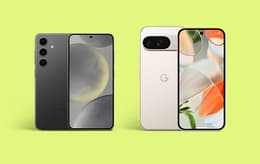
Google Pixel 9 Pro • Unlocked vs iPhone 14 Plus • Locked T-Mobile

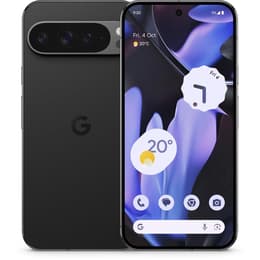
Google Pixel 9 Pro • Unlocked
Starting at

Refurbished price:$435.86

Versus $899.99 new

See options
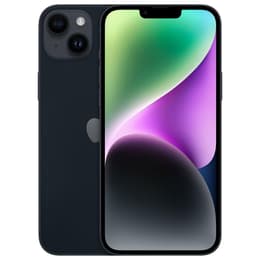
iPhone 14 Plus • Locked T-Mobile
Starting at

Refurbished price:$344.23

Versus $699.00 new

See options

Ratings

The Google Pixel 9 Pro, released in late 2024, and the iPhone 14 Plus, launched in late 2022, represent distinct approaches to the large-screen smartphone experience. While both offer expansive displays and robust performance, the Pixel 9 Pro emphasizes advanced AI capabilities and computational photography, running on Android, whereas the iPhone 14 Plus focuses on a streamlined user experience within the iOS ecosystem, prioritizing consistent performance and a strong battery life.

Scores

Durability

When considering the long-term usability of a smartphone, factors like software support and physical resilience are key. The Pixel 9 Pro and iPhone 14 Plus offer different timelines and approaches to longevity.

  • Software Updates: The Google Pixel 9 Pro is expected to receive seven years of major Android updates and security patches, offering extended software longevity. The iPhone 14 Plus, released in 2022, typically receives iOS updates for approximately 5-6 years from its launch, meaning it will likely see fewer future OS versions compared to the Pixel 9 Pro.
  • Physical Durability: Both devices feature durable designs. The iPhone 14 Plus incorporates Ceramic Shield on the front and an aluminum design, along with IP68 water and dust resistance. The Pixel 9 Pro also uses Corning Gorilla Glass Victus 2 for screen protection and a glass back, with an IP68 rating for dust and water resistance.
  • Repairability: While specific repairability scores can vary, both manufacturers offer repair services. Users seeking an eco-friendly alternative might consider quality-assured refurbished options for either model, extending their practical lifespan.

Release Year

2024

2022

Last OS Compatibility

Yes

Yes

OS

Android

iOS

Foldable

No

No

Performance

The performance of a smartphone is crucial for daily tasks, from browsing to demanding applications. Both the Pixel 9 Pro and iPhone 14 Plus deliver smooth experiences, though with different underlying architectures.

  • Processing Power: The Google Pixel 9 Pro is powered by the Tensor G4 chip, designed by Google, which focuses on efficient AI and machine learning tasks, contributing to smooth app loading and responsive multitasking. The iPhone 14 Plus utilizes the A15 Bionic chip, known for its strong general performance and graphical capabilities, ensuring fluid navigation and capable handling of games and intensive applications.
  • Multitasking and Storage: The Pixel 9 Pro typically comes with 16GB of RAM, supporting extensive multitasking and keeping many apps open in the background without slowdowns. The iPhone 14 Plus features 6GB of RAM, which, combined with iOS's efficient memory management, provides a smooth experience for most users. Both devices offer various internal storage options, ranging from 128GB to 512GB, with the Pixel 9 Pro also offering a 1TB option.
  • Battery Behavior: The iPhone 14 Plus is recognized for its strong battery life, with a 4325 mAh battery providing up to 26 hours of video playback, often lasting a full day or more for many users. The Pixel 9 Pro, with a 4700 mAh battery, also offers excellent endurance, with users reporting solid screen-on times even with heavy use.

Memory (GB)

16 GB

6 GB

Screen quality

The display is a primary interface for any smartphone, and both the Pixel 9 Pro and iPhone 14 Plus offer large, vibrant screens for an engaging visual experience.

  • Display Technology and Size: The iPhone 14 Plus features a 6.7-inch Super Retina XDR OLED display, providing deep blacks and vibrant colors. The Pixel 9 Pro comes with a 6.3-inch LTPO OLED display, offering rich visuals and adaptive refresh rates.
  • Resolution and Brightness: The Pixel 9 Pro's display has a resolution of 2856 x 1280 pixels at 495 ppi, with a peak brightness of up to 3000 nits, making it highly visible even in bright outdoor conditions. The iPhone 14 Plus offers a resolution of 2778 x 1284 pixels at 458 ppi, with typical brightness up to 800 nits and peak brightness up to 1200 nits for HDR content.
  • Refresh Rate: The Pixel 9 Pro features a 120Hz adaptive refresh rate, which allows for smoother scrolling and more fluid animations. The iPhone 14 Plus has a standard 60Hz refresh rate, which is sufficient for most daily interactions but less fluid than higher refresh rate displays.

Resolution

1280 x 2856

1284 x 2778

Screen type

LTPO OLED

Super Retina XDR OLED

Audiovisual

Both smartphones offer advanced camera systems, but they excel in different areas, catering to varying photography preferences.

  • Rear Camera System: The Google Pixel 9 Pro features a versatile triple-camera setup, including a 50MP main sensor, a 48MP ultrawide lens, and a 48MP telephoto lens with 5x optical zoom. It leverages Google's computational photography for features like Super Res Zoom and Night Sight. The iPhone 14 Plus has a dual-camera system with a 12MP main camera and a 12MP ultrawide camera, both offering good performance in various lighting conditions.
  • Photography Features: The Pixel 9 Pro emphasizes AI-driven features such as Video Boost for enhanced video quality up to 8K, Night Sight Video, and advanced Pro Controls for manual adjustments. The iPhone 14 Plus benefits from Apple's Photonic Engine for improved low-light performance and features like Cinematic mode for video with shallow depth of field, and Action mode for stabilized video.
  • Front Camera: The Pixel 9 Pro is equipped with a 42MP front camera with autofocus, designed for sharp selfies and improved low-light performance. The iPhone 14 Plus includes a 12MP TrueDepth front camera with autofocus and a wider aperture for better low-light selfies and Face ID functionality.

Main camera

50 megapixels

12 megapixels

Front camera

42 megapixels

12 megapixels

Miscellaneous

Beyond core performance and display, several other features contribute to the overall user experience and practical utility of these devices.

  • Connectivity and Ports: Both devices support 5G connectivity for fast mobile data. The iPhone 14 Plus uses a Lightning port for charging and data transfer, while the Pixel 9 Pro features a USB-C port. The iPhone 14 Plus supports Wi-Fi 6 and Bluetooth 5.3. The Pixel 9 Pro supports Wi-Fi 6E/7 and Bluetooth 5.3.
  • Biometric Security: The iPhone 14 Plus relies on Face ID for secure facial recognition. The Pixel 9 Pro incorporates an in-display fingerprint sensor for biometric authentication.
  • Design and Build: The iPhone 14 Plus has a glass front and back with an aluminum design, weighing 203 grams. The Pixel 9 Pro features a glass front and back (Gorilla Glass Victus 2) with a polished metal frame, weighing 199 grams. The Pixel 9 Pro also includes an Ultra Wideband (UWB) chip.

Weight

7 oz

7 oz

Screen size (inches)

6.3

6.7

Network

5G

5G

SIM card

Physical SIM + eSIM

eSIM

Carrier compatibility

Unlocked

T-Mobile

Connector

USB-C

Lightning

The Google Pixel 9 Pro and iPhone 14 Plus cater to users with distinct priorities. The Pixel 9 Pro, with its later release, offers cutting-edge AI features, a highly capable triple-camera system with advanced computational photography, and an extended software support commitment. Users who prioritize the latest Android innovations, advanced camera controls, and a longer software update cycle will find the Pixel 9 Pro well-suited to their needs. Its high refresh rate display and powerful Tensor G4 chip also appeal to those seeking a responsive and intelligent smartphone experience.

Conversely, the iPhone 14 Plus provides a reliable and consistent experience within Apple's iOS ecosystem. Its strengths lie in its robust battery life, a large and vibrant OLED display, and a user-friendly interface. Users who value a straightforward, dependable smartphone with excellent battery endurance, a strong focus on video capabilities like Cinematic and Action modes, and integration with Apple's services will likely lean toward the iPhone 14 Plus. While the iPhone 14 Plus has a standard refresh rate, its overall performance remains smooth for everyday use.

Ultimately, the choice between these two devices depends on individual preferences for operating system, camera features, and long-term software commitment. Both models are available as quality-assured refurbished options, providing a sustainable choice for consumers.
See all articles

Our recent comparisons