iPad Pro (2015, A9 series) vs iPad Pro (2018, A12 series)

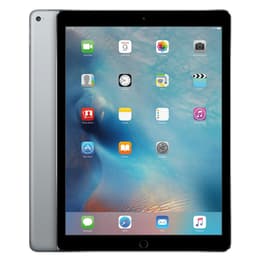
iPad Pro (2015, A9 series)
Starting at

Refurbished price:$181.00

Versus $899.00 new

See options
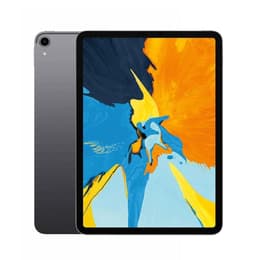
iPad Pro (2018, A12 series)
Starting at

Refurbished price:$269.00

Versus $949.00 new

See options

Ratings

The iPad Pro 2015 (A9 Series) and the iPad Pro 2018 (A12 Series) represent distinct generations within Apple's professional tablet lineup. Released three years apart, these devices showcase significant advancements in design, processing power, and feature sets. While both offer a premium tablet experience running iPadOS, the 2018 model introduced a modern aesthetic and substantial internal upgrades that differentiate it from its predecessor.

Scores

Durability

The longevity of these iPad Pro models is influenced by their release timelines and ongoing software support.

  • Release Timeline: The iPad Pro 2015, launched in November 2015, is an older device compared to the iPad Pro 2018, which debuted in October 2018. This age difference directly impacts their expected practical lifespan.
  • Software Support: The iPad Pro 2015 launched with iOS 9 and received major iPadOS updates up to iPadOS 16.7.7, meaning it is no longer receiving the latest iPadOS versions. Users report it still functions well for basic tasks on its last supported OS. In contrast, the iPad Pro 2018, starting with iOS 12, continues to receive current iPadOS updates, extending its software longevity significantly further into the future.
  • Physical Durability: Both models feature robust aluminum unibody constructions. While the 2018 model introduced a thinner design, both are generally durable, with physical lifespan often depending on individual care and usage.

Release Year

2015

2018

Last OS Compatibility

No

Yes

OS

iPadOS

iPadOS

Maximum Operating System supported

iPadOS 16

iPadOS 18

Performance

Performance is a key area where the three-year gap between these models becomes evident, particularly in handling demanding applications and multitasking.

  • Processing Power: The iPad Pro 2015, powered by its A9X chip, capably handles everyday tasks, web browsing, and many productivity applications. However, the iPad Pro 2018 features the A12X Bionic chip, which offers a substantial increase in processing and graphics capabilities. This translates to noticeably smoother performance for intensive tasks like video editing, graphic design, and advanced gaming.
  • Multitasking and Responsiveness: The iPad Pro 2018 generally provides a more fluid multitasking experience, especially with multiple demanding apps open simultaneously, partly due to its more powerful processor and, in some configurations, increased RAM (up to 6GB in 1TB models compared to 4GB in the 2015 model). The 2015 model may exhibit some slowdown with newer, more resource-intensive applications.
  • Battery Behavior: Both models are designed to offer up to 10 hours of battery life for web surfing or video playback on Wi-Fi. Real-world battery performance can vary based on usage patterns and the age of the device's battery.

Memory (GB)

4 GB

4 GB

Processor

Apple A9X

Apple A12X Bionic

Screen quality

Both iPad Pro models offer high-quality displays, but the 2018 version incorporates several advancements for an enhanced visual experience.

  • Display Technology and Resolution: The iPad Pro 2015 features an LED-backlit IPS LCD Retina display with a resolution of 2732 x 2048 pixels on the 12.9-inch model, resulting in a pixel density of 264 ppi. The iPad Pro 2018 also uses an IPS LCD, but it introduces the Liquid Retina display, maintaining the same resolution and pixel density on the 12.9-inch model while offering a more edge-to-edge design.
  • Brightness and Color: The 2018 model's Liquid Retina display offers improved color accuracy with Wide Color (P3) support and higher peak brightness (600 nits) compared to the 2015 model's 400 nits, making it more suitable for outdoor use and HDR content. The 2018 model also includes True Tone technology, which adjusts the display's white balance to match the ambient light.
  • Refresh Rate: The iPad Pro 2018 features ProMotion technology, providing an adaptive refresh rate of up to 120Hz for smoother scrolling and more responsive interactions, particularly noticeable with the Apple Pencil. The 2015 model does not include ProMotion technology.

Resolution

2048 x 2732

2388 x 1668

True Tone

No

Yes

Pro-Motion

No

Yes

Screen type

Retina display

Liquid Retina display

Pixel density

264ppp

264ppp

Brightness

400 nits brightness

600 nits brightness

Sound quality

Speakers

Four speaker audio

Four speaker audio

Audiovisual

The camera systems on these iPad Pro generations show a clear progression, with the 2018 model offering more advanced capabilities for both photography and video.

  • Rear Camera: The iPad Pro 2015 is equipped with an 8-megapixel iSight camera capable of recording 1080p video. The iPad Pro 2018 significantly upgrades this to a 12-megapixel camera with a wider f/1.8 aperture, enabling better low-light performance and the ability to record 4K video at up to 60 frames per second.
  • Front Camera: For video calls and selfies, the 2015 model has a 1.2-megapixel FaceTime HD camera. The 2018 model features a 7-megapixel TrueDepth front camera, which supports Portrait Mode selfies and enables Face ID for secure authentication.
  • Audio Quality: Both devices feature a quad-speaker audio system for an immersive media consumption experience. The 2018 model also includes improved microphones for clearer audio capture during recordings and video calls.

Miscellaneous

Beyond core performance and display, several practical features and design elements distinguish these two iPad Pro models.

  • Connectivity and Ports: The iPad Pro 2015 utilizes Apple's proprietary Lightning connector for charging and accessories. The iPad Pro 2018 made a significant shift to a USB-C port, offering greater versatility for connecting to external displays, storage devices, and other peripherals, and even charging other devices. Both support Wi-Fi and cellular connectivity options.
  • Biometric Authentication: The 2015 model relies on Touch ID, integrated into the home button, for fingerprint-based authentication. The 2018 model replaced the home button with Face ID, allowing for facial recognition to unlock the device and authenticate purchases.
  • Apple Pencil Support: The iPad Pro 2015 supports the 1st Generation Apple Pencil. The iPad Pro 2018 introduced support for the 2nd Generation Apple Pencil, which magnetically attaches to the side of the tablet for charging and storage, and offers gesture controls.
  • Design and Dimensions: The 2018 iPad Pro features a more modern, edge-to-edge display design with thinner bezels and a thinner profile (5.9mm) compared to the 2015 model, which has more prominent bezels and a home button. The 12.9-inch 2018 model is also lighter than its 2015 counterpart.

Weight

25 oz

16 oz

Width

8.6 in

7 in

Height

12 in

9.7 in

Depth

0.2 in

0.2 in

Screen size (inches)

12.9

11

Network

Wi-Fi

Wi-Fi

Carrier compatibility

Without SIM Port

Without SIM Port

Wi-Fi technology

Wi-Fi 6 802.11a/b/g/n/ac

Wi-Fi 6 802.11a/b/g/n/ac

Bluetooth Version

Bluetooth 4.2

Bluetooth 5.0

Face ID

No

Yes

Touch ID

Yes

No

Connector

Lightning connector

USB Type-C

User feedback on platforms like Reddit indicates that the iPad Pro 2015 is still considered a capable device for basic tasks such as media consumption, light browsing, and note-taking, with its display and sound quality often praised. However, common criticisms revolve around its aging performance for demanding applications and its limited software update longevity, with many users noting it will not receive the latest iPadOS versions. The Lightning port is also seen as a limitation compared to newer standards.

The iPad Pro 2018, conversely, is frequently lauded for its powerful performance, modern design, and the versatility offered by its USB-C port and 2nd Generation Apple Pencil support. Users appreciate its ability to handle intensive creative and productivity workflows, with many considering it a device that has aged well due to its robust A12X Bionic chip. Some early concerns about potential bending issues were noted, though this was not a widespread problem.

Users prioritizing a modern design, extended software support, and high performance for creative work, demanding applications, or extensive multitasking will find the iPad Pro 2018 well-suited to their needs. Its USB-C connectivity and support for the 2nd Gen Apple Pencil also make it a more versatile tool for professionals and students. For users primarily needing a tablet for media consumption, light productivity, or as a secondary device, the iPad Pro 2015 can still serve its purpose, especially if software updates are not a primary concern. Both models are available as quality-assured refurbished options, providing an eco-friendly alternative for those seeking to extend the life cycle of electronic products.


See all articles

Our recent comparisons