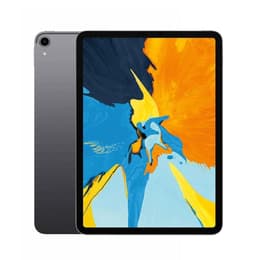
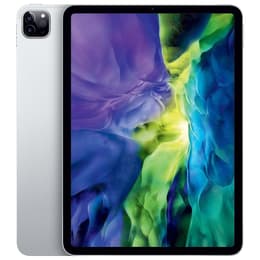

iPad Pro (2018, A12 series) vs iPad Pro (2020, A12 series)

iPad Pro (2018, A12 series)
Starting at

Refurbished price:$269.00

Versus $949.00 new

See options
iPad Pro (2020, A12 series)
Starting at

Refurbished price:$370.99

Versus $899.00 new

See options

Ratings

The iPad Pro 2018 and iPad Pro 2020 are two generations of Apple's high-performance tablet line, released in late 2018 and early 2020, respectively. While they share a similar design philosophy and core user experience, the 2020 model introduced several enhancements, particularly in its camera system and internal components. Both devices operate on iPadOS, offering a consistent software environment for productivity and creative tasks.

Scores

Durability

When considering the long-term usability of these tablets, their release timelines and software support are key factors. The iPad Pro 2018, launched in October 2018, has received consistent iPadOS updates since its release. The iPad Pro 2020, released in March 2020, benefits from a later launch date, typically translating to an additional year of major iPadOS updates compared to its predecessor.

  • Software Longevity: The iPad Pro 2020 is expected to receive major iPadOS updates for a longer duration, potentially extending its functional lifespan by approximately one year compared to the 2018 model.
  • Practical Lifespan: Both models are built with durable aluminum unibody constructions, designed for sustained use. Users often report that these devices maintain strong performance for several years, making either a viable option for extended use, especially as a quality-assured refurbished option.
  • Repairability: Both generations share similar design principles, which generally means comparable ease of repair for common components, contributing to their overall practical lifespan.

Release Year

2018

2020

Last OS Compatibility

Yes

Yes

OS

iPadOS

iPadOS

Maximum Operating System supported

iPadOS 18

iPadOS 18

Performance

The performance capabilities of the iPad Pro 2018 and 2020 are robust, designed to handle demanding applications and multitasking. While both offer a fluid user experience, the 2020 model features a slightly refined internal architecture.

  • Processing Power: The iPad Pro 2018 is powered by a capable processor that handles complex applications, graphic-intensive games, and seamless multitasking. The iPad Pro 2020 features an updated processor with an additional graphics core and improved thermal management, which can provide a marginal advantage in sustained heavy workloads like 4K video editing or advanced augmented reality applications.
  • Multitasking and Responsiveness: The 2018 model typically comes with 4GB of RAM, with a 6GB option for the 1TB storage configuration. The 2020 model standardizes 6GB of RAM across all storage options, which can offer a smoother experience when running numerous applications simultaneously or working with very large files.
  • Storage Options: The iPad Pro 2018 starts with a 64GB storage option, while the iPad Pro 2020 begins at 128GB, offering more base storage for users. Both models are available with higher storage capacities up to 1TB.

Memory (GB)

4 GB

6 GB

Processor

Apple A12X Bionic

Apple A12Z Bionic

Screen quality

Both iPad Pro generations feature advanced display technology, providing a high-quality visual experience that remains consistent across the models.

  • Display Technology: Both the 2018 and 2020 iPad Pro models utilize a Liquid Retina IPS LCD display. This technology delivers accurate colors and wide viewing angles, suitable for creative work and media consumption.
  • Visual Smoothness: Both displays incorporate ProMotion technology, enabling an adaptive refresh rate of up to 120Hz. This results in exceptionally smooth scrolling, responsive touch input, and a fluid experience when interacting with content, particularly noticeable in drawing and gaming.
  • Clarity and Brightness: Both models offer a high resolution, providing sharp text and detailed images. They also feature True Tone for automatic white balance adjustment and support a wide P3 color gamut, along with a peak brightness of 600 nits, ensuring good visibility in various lighting conditions.

Resolution

2388 x 1668

2388 x 1668

True Tone

Yes

Yes

Pro-Motion

Yes

Yes

Screen type

Liquid Retina display

Liquid Retina display

Pixel density

264ppp

264ppp

Brightness

600 nits brightness

600 nits brightness max

Sound quality

Speakers

Four speaker audio

Four speaker audio

Audiovisual

The camera systems received notable upgrades in the 2020 iPad Pro, expanding its capabilities beyond the 2018 model, particularly for augmented reality and wide-angle photography.

  • Rear Camera System: The iPad Pro 2018 features a single 12-megapixel wide-angle rear camera. The iPad Pro 2020 introduces a dual-camera setup, adding a 10-megapixel ultrawide lens alongside the 12-megapixel wide-angle camera, offering more versatility for capturing different perspectives.
  • LiDAR Scanner: Exclusive to the 2020 model is the inclusion of a LiDAR scanner. This technology enhances depth sensing, significantly improving augmented reality (AR) experiences and enabling faster, more accurate focus in low-light conditions.
  • Audio and Video Recording: Both models support 4K video recording. The 2020 iPad Pro also features "studio-quality" microphones, which can provide clearer audio capture for video recording, calls, and voice memos compared to the 2018 model.

Miscellaneous

Beyond core performance and display, several practical features differentiate these two iPad Pro models, impacting connectivity, accessory compatibility, and overall user interaction.

  • Connectivity: The iPad Pro 2018 supports Wi-Fi 5 (802.11ac), providing reliable wireless internet. The iPad Pro 2020 upgrades to Wi-Fi 6 (802.11ax), which offers faster speeds and improved performance in crowded network environments, beneficial for users with compatible routers. Both models include Bluetooth 5.0 for connecting accessories.
  • Ports and Biometrics: Both generations feature a versatile USB-C port for charging, data transfer, and connecting external accessories. For secure authentication, both rely on Face ID, allowing for convenient unlocking and secure purchases.
  • Design and Accessories: The physical design of both models is largely identical, characterized by flat edges and an all-screen front. Both are compatible with the second-generation Apple Pencil. The Magic Keyboard, with its integrated trackpad and backlit keys, is also compatible with both the 2018 and 2020 iPad Pro models, enhancing their laptop-like functionality.

Weight

16 oz

16 oz

Width

7 in

7 in

Height

9.7 in

9.7 in

Depth

0.2 in

0.2 in

Screen size (inches)

11

11

Network

Wi-Fi

Wi-Fi

Carrier compatibility

Without SIM Port

Without SIM Port

Wi-Fi technology

Wi-Fi 6 802.11a/b/g/n/ac

Wi-Fi 6 802.11ax

Bluetooth Version

Bluetooth 5.0

Bluetooth 5.0

Face ID

Yes

Yes

Touch ID

No

No

Connector

USB Type-C

USB Type-C

The iPad Pro 2018 and 2020 both offer a premium tablet experience, excelling in performance, display quality, and design. User sentiment often highlights the 2018 model as still highly capable for most tasks, with many users on forums like Reddit noting its continued strong performance and excellent display. Common praise for the 2018 model centers on its enduring speed and the fluidity provided by its ProMotion display, making it a solid choice for general use, creative work, and media consumption.

The 2020 iPad Pro, while sharing many core features, introduces refinements that cater to specific user needs. Its enhanced camera system with an ultrawide lens and LiDAR scanner is frequently cited as a significant advantage for those interested in augmented reality applications, 3D scanning, or more versatile photography and videography. The upgrade to Wi-Fi 6 and the standardized 6GB of RAM across all configurations also contribute to a slightly more future-proof device, particularly for users who prioritize the latest connectivity standards and robust multitasking.

Users prioritizing advanced camera capabilities, especially for AR or wide-angle shots, and those seeking the latest wireless connectivity, may find the iPad Pro 2020 better suited to their needs. Conversely, users primarily focused on general productivity, content consumption, and creative tasks that don't heavily rely on the newer camera features will find the iPad Pro 2018 remains a highly capable device. Both models represent a strong choice, and considering a quality-assured refurbished option for either can provide an excellent balance of performance and value.

See all articles

Our recent comparisons