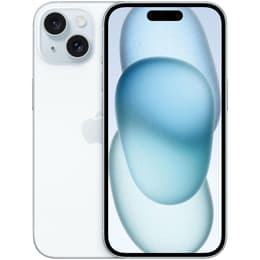
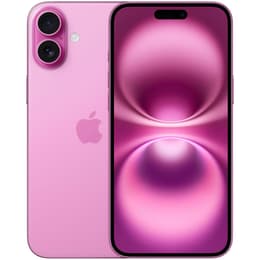

iPhone 15 • Unlocked vs iPhone 16 Plus • Unlocked

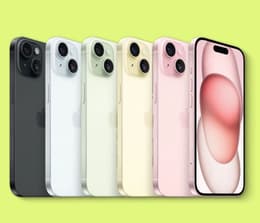
iPhone 15 • Unlocked
Starting at

Refurbished price:$376.00

Versus $729.00 new

See options
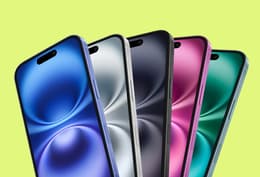
iPhone 16 Plus • Unlocked
Starting at

Refurbished price:$575.98

Versus $829.00 new

See options

Ratings

The iPhone 15, released in September 2023, and the iPhone 16 Plus, launched in September 2024, represent two consecutive generations of Apple's smartphone lineup. While both operate on the iOS platform and share a similar design philosophy, the iPhone 16 Plus introduces a larger form factor, an updated internal processor, and enhanced features that distinguish it from its predecessor.

Scores

Durability

When considering the practical lifespan of these devices, several factors come into play, including software support, physical durability, and battery longevity.

  • Software Longevity: The iPhone 15, having been released in 2023, is expected to receive iOS updates for approximately 5-6 years from its launch. The iPhone 16 Plus, being a year newer (2024 release), will benefit from an additional year of software support, extending its functional lifespan in terms of access to the latest features and security updates.
  • Physical Durability: Both models feature a Ceramic Shield front cover and an IP68 rating for dust and water resistance, indicating a similar level of protection against environmental elements. The iPhone 15 utilizes an aluminum design with a color-infused glass back. User experiences with the iPhone 15 suggest its aluminum frame holds up well in bend tests, though the curved edge design might expose the glass more during drops compared to older models. The iPhone 16 Plus maintains a similar durable design.
  • Battery Lifespan: Apple has indicated that the iPhone 15 series batteries are designed to retain 80% of their original capacity after 1000 charge cycles, a significant improvement over previous generations. While specific long-term data for the iPhone 16 Plus is still emerging, it is expected to offer comparable or improved battery longevity due to its newer components and larger capacity.

Release Year

2023

2024

Last OS Compatibility

Yes

Yes

Foldable

No

No

Performance

Performance is a key area where the newer iPhone 16 Plus offers advancements over the iPhone 15, particularly in processing power and multitasking capabilities.

  • Processing Power: The iPhone 15 is equipped with a capable current-generation processor that handles everyday applications, web browsing, and moderate gaming smoothly. The iPhone 16 Plus features a newer generation processor, which is expected to deliver a noticeable increase in processing speed and graphical performance, making it more adept at handling demanding applications, complex computations, and graphically intensive games with greater efficiency.
  • Multitasking and Responsiveness: The iPhone 15 comes with 6GB of RAM, providing a fluid experience for typical multitasking. The iPhone 16 Plus is equipped with 8GB of RAM, which allows for more applications to run simultaneously in the background without slowdowns and contributes to an overall more responsive user interface, especially during rapid app switching or heavy usage.
  • Battery Behavior: The iPhone 15 offers up to 20 hours of video playback. The iPhone 16 Plus, with its larger physical size, accommodates a larger battery capacity (4674 mAh compared to the iPhone 15 Plus's 4383 mAh), resulting in extended usage times. Users of the iPhone 16 Plus can expect up to 27 hours of offline video playback, often translating to 1.5 to 2 days of heavy use for many individuals.

Memory (GB)

6 GB

8 GB

Screen quality

Both devices offer high-quality visual experiences, but the iPhone 16 Plus provides a larger display, which can impact media consumption and productivity.

  • Display Technology and Size: The iPhone 15 features a 6.1-inch Super Retina XDR OLED display, offering deep blacks and vibrant colors. The iPhone 16 Plus, designed for users who prefer a larger viewing area, comes with a 6.7-inch Super Retina XDR OLED display. Both displays feature the Dynamic Island at the top, integrating alerts and activities seamlessly.
  • Resolution and Clarity: Both models provide a high pixel density of approximately 460 pixels per inch (PPI), ensuring sharp text and detailed images. The iPhone 15 has a resolution of 2556x1179 pixels, while the larger iPhone 16 Plus offers a resolution of 2796x1290 pixels, maintaining consistent visual clarity across their respective screen sizes.
  • Brightness and Refresh Rate: Both devices achieve a typical brightness of 1000 nits, a peak HDR brightness of 1600 nits, and an impressive 2000 nits peak brightness for outdoor visibility, ensuring content remains clear even in bright sunlight. Neither the iPhone 15 nor the iPhone 16 Plus feature a high refresh rate display, both maintaining a standard 60Hz refresh rate.

Resolution

1179 x 2556

1290 x 2796

Screen type

Super Retina XDR OLED

Super Retina XDR OLED

Audiovisual

The camera systems on both the iPhone 15 and iPhone 16 Plus are designed to capture high-quality photos and videos, with the newer model introducing specific enhancements.

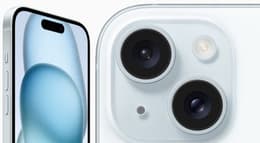
  • Main Camera System: Both the iPhone 15 and iPhone 16 Plus feature an advanced dual-camera system with a 48-megapixel main sensor and a 12-megapixel ultra-wide lens. The 48MP main camera on both supports sensor-shift optical image stabilization and offers a 2x telephoto option by cropping the high-resolution sensor. The iPhone 16 Plus introduces a vertical arrangement for its rear cameras, a design change that enables the capture of Spatial Videos, optimized for viewing on compatible extended reality devices.
  • Photography Features: Both models include features like Photonic Engine, Deep Fusion, Smart HDR, Night mode, and next-generation portraits with Focus and Depth Control, allowing for versatile photography in various lighting conditions. The iPhone 16 Plus also integrates a new 'Camera Control' button, providing quick access to camera functions.
  • Video Recording Quality: Both devices are capable of recording 4K Dolby Vision video at up to 60 frames per second and offer Cinematic mode for depth-of-field effects. The iPhone 16 Plus's ability to capture Spatial Video adds a new dimension to video content creation, catering to emerging viewing technologies.

Main camera

48 megapixels

48 megapixels

Front camera

12 megapixels

12 megapixels

Miscellaneous

Beyond core specifications, several practical elements differentiate the user experience between the iPhone 15 and iPhone 16 Plus.

  • Connectivity and Ports: Both the iPhone 15 and iPhone 16 Plus feature a USB-C port, marking a shift from the proprietary Lightning connector. This change allows for broader compatibility with accessories and chargers. The iPhone 15 supports USB 2.0 transfer speeds, while the iPhone 16 Plus is expected to offer Wi-Fi 6E connectivity, providing faster wireless data transfer speeds when connected to compatible networks. Both support 5G and Bluetooth 5.3.
  • Physical Design and Handling: The iPhone 15 has a 6.1-inch display, with dimensions of 147.6 mm in height and 71.6 mm in width, weighing 171 grams. The iPhone 16 Plus, with its 6.7-inch display, is larger at 160.9 mm in height and 77.8 mm in width, offering a more expansive screen but also a larger footprint in hand. Both models feature a Ceramic Shield front and a color-infused glass back.
  • User Interaction Features: The iPhone 16 Plus incorporates the Action Button, a customizable physical button that can be assigned to various functions like launching the camera, voice memos, or accessibility features, a feature not present on the standard iPhone 15. Additionally, the iPhone 16 Plus supports Apple Intelligence features, leveraging its newer processor for advanced on-device AI capabilities.

Weight

171 oz

7030 oz

Screen size (inches)

6.1

6.7

Network

5G

5G

SIM card

eSIM

eSIM

Carrier compatibility

Unlocked

Unlocked

Connector

USB-C (USB 2)

USB-C (USB 2)

The iPhone 15 and iPhone 16 Plus both offer robust smartphone experiences, but cater to slightly different user priorities. The iPhone 15 is praised by users for its balanced size, capable camera system, and solid performance for everyday tasks. Some users noted initial overheating concerns, which were addressed through software updates. Its battery life is generally considered sufficient for a full day of moderate use.

The iPhone 16 Plus, on the other hand, is frequently lauded for its significantly extended battery life, often lasting well into a second day for many users, and its larger display is a consistent highlight for media consumption and productivity. Users appreciate the introduction of the Action Button for quick access to functions and the enhanced performance from its newer processor, which is particularly beneficial for demanding applications and future-proofing. The vertical camera arrangement for Spatial Video is also a notable addition for those interested in emerging technologies.

Users prioritizing a more compact device with strong all-around performance will find the iPhone 15 well-suited to their needs. Conversely, users who prioritize a larger screen, longer battery life, and the latest performance enhancements, including advanced AI capabilities and the Action Button, will likely lean towards the iPhone 16 Plus. Both devices represent quality options, and choosing a quality-assured refurbished option for either model can be an eco-friendly alternative for consumers.

See all articles

Our recent comparisons