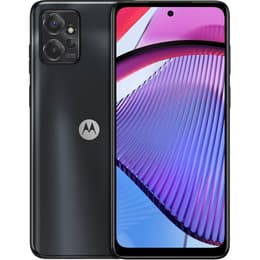
iPhone SE (2022) • Locked Verizon vs Motorola Moto G Power 5G • Unlocked

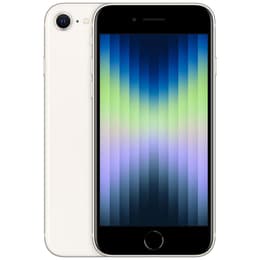
iPhone SE (2022) • Locked Verizon
Starting at

Refurbished price:$124.00

Versus $429.00 new

See options
Motorola Moto G Power 5G • Unlocked
See options

Ratings

The iPhone SE (3rd generation), released in March 2022, and the Motorola Moto G Power 5G (2024), launched in March 2024, are both smartphones designed to offer essential features for daily use. While the iPhone SE provides a compact iOS experience with a powerful internal processor, the Moto G Power 5G focuses on a larger display, extensive battery life, and the Android operating system. These devices cater to different user preferences, primarily differing in their design philosophy and software ecosystems.

Scores

Durability

The practical lifespan of a smartphone is often determined by its software support and physical resilience.

  • Software Longevity: The iPhone SE (3rd generation) launched with iOS 15.4 and is expected to receive major iOS updates until at least 2028, potentially extending to 2030 for security patches. This provides a long period of access to new features and security enhancements. In contrast, the Motorola Moto G Power 5G (2024) launched with Android 14 and is expected to receive one major OS update (Android 15, which rolled out in January 2025) and three years of security updates, concluding around March 2027.
  • Physical Durability: The iPhone SE features glass on both the front and back, with an aluminum frame, and offers IP67 water and dust resistance, meaning it can withstand immersion in up to 1 meter of water for 30 minutes. Its repairability score is rated around 5.5 out of 10, indicating that while some components like the screen and battery are replaceable, the use of adhesive can make repairs challenging. The Moto G Power 5G (2024) has a vegan leather back and a plastic frame, which offers a different tactile experience and can be resistant to fingerprints. It lacks an official IP rating but is generally considered splash-resistant.

Release Year

2022

2023

OS

iOS

Android

Foldable

No

No

Performance

Performance in daily use is influenced by the internal processing power, memory, and battery optimization.

  • Processing Power: The iPhone SE (3rd generation) is equipped with a powerful processor, similar to those found in more advanced iPhone models from its release year, enabling smooth operation for demanding applications and multitasking. Users report that it handles everyday tasks and even intensive gaming with responsiveness. The Motorola Moto G Power 5G (2024) utilizes a current-generation processor that provides solid performance for daily tasks such as social media, web browsing, and video playback. While capable for most users, some reports indicate it may experience slight stalls when switching between many demanding applications.
  • Memory and Storage: The iPhone SE comes with 4GB of RAM and offers storage options of 64GB, 128GB, or 256GB, without expandable storage. The Moto G Power 5G (2024) includes 8GB of RAM and 128GB of internal storage, with the added flexibility of expanding storage up to 1TB using a microSD card.
  • Battery Performance: The iPhone SE has a battery capacity of 2018 mAh, which users often find sufficient for a full day of moderate use but may require more frequent charging for heavy usage. The Moto G Power 5G (2024) features a larger 5000 mAh battery, consistently praised for its extended battery life, often lasting two to three days with moderate use or over 12 hours of continuous video playback.

Memory (GB)

4 GB

6 GB

Screen quality

The visual experience on a smartphone is largely defined by its display technology, resolution, and responsiveness.

  • Display Technology and Size: The iPhone SE (3rd generation) features a 4.7-inch IPS LCD Retina HD display, known for its color accuracy and clarity. Its design includes noticeable bezels at the top and bottom. The Motorola Moto G Power 5G (2024) offers a larger 6.7-inch IPS LCD screen with a more modern punch-hole design, providing a more expansive viewing area.
  • Resolution and Refresh Rate: The iPhone SE has a resolution of 1334x750 pixels (326 ppi) and a standard 60Hz refresh rate. The Moto G Power 5G (2024) provides a higher resolution of 2400x1080 pixels (393 ppi) and an adaptive refresh rate of up to 120Hz, contributing to smoother scrolling and a more fluid visual experience.
  • Brightness and Clarity: Both devices offer adequate brightness for indoor use. The iPhone SE has a typical maximum brightness of 625 nits. The Moto G Power 5G (2024) reaches a peak brightness of 500 nits, which is generally sufficient but may be less ideal in direct sunlight compared to some other displays.

Resolution

750 x 1334

1080 x 2400

Audiovisual

Camera capabilities are a key consideration for many users, encompassing both still photography and video recording.

  • Rear Camera System: The iPhone SE (3rd generation) features a single 12MP rear camera with an f/1.8 aperture and optical image stabilization (OIS). It benefits from advanced computational photography features like Smart HDR 4 and Deep Fusion, which enhance image quality in good lighting. However, it notably lacks a dedicated Night Mode, which can impact low-light performance. The Motorola Moto G Power 5G (2024) includes a dual-camera setup: a 50MP main sensor with OIS (which uses pixel-binning to produce 12.5MP images) and an 8MP ultrawide lens that also functions as a macro camera. Its main camera performs well in good lighting, though some users note colors can be overly saturated.
  • Video Recording: The iPhone SE is capable of recording 4K video at up to 60 frames per second (fps) with stabilization, offering strong video quality for its segment. The Moto G Power 5G (2024) records video at 1080p at 30 or 60 fps.
  • Front Camera and Audio: For selfies, the iPhone SE has a 7MP front camera that records 1080p video. The Moto G Power 5G (2024) features a 16MP front camera, also capable of 1080p video recording. Both devices offer stereo speakers, with the iPhone SE providing a loud and balanced audio output. The Moto G Power 5G (2024) also includes Dolby Atmos support for an immersive audio experience.

Miscellaneous

Beyond core features, practical elements like connectivity, ports, and physical design contribute to the overall user experience.

  • Connectivity and Ports: Both smartphones support 5G connectivity, enabling faster mobile data speeds. The iPhone SE (3rd generation) uses Wi-Fi 6 and Bluetooth 5.0, and features a Lightning port. The Motorola Moto G Power 5G (2024) supports Wi-Fi 5 (802.11 a/b/g/n/ac) and Bluetooth 5.3, and includes a USB-C port along with a traditional 3.5mm headphone jack. Both devices also feature NFC for contactless payments.
  • Biometric Security and Design: The iPhone SE retains the classic Home button with Touch ID for fingerprint authentication. It has a compact form factor, measuring 138.4 x 67.3 x 7.3 mm and weighing 144g. The Moto G Power 5G (2024) utilizes a side-mounted fingerprint sensor for security. It is a larger and heavier device, with dimensions of 167.2 x 76.4 x 8.5 mm and a weight of 201g.
  • Additional Features: The iPhone SE supports wireless charging. The Moto G Power 5G (2024) also supports wireless charging, a new addition for the G Power series, and offers 30W fast wired charging.

Weight

3 oz

7 oz

Screen size (inches)

4.7

6.5

Network

5G

5G

SIM card

Physical SIM + eSIM

Physical SIM

Carrier compatibility

Verizon

Unlocked

Connector

Lightning

USB-C

The iPhone SE (3rd generation) and the Motorola Moto G Power 5G (2024) offer distinct experiences for different user needs. The iPhone SE is frequently praised for its powerful processor, ensuring smooth performance and a long software support window, making it a reliable choice for those who prefer the iOS ecosystem and a compact device. However, common criticisms include its dated design with thick bezels, a standard 60Hz LCD screen, and an average battery life that may not satisfy heavy users. Its camera, while capable in good lighting, lacks a dedicated Night Mode.

Conversely, the Motorola Moto G Power 5G (2024) is often lauded for its expansive 120Hz display, exceptionally long battery life, and the inclusion of features like a headphone jack and expandable storage. Users appreciate its solid everyday performance and the tactile feel of its vegan leather back. Its main drawbacks typically revolve around a shorter software update commitment compared to the iPhone, and camera performance that, while decent, may not excel in challenging conditions like low light.

Users prioritizing a compact form factor, a powerful processor for sustained performance, and extended software support within the Apple ecosystem will find the iPhone SE (3rd generation) well-suited to their needs. Those who value a large, fluid display, multi-day battery life, expandable storage, and the flexibility of Android may lean towards the Motorola Moto G Power 5G (2024). Both devices represent solid choices, and considering quality-assured refurbished options can provide an eco-friendly alternative for either model.

See all articles

Our recent comparisons