(2,115)
Refurbished price:$414.00
Versus $1,999.00 new


Updated on November 2, 2026
November 2, 2026
6 mins read

Chris Stokel-Walker
Journalist
While RAM prices rise, cutting costs as well as saving the planet is becoming a more logical choice.
Busy mom Emily-Anne Hunt no longer buys new technology. Admitting she never cared about owning the latest phone, Hunt first noticed an ad for Back Market on the London Underground. A year or two later, when teachers recommended an iPad and learning apps for her son, who has special needs, she suddenly remembered it vividly.
Spending a lot on a new tablet that could get banged up felt risky. Hunt bought an older refurbished iPad instead. “I was quite impressed with the quality of it,” she says. Around the same time, her insurer replaced a broken phone with a refurbished device. “Other than it not coming in a new phone box, I couldn’t really tell the difference,” she adds.
More people are turning to pre-owned and refurbished devices as the price of new electronics rises. The industry has dubbed the squeeze “RAMageddon”—essentially, AI companies are buying huge quantities of high-bandwidth memory and server-grade components, encouraging chipmakers to devote more production to lucrative data centers and less to the conventional forms of DRAM and flash storage used in phones, tablets, gaming consoles, and laptops.
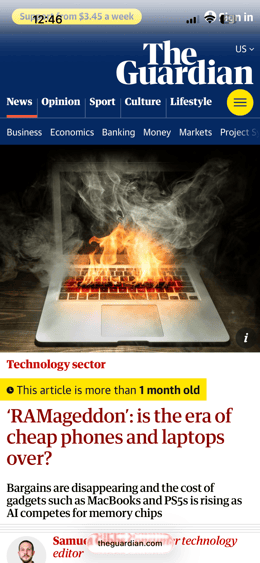

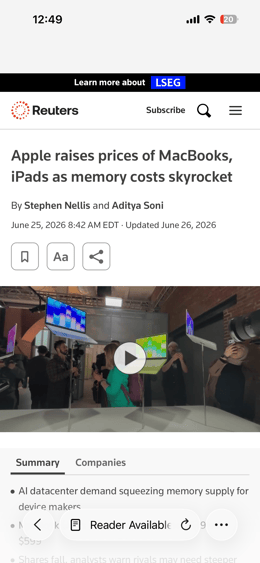
Conventional DRAM contract prices are rising by around 60% quarter-over-quarter, according to TrendForce data, while NAND flash prices are increasing by 70 to 75%. Faced with increased costs for the components that make up devices, manufacturers are passing on the costs to their customers through higher prices for new consumer electronics. For example, despite being a five-year-old console, the PS5 recently had its base price raised by $150. “With prices rising and Back to School approaching, the market is making the case for refurbished devices at a scale we have never seen before,” says Thibaud Hug de Larauze, co-founder and CEO of Back Market.
Market | iPad | |
France | +55% | +36% |
Germany | +28% | +16% |
Spain | +80% | +30% |
UK | +43% | +36% |
US | +37% | +25% |
Source: Back Market internal data. GMV growth compares the latest week with the previous week.
When Hunt next needed a phone she compared new and refurbished models, quickly realizing that for roughly half the cost of buying new she could get a clear upgrade. “I’d rather save money, or I’d rather spend the same money but get better,” she says. “Why spend all that extra money when you’re not really getting anything?”
She applied the same test when one of her sons needed a laptop for high school. He initially wanted a new one, and Hunt gave him a budget of around £250 and asked him to compare what it bought in each market. The refurbished options were substantially better specs. “He realized that he’d be getting something that was a massive upgrade over what his brother, who’s a couple of years older, had,” Hunt says. Faced with the comparison, he chose refurbished.
The same decision-making process persuaded Kat Corbett, who works in circular economy to turn to pre-owned and refurbished items, too. Her first Back Market purchase was a Microsoft Surface Pro for her then-12-year-old daughter, who needed it for homework and drawing. Corbett paid £203 in 2024 rather than spending far more on a new model that might be dropped or damaged.
The Surface Pro still works, including for long sessions playing The Sims. “She still spends hours on it,” she says. “If it was any smoother, it would probably just mean that she’d end up spending even more time on it.”
“Counterpoint Research expects the secondary and refurbished smartphone market to grow 13% in 2026, even as shipments of new smartphones fall amid the memory shortage and wider economic uncertainty.”
Corbett has since used refurbished tech to solve a less obvious problem: compatibility. A newer Apple Pencil she bought would not work with the family’s older iPad, so she bought a refurbished earlier-generation Pencil instead. Apple currently charges £99 for a first-generation Apple Pencil, while a new Surface Pro can cost several times what Corbett paid for her daughter’s refurbished one.
Corbett’s biggest saving came with her own phone. After four years, the storage on her old phone had become so tight that installing one app meant having to delete another. She bought a refurbished Samsung Galaxy S24+ for $338.34 – two-thirds less than the launch price of the Galaxy S24+ in Britain at £999 for the 256GB version and £1,099 for 512GB. “It looks like new,” she says. “Other than it arriving in a cardboard box rather than a shiny, stylized box, I really couldn’t tell that it had been used before.”
The camera is better, her storage anxiety has gone, and her old phone can now continue as a work device. Corbett is also trying to persuade her employer to provide refurbished work phones rather than issuing a new device by default.
Refurbished price:$414.00
Versus $1,999.00 new
Refurbished price:$153.00
Versus $999.00 new
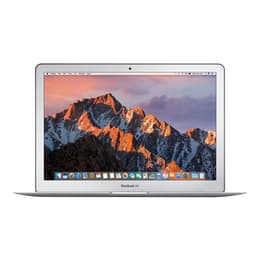
Refurbished price:$374.00
Versus $1,649.00 new

Refurbished price:$364.00
Versus $3,450.00 new

Refurbished price:$355.00
Versus $2,499.00 new
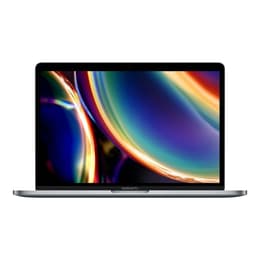
Refurbished price:$417.19
Versus $2,599.00 new

Refurbished price:$350.00
Versus $1,500.00 new
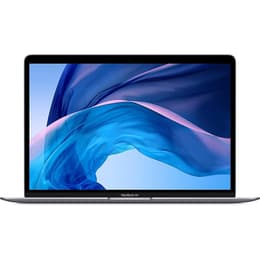
Refurbished price:$400.00
Versus $1,649.00 new

Refurbished price:$363.73
Versus $999.00 new
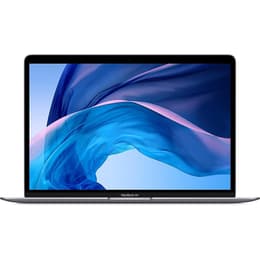
Refurbished price:$434.00
Versus $2,299.00 new

Refurbished price:$166.00
Versus $499.00 new
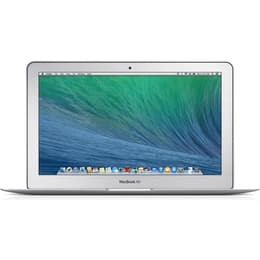
Refurbished price:$172.23
Versus $359.00 new
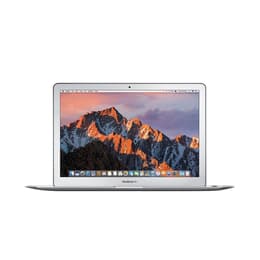
Refurbished price:$246.00
Versus $899.00 new
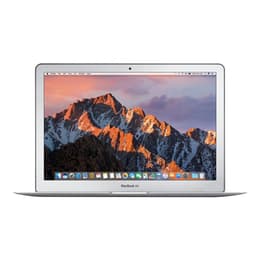
Refurbished price:$258.00
Versus $1,299.00 new

Refurbished price:$285.89
Versus $2,299.00 new

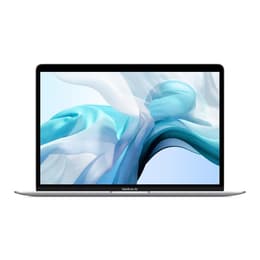
Refurbished price:$362.00
Versus $1,500.00 new
Back Market is a marketplace where sellers must follow its quality standards, meaning devices are cleaned, tested and, graded by their cosmetic condition while remaining fully functional. And all purchases also come with a one-year warranty and a 30-day return window. That reassurance was important to Hunt. “If you buy a secondhand phone on eBay and then it doesn’t work, you’ve wasted that money,” she says. “But if you’re buying it from a reputable company that’s has a guarantee process in place, then if it doesn’t work, you can send it back and replace it.”
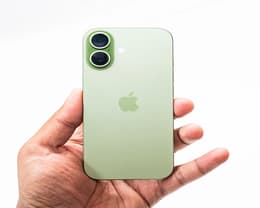
Photo credit: Julian Chokkattu
The price gap can be stark. Refurbished iPhone 14 and iPhone are 15 models selling for hundreds of pounds less than their new stock would – suggesting refurbished phones are shifting from a fallback to a first choice.
The market is expected to keep growing as new devices become more expensive. Counterpoint Research expects the secondary and refurbished smartphone market to grow 13% in 2026, even as shipments of new smartphones fall amid the memory shortage and wider economic uncertainty.
Beyond the cost savings, there’s an environmental gain, too. The world produced 62 million tonnes of electronic waste in 2022, according to the Global E-waste Monitor, of which only 22.3% was formally collected and recycled. Keeping a working device in use helps slow the conveyor belt from factory to drawer to waste stream.
For Corbett, the strongest sign that refurbished devices have gone mainstream came from her daughter. She recently came home excitedly reporting that friends had told her about a place where she could buy a desirable iPhone cheaply. It was Back Market. “If the teenagers are talking about it,” Corbett says, “I think we’re probably winning a little bit.”
Chris Stokel-Walker is a UK journalist focused on technology. He writes for the New York Times, Wall Street Journal, Washington Post, Fast Company, WIRED and New Scientist, among others.