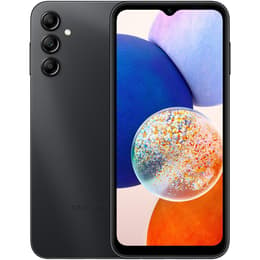
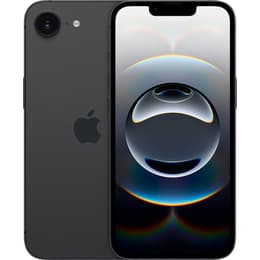

Galaxy A14 5G • Unlocked vs iPhone 16e • Unlocked

Galaxy A14 5G • Unlocked
Starting at

Refurbished price:$99.00

Versus $249.99 new

See options
iPhone 16e • Unlocked
Starting at

Refurbished price:$361.00

Versus $599.00 new

See options

Ratings

The Samsung Galaxy A14 5G, released in January 2023, is an Android smartphone designed to offer essential features and 5G connectivity. In contrast, the iPhone 16E, launched in February 2025 and recently discontinued in March 2026, represented Apple's accessible iOS option. These devices cater to different user preferences, primarily differing in their operating systems, display technology, and overall performance capabilities.

Scores

Durability

When considering the long-term usability of these smartphones, several factors come into play, including software support and physical resilience.

  • Software Longevity: The Samsung Galaxy A14 5G launched with Android 13 and is expected to receive two major OS updates and four years of security updates from its release. The iPhone 16E, running on iOS 18 at launch, benefits from Apple's typically longer software support, often extending to five or more years of major iOS updates.
  • Physical Durability: The Galaxy A14 5G features a plastic body and lacks an official IP rating for water and dust resistance, suggesting it is not protected against immersion or fine particles. The iPhone 16E, on the other hand, incorporates an aluminum frame with a glass front and back, protected by Ceramic Shield technology, and boasts an IP68 rating, indicating resistance to dust and water immersion.
  • Repairability: While specific repairability scores can vary, the Galaxy A14 5G's construction with a plastic back may offer a more straightforward repair process for certain components compared to the glass and aluminum sandwich design of the iPhone 16E. However, Apple's ecosystem often provides structured repair options.

Release Year

2023

2025

OS

Android

iOS

Foldable

No

No

Performance

The performance of a smartphone dictates its responsiveness and ability to handle various applications and tasks. Both devices offer distinct experiences in this regard.

  • Processing Power: The Samsung Galaxy A14 5G is equipped with a processor that capably handles everyday tasks such as web browsing, messaging, and social media. However, it may exhibit slower performance and stuttering when switching between demanding applications or playing graphically intensive games. The iPhone 16E features a current-generation Apple A18 chip, providing robust performance for complex applications, advanced multitasking, and high-fidelity gaming.
  • Multitasking and Storage: The Galaxy A14 5G typically comes with 4GB of RAM, which is sufficient for general use, though some configurations offer more. It offers 64GB or 128GB of internal storage, with the notable advantage of expandable storage via a microSD card up to 1TB. The iPhone 16E includes 8GB of RAM, facilitating smoother multitasking and more efficient handling of numerous open applications. It is available with 128GB, 256GB, or 512GB of internal storage, but does not support expandable storage.
  • Battery Behavior: The Galaxy A14 5G houses a large 5000mAh battery, often providing up to two days of usage with moderate activity. Its 15W wired charging takes approximately two hours for a full charge. The iPhone 16E, with a battery capacity ranging from 3279mAh to 3961mAh, is optimized for efficiency, claiming up to 26 hours of video playback. It supports faster wired charging (18W-20W) and offers wireless charging capabilities.

Memory (GB)

4 GB

8 GB

Screen quality

The visual experience is a primary consideration for many users, and these two devices offer different display technologies and characteristics.

  • Display Technology and Clarity: The Samsung Galaxy A14 5G features a 6.6-inch PLS LCD display with a resolution of 1080x2408 pixels, providing clear visuals for daily tasks. The iPhone 16E comes with a 6.1-inch LTPS OLED Super Retina XDR display, offering deeper blacks, higher contrast, and more vibrant colors. Its resolution of 2532 x 1170 pixels results in a sharp image with 460 pixels per inch.
  • Brightness and Refresh Rate: The Galaxy A14 5G's display has a 90Hz refresh rate, contributing to smoother scrolling and a more fluid user interface experience. However, its brightness levels can make outdoor visibility challenging in direct sunlight. The iPhone 16E features a standard 60Hz refresh rate but offers higher peak brightness of up to 800 nits for typical content and 1200 nits for HDR content, improving visibility in bright environments.
  • Design and Viewing Experience: The Galaxy A14 5G has a slightly larger screen, which can be beneficial for media consumption and general browsing. The iPhone 16E's OLED panel and higher pixel density provide a more premium visual experience, despite its smaller physical size. It also features a notch design for its front camera and sensors.

Resolution

1080 x 2408

2532x1170

Screen type

PLS LCD

Super Retina XDR

Audiovisual

For many users, the camera system is a crucial component, and both phones approach photography and videography with different capabilities.

  • Rear Camera System: The Samsung Galaxy A14 5G includes a triple rear camera setup with a 50MP main sensor, complemented by 2MP macro and 2MP depth sensors. It performs well in bright conditions, capturing detailed images, but its performance diminishes in low-light environments and with moving subjects. The iPhone 16E features a single 48MP main camera with optical image stabilization (OIS), designed to capture high-quality photos with improved low-light performance and detail. It also offers 1x and 2x optical zoom options through its 2-in-1 Fusion camera system.
  • Front Camera and Video Recording: The Galaxy A14 5G has a 13MP front-facing camera that delivers good selfies in adequate lighting. Video recording on the A14 5G is limited to 1080p at 30 frames per second. The iPhone 16E is equipped with a 7MP to 24MP TrueDepth front camera, capable of detailed selfies and supporting Face ID. It excels in video recording, offering 4K resolution at up to 60 frames per second with Dolby Vision support.
  • Audio Experience: The Galaxy A14 5G features a mono speaker, which may not provide a rich audio experience for media consumption. The iPhone 16E typically offers stereo speakers, enhancing the audio output for videos and music.

Main camera

50 megapixels

48MP

Front camera

13 megapixels

TrueDepth 12MP

Miscellaneous

Beyond the core features, several practical elements contribute to the overall user experience and device utility.

  • Connectivity and Ports: Both devices support 5G connectivity, enabling faster mobile data speeds. The Galaxy A14 5G includes Wi-Fi 5 and Bluetooth 5.2, along with a traditional 3.5mm headphone jack and a USB-C port for charging and data transfer. The iPhone 16E features Wi-Fi 6 and a USB-C port, aligning with modern connectivity standards, but it omits the 3.5mm headphone jack. It also integrates Apple's custom C1 5G modem.
  • Biometric Security and Navigation: The Galaxy A14 5G utilizes a side-mounted fingerprint sensor for secure unlocking. The iPhone 16E relies on Face ID for biometric authentication, offering a different approach to security and user interaction. It also features an Action Button, replacing the traditional mute switch, which can be customized for various functions.
  • Design and Handling: The Galaxy A14 5G has a larger form factor, measuring 167.7 x 78 x 9.1mm and weighing 202g, which might appeal to users who prefer a more substantial device. Its plastic back provides a secure grip. The iPhone 16E is more compact and lighter, with dimensions of 146.7 x 71.5 x 7.8mm and a weight of 144g to 165g, making it easier for one-handed use and pocketability.

Weight

7 oz

167 oz

Screen size (inches)

6.6

6.1

Network

5G

5G

SIM card

Physical SIM

eSIM

Carrier compatibility

Unlocked

Unlocked

The Samsung Galaxy A14 5G and the iPhone 16E offer distinct smartphone experiences, each with its own set of strengths tailored to different user needs. The Galaxy A14 5G is often praised for its long battery life, large display, and the inclusion of a headphone jack and expandable storage, which are practical benefits for many Android users. Criticisms sometimes point to its less vibrant LCD screen, average camera performance in challenging conditions, and lack of water resistance.

The iPhone 16E, despite its relatively short market availability as a new device, garnered positive attention for bringing a powerful processor, a high-quality OLED display, and robust build quality with an IP68 rating to a more accessible iPhone model. Users appreciated its improved camera capabilities and the integration of Face ID and the Action Button. Some potential drawbacks for users accustomed to other devices might include the absence of a headphone jack and the lack of expandable storage.

Users prioritizing a large screen, extensive battery life, and the flexibility of expandable storage and a headphone jack may find the Samsung Galaxy A14 5G well-suited to their requirements. It's a practical choice for those who value these features within the Android ecosystem. Conversely, users who prioritize a compact design, a premium display, strong performance for demanding tasks, superior camera quality, and the security and ecosystem benefits of iOS will likely lean towards the iPhone 16E. As the iPhone 16E was recently discontinued, it is now primarily available as a quality-assured refurbished option, offering an eco-friendly alternative for those seeking its features.

See all articles

Our recent comparisons