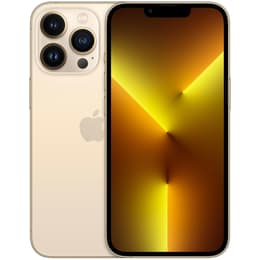

Galaxy S10+ • Unlocked vs iPhone 13 Pro • Unlocked

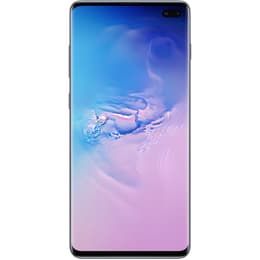
Galaxy S10+ • Unlocked
Starting at

Refurbished price:$165.00

Versus $719.00 new

See options
iPhone 13 Pro • Unlocked
Starting at

Refurbished price:$299.99

Versus $899.00 new

See options

Ratings

The Samsung Galaxy S10 Plus, released in March 2019, is an Android smartphone that offered a premium experience at its launch. In contrast, the iPhone 13 Pro, launched in September 2021, is an Apple iOS device. These two devices represent different generations and operating system ecosystems, leading to distinct user experiences. Key differentiators include their respective operating systems, release timelines, and the core hardware advancements each brings to the table.

Scores

Durability

When considering the long-term usability of these devices, their release timelines and software support are significant factors.

  • Release Timeline and Age: The Galaxy S10 Plus was released in March 2019, making it an older device compared to the iPhone 13 Pro, which launched in September 2021. This age difference impacts how long each device can be expected to receive official support and updates.
  • OS Support Duration: The Galaxy S10 Plus launched with Android 9.0 (Pie) and received major Android updates up to Android 12 (One UI 4). It is unlikely to receive further major Android version updates. The iPhone 13 Pro, on the other hand, launched with iOS 15 and is currently supported by iOS 26.4 as of March 2026. Apple typically provides a longer period of software support for its devices compared to many Android manufacturers.
  • Practical Lifespan: Due to its more recent release and Apple's extended software update policy, the iPhone 13 Pro is expected to offer a longer practical lifespan in terms of receiving the latest operating system features and security updates. Both devices feature glass backs, which can be susceptible to damage, but both also carry an IP68 rating for dust and water resistance.

Release Year

2019

2021

Last OS Compatibility

No

Yes

OS

Android

iOS

Foldable

No

No

Performance

The performance of a smartphone is crucial for daily tasks, from app usage to multitasking and gaming.

  • Storage Options: The Galaxy S10 Plus was available with storage options including 128GB, 512GB, and a 1TB variant that came with 12GB of RAM. The iPhone 13 Pro offers storage capacities of 128GB, 256GB, 512GB, and 1TB.
  • Battery Behavior: The Galaxy S10 Plus is equipped with a 4100 mAh battery, which users have reported offers good endurance for a full day of heavy use. The iPhone 13 Pro has a 3095 mAh battery. Despite the smaller capacity, Apple claims improved battery life compared to its predecessor, and users generally report impressive all-day battery performance, partly due to the efficiency of its internal processor.
  • Processor Capabilities: The Galaxy S10 Plus is powered by a processor from 2019, which capably handles everyday tasks and most applications. However, with newer, more demanding applications or future software, its performance may show its age. The iPhone 13 Pro features a newer, more advanced processor that provides smooth and responsive performance for demanding applications, intensive multitasking, and graphic-heavy gaming.
  • Multitasking: The Galaxy S10 Plus offered 8GB or 12GB of RAM. The iPhone 13 Pro comes with 6GB of RAM. While the Galaxy S10 Plus has higher RAM numbers, the iPhone's optimized operating system often allows for efficient multitasking with its available memory.

Memory (GB)

8 GB

6 GB

Screen quality

The display is a primary interface for smartphone interaction, and both devices offer distinct visual experiences.

  • Display Technology: The Galaxy S10 Plus features a Dynamic AMOLED display. The iPhone 13 Pro utilizes a Super Retina XDR OLED display with ProMotion technology.
  • Resolution and Clarity: The Galaxy S10 Plus has a 6.4-inch display with a resolution of 1440 x 3040 pixels, resulting in approximately 522 pixels per inch (ppi). The iPhone 13 Pro has a 6.1-inch display with a resolution of 2532 x 1170 pixels, offering around 460 ppi. Both displays provide high clarity and sharp visuals.
  • Brightness and Refresh Rate: The Galaxy S10 Plus supports HDR10+. The iPhone 13 Pro offers high brightness levels, reaching up to 1000 nits typically and 1200 nits for HDR content. A notable difference is the refresh rate: the Galaxy S10 Plus has a standard refresh rate, while the iPhone 13 Pro features ProMotion technology, providing adaptive refresh rates up to 120Hz for smoother scrolling and more fluid animations.
  • Viewing Experience: The Galaxy S10 Plus offers a larger screen size at 6.4 inches, which can be beneficial for media consumption and productivity. The iPhone 13 Pro's 6.1-inch display provides a slightly more compact viewing area.

Resolution

1440 x 3040

1170 x 2532

Screen type

Dynamic AMOLED

Super Retina XDR OLED

Audiovisual

Both smartphones offer capable camera systems, but with different strengths and features.

  • Camera System Configuration: The Galaxy S10 Plus features a triple rear camera setup, including a 12MP wide lens, a 12MP telephoto lens, and a 16MP ultrawide lens. Its front camera system is dual, with a 10MP wide lens and an 8MP depth sensor. The iPhone 13 Pro also has a triple rear 12MP camera system, comprising wide, telephoto, and ultrawide lenses, complemented by a LiDAR scanner for depth sensing. Its front camera is a 12MP lens.
  • Photography Performance: The Galaxy S10 Plus's main camera has a wide f/1.5 aperture, contributing to good low-light potential. The iPhone 13 Pro features larger sensors and wider apertures across its lenses, which significantly improve low-light performance. It also includes computational photography features like Night mode, Deep Fusion, and Smart HDR 4 for enhanced image quality in various conditions.
  • Video Recording Capabilities: The Galaxy S10 Plus supports 4K video recording and HDR10+. The iPhone 13 Pro offers advanced video features such as Cinematic mode, which provides a shallow depth of field, and ProRes video recording for professional-grade footage (4K at 30fps for models with 256GB storage or more). It also supports HDR video recording with Dolby Vision up to 4K at 60fps.
  • Audio Experience: The Galaxy S10 Plus provides surround sound with Dolby Atmos technology for an immersive audio experience. The iPhone 13 Pro features stereo speakers, offering a balanced sound output for media consumption.

Main camera

12 megapixels

12 megapixels

Front camera

10 megapixels

12 megapixels

Miscellaneous

Beyond core features, several practical elements differentiate these two devices in daily use.

  • Connectivity Options: The Galaxy S10 Plus supports Wi-Fi 6 and Bluetooth 5.0. It does not include 5G connectivity. The iPhone 13 Pro offers 5G connectivity, Wi-Fi 6, and Bluetooth 5.0, along with a U1 Ultra Wideband chip for enhanced spatial awareness.
  • Port Types: The Galaxy S10 Plus includes a USB-C port for charging and data transfer, and notably, a 3.5mm headphone jack. The iPhone 13 Pro uses Apple's proprietary Lightning port.
  • Biometric Sensors: For security, the Galaxy S10 Plus features an ultrasonic in-display fingerprint sensor and face recognition. The iPhone 13 Pro relies on Face ID, its facial recognition system.
  • Physical Characteristics: The Galaxy S10 Plus measures 157.6 x 74.1 x 7.8 mm and weighs between 175g and 198g, depending on the build material. The iPhone 13 Pro is more compact at 146.7 x 71.5 x 7.65 mm but is heavier at 204g. This increased weight in the iPhone 13 Pro is partly due to its stainless steel frame, compared to the aluminum frame of the Galaxy S10 Plus. Both devices feature IP68 dust and water resistance.

Weight

6 oz

6 oz

Screen size (inches)

6.4

6.1

Network

LTE

5G

SIM card

Physical SIM

Physical SIM + eSIM

Carrier compatibility

Unlocked

Unlocked

The Samsung Galaxy S10 Plus and iPhone 13 Pro cater to different user preferences, largely due to their distinct operating systems and release generations. User feedback often praises the Galaxy S10 Plus for its expansive and vibrant display, the inclusion of a traditional headphone jack, and the flexibility of expandable storage. Some common concerns for the S10 Plus revolve around its older software, which may lead to a shorter update lifespan compared to newer devices, and its performance potentially lagging behind more recent smartphones in very demanding tasks.

Conversely, the iPhone 13 Pro is frequently lauded for its exceptional performance, the smooth and responsive ProMotion display, and its advanced camera capabilities, including features like Cinematic Mode and ProRes video recording. Its strong battery life and Apple's commitment to extended software support are also often highlighted as significant advantages. A frequent point of discussion for the iPhone 13 Pro is its continued use of the Lightning port instead of the more universal USB-C, and its relatively heavier build for its size.

Users prioritizing a larger display for media consumption, the convenience of a traditional headphone jack, and the option for expandable storage may find the Galaxy S10 Plus well-suited to their needs. For those seeking cutting-edge performance, advanced photographic and videographic tools, a high refresh rate display, and a longer period of software updates, the iPhone 13 Pro would likely be the preferred choice. Both devices, whether new or as a quality-assured refurbished option, offer distinct advantages depending on individual user priorities.


See all articles

Our recent comparisons