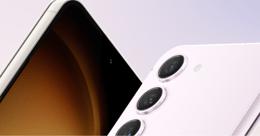
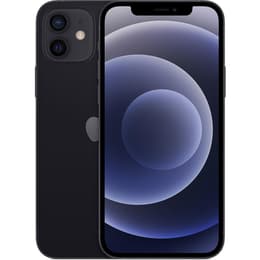

Galaxy S23 FE • Unlocked vs iPhone 12 • Unlocked

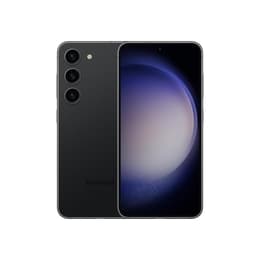
Galaxy S23 FE • Unlocked
Starting at

Refurbished price:$205.00

Versus $799.00 new

See options
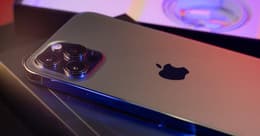
iPhone 12 • Unlocked
Starting at

Refurbished price:$172.96

Versus $629.00 new

See options

Ratings

The Samsung Galaxy S23 FE, released in October 2023, and the Apple iPhone 12, launched in October 2020, represent distinct approaches to smartphone design and functionality. While the Galaxy S23 FE offers a more recent Android experience with updated hardware, the iPhone 12 provides a streamlined iOS environment and a proven track record. Key differences lie in their release timelines, display technology, and camera versatility, catering to varied user preferences.

Scores

Durability

The age difference between these two devices significantly influences their expected longevity and software support. Both devices feature robust builds designed for daily use, but their respective ecosystems offer different update policies.

  • Software Support: The Galaxy S23 FE, being a newer device, is expected to receive four major Android OS updates and five years of security updates, potentially extending its major OS support until Android 17 around 2027. The iPhone 12, released three years prior, typically receives major iOS updates for about five to six years from its launch, with security updates often extending longer. It is likely to receive major iOS updates until around 2025 or 2026, with security patches continuing until at least 2027.
  • Physical Durability: Both smartphones boast an IP68 rating for dust and water resistance, indicating good protection against environmental elements. The iPhone 12 introduced a Ceramic Shield front cover, designed for enhanced drop performance. The Galaxy S23 FE utilizes Gorilla Glass 5 for both its front and back, providing a durable surface.
  • Repairability: The iPhone 12 benefits from a well-established global network of repair centers, both official and independent. The Galaxy S23 FE's design incorporates more recent manufacturing trends, which can influence component accessibility for repairs.

Release Year

2023

2020

Last OS Compatibility

Yes

Yes

OS

Android

iOS

Foldable

No

No

Performance

Performance characteristics highlight the evolution of mobile hardware, particularly in multitasking and efficiency, with both devices offering capable experiences for their respective generations.

  • Processing Power: The Galaxy S23 FE is equipped with a current-generation processor, providing smooth operation for demanding applications and multitasking. The iPhone 12 features a capable processor that, despite its age, continues to deliver a fluid and responsive user experience for everyday tasks and many modern applications.
  • Multitasking and Responsiveness: With 8GB of RAM, the Galaxy S23 FE handles multiple applications simultaneously with ease, contributing to a responsive overall system. The iPhone 12, with 4GB of RAM, maintains strong system responsiveness within the iOS ecosystem, efficiently managing background processes.
  • Battery Behavior: The Galaxy S23 FE houses a larger 4500 mAh battery, generally offering longer usage times for many users. The iPhone 12, with a 2815 mAh battery, provides solid battery life for a full day of moderate use, though heavy usage, especially with 5G connectivity, may require more frequent charging.

Memory (GB)

8 GB

4 GB

Screen quality

The visual experience on both devices is a significant factor, with differences in display technology and refresh rates impacting overall smoothness and clarity.

  • Display Technology and Clarity: The Galaxy S23 FE features a 6.4-inch Dynamic AMOLED 2X display, offering vibrant colors, deep blacks, and a sharp Full HD+ resolution (1080 x 2340 pixels). The iPhone 12 comes with a 6.1-inch Super Retina XDR OLED display, known for its excellent contrast, color accuracy, and a crisp resolution of 1170 x 2532 pixels.
  • Refresh Rate and Smoothness: A notable difference is the refresh rate; the Galaxy S23 FE boasts a 120Hz adaptive refresh rate, which provides noticeably smoother scrolling and animations, enhancing the visual fluidity. The iPhone 12 has a standard 60Hz refresh rate, which is consistent but does not offer the same level of visual smoothness as higher refresh rate displays.
  • Brightness for Outdoor Use: For visibility in bright conditions, the Galaxy S23 FE can reach a peak brightness of 1450 nits. The iPhone 12 offers a peak brightness of 1200 nits, ensuring good readability outdoors.

Resolution

1080 x 2340

1170 x 2532

Screen type

Dynamic AMOLED 2X

Super Retina XDR OLED

Audiovisual

Both smartphones offer capable camera systems, but they differ in their configurations and specialized features, influencing their photographic and videographic versatility.

  • Rear Camera System: The Galaxy S23 FE features a versatile triple-camera setup, including a 50MP main sensor with optical image stabilization (OIS), a 12MP ultrawide lens, and an 8MP telephoto lens with 3x optical zoom and OIS. This configuration provides flexibility for various shooting scenarios, including distant subjects. The iPhone 12 has a dual-camera system, comprising a 12MP wide lens with OIS and a 12MP ultrawide lens. It lacks a dedicated telephoto lens, relying on digital zoom.
  • Photography Performance: The Galaxy S23 FE delivers good image quality in various lighting conditions, with users noting strong performance in well-lit environments. The iPhone 12 is praised for its consistent color reproduction, detail, and excellent low-light performance across both lenses, supported by its Night mode feature.
  • Video Recording and Audio: The Galaxy S23 FE supports video recording up to 8K resolution, offering high-detail capture. The iPhone 12 records video up to 4K with Dolby Vision HDR, known for its cinematic quality and strong stabilization. Both devices provide clear audio recording and offer a good media consumption experience through their stereo speakers.

Main camera

50 megapixels

12 megapixels

Front camera

10 megapixels

12 megapixels

Miscellaneous

Beyond core performance, practical elements such as connectivity, physical design, and biometric security contribute to the daily user experience.

  • Connectivity and Ports: The Galaxy S23 FE supports 5G connectivity, Wi-Fi 6E, and Bluetooth 5.3, offering modern wireless standards. It features a USB-C 3.2 port for charging and data transfer. The iPhone 12 also supports 5G and Wi-Fi 6, along with Bluetooth 5.0. It uses Apple's proprietary Lightning port.
  • Biometric Security: For secure unlocking, the Galaxy S23 FE incorporates an under-display optical fingerprint sensor. The iPhone 12 relies on Face ID, Apple's facial recognition system.
  • Physical Characteristics: The Galaxy S23 FE measures 158 x 76.5 x 8.2 mm and weighs 209g, presenting a more substantial feel. The iPhone 12 is more compact and lighter at 146.7 x 71.5 x 7.4 mm and 164g, making it easier for one-handed use and portability. Both devices feature aluminum frames, contributing to their solid build quality.

Weight

6 oz

7 oz

Screen size (inches)

6.1

6.1

Network

5G

5G

SIM card

Physical SIM

Physical SIM + eSIM

Carrier compatibility

Unlocked

Unlocked

Connector

USB-C

Lightning

The Samsung Galaxy S23 FE and the iPhone 12 each present a compelling set of features, appealing to different user priorities. User feedback often highlights the Galaxy S23 FE's modern 120Hz display and its versatile triple-lens camera system as strong advantages, though some users find its larger size less convenient. Conversely, the iPhone 12 is frequently praised for its consistent performance, compact design, and the intuitive nature of its iOS software, even if its display technology and battery life are considered more standard by current benchmarks.

Users who prioritize a fluid display, a comprehensive camera system with optical zoom capabilities, and a longer window of future Android software updates will likely find the Galaxy S23 FE to be a more suitable choice. Its larger screen also offers a more immersive viewing experience for media consumption. On the other hand, individuals who value a lightweight and compact device, a straightforward user experience, and seamless integration within the Apple ecosystem may prefer the iPhone 12. Its proven performance and consistent software updates make it a reliable option for those who appreciate the iOS environment. For those considering either device, exploring a quality-assured refurbished option can be an eco-friendly alternative to access these features while supporting a more sustainable consumption model.

See all articles

Our recent comparisons