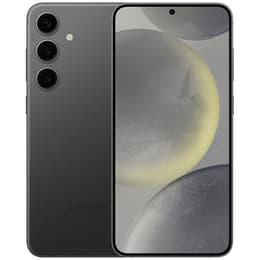


Galaxy S24+ • Unlocked vs Google Pixel 8 Pro • Unlocked

Galaxy S24+ • Unlocked
Starting at

Refurbished price:$408.00

Versus $814.00 new

See options
Google Pixel 8 Pro • Unlocked
Starting at

Refurbished price:$296.00

Versus $899.99 new

See options

Ratings

The Samsung Galaxy S24 Plus, released in January 2024, and the Google Pixel 8 Pro, launched in October 2023, are both advanced Android smartphones. While they share a premium experience, they differentiate themselves through their software approaches, camera systems, and overall performance profiles. Both devices operate on the Android platform, offering distinct user interfaces and feature sets.

Scores

Durability

When considering the long-term usability of these devices, both the Galaxy S24 Plus and the Pixel 8 Pro offer substantial software support and robust build quality.

  • Software Longevity: Both smartphones are committed to receiving seven years of operating system upgrades and security updates, ensuring extended relevance and protection well into the future.
  • Physical Durability: The Galaxy S24 Plus features an Armor Aluminum frame and Corning Gorilla Glass Victus 2 on both the front and back. Similarly, the Pixel 8 Pro utilizes an aluminum frame and Gorilla Glass Victus 2 for its front and back panels. Both devices also carry an IP68 rating, indicating high resistance to dust and water immersion.
  • Practical Lifespan: With identical software support timelines and comparable physical resilience, both the Galaxy S24 Plus and Pixel 8 Pro are designed to offer a practical lifespan that extends over many years, making them suitable for users who prefer to keep their devices for longer periods.

Release Year

2024

2023

Last OS Compatibility

Yes

Yes

OS

Android

Android

Foldable

No

No

Performance

The performance of the Galaxy S24 Plus and Pixel 8 Pro varies, particularly in demanding tasks and battery endurance, reflecting their distinct internal architectures.

  • Processing Power: The Galaxy S24 Plus generally offers stronger performance, especially noticeable during intensive gaming sessions and heavy multitasking, with users reporting smooth operation and minimal lag. The Pixel 8 Pro, powered by its custom-designed chip, handles daily tasks and most applications smoothly, though some users note occasional stutters in certain apps or during heavy processing.
  • Battery Experience: The Galaxy S24 Plus, despite having a slightly smaller 4900 mAh battery compared to the Pixel 8 Pro's 5050 mAh, often delivers better overall battery life, frequently lasting through a full day of heavy use and sometimes longer. The Pixel 8 Pro generally provides good battery life, often reaching 7 hours of screen-on time, but some users report inconsistency and faster drain under heavy use or on mobile data.
  • Multitasking and Storage: Both devices come with 12GB of RAM, providing ample capacity for smooth multitasking and app management. For storage, the Galaxy S24 Plus offers options of 256GB and 512GB, while the Pixel 8 Pro provides more varied configurations, including 128GB, 256GB, 512GB, and a 1TB option.

Memory (GB)

12 GB

12 GB

Screen quality

Both smartphones feature high-quality displays, but there are subtle differences in their technology and characteristics.

  • Display Technology and Resolution: The Galaxy S24 Plus features a 6.7-inch QHD+ Dynamic LTPO AMOLED 2X display with a resolution of 3120 x 1440 pixels, resulting in a pixel density of 513 PPI. The Pixel 8 Pro also has a 6.7-inch LTPO OLED display with a resolution of 2992 x 1344 pixels, offering a pixel density of 489 PPI.
  • Brightness and Refresh Rate: The Galaxy S24 Plus can achieve a peak brightness of up to 2600 nits, making it exceptionally visible in bright outdoor conditions. The Pixel 8 Pro offers a peak brightness of up to 2400 nits, which also provides good outdoor visibility. Both incorporate adaptive refresh rate technology, ranging from 1Hz to 120Hz, which allows for smooth scrolling and responsive interactions while optimizing power consumption.
  • Viewing Experience: Users generally find both displays vibrant and sharp, suitable for media consumption and daily use. The Galaxy S24 Plus has a slightly wider aspect ratio, while the Pixel 8 Pro is a bit narrower.

Resolution

1440 x 3120

1344 x 2992

Screen type

Dynamic LTPO AMOLED 2X

LTPO OLED

Audiovisual

Both devices offer advanced camera systems, but their strengths lie in different areas, catering to varying photography preferences.

  • Rear Camera System: The Galaxy S24 Plus features a triple camera setup with a 50MP main lens, a 12MP ultrawide lens, and a 10MP telephoto lens with 3x optical zoom. The Pixel 8 Pro also has a triple camera system, including a 50MP main lens, a 48MP ultrawide lens, and a 48MP telephoto lens with 5x optical zoom.
  • Photography Performance: The Pixel 8 Pro is often praised for its point-and-shoot capabilities, producing fast and stable still images with excellent color science, particularly in challenging conditions. The Galaxy S24 Plus offers capable cameras, with improved low-light performance, but some users note it can struggle with capturing fast-moving subjects, such as pets or children, leading to blur.
  • Video Capabilities: The Galaxy S24 Plus supports video recording up to 8K at 30 frames per second, offering very high-resolution video capture. The Pixel 8 Pro records video up to 4K at 60 frames per second, with users noting improved video stabilization compared to previous Pixel models.

Main camera

50 megapixels

50 megapixels

Front camera

12 megapixels

10.5 megapixels

Miscellaneous

Beyond core specifications, several practical elements contribute to the overall user experience of these smartphones.

  • Connectivity and Ports: Both devices support 5G connectivity, Wi-Fi 6E, and Bluetooth 5.3. Both utilize a USB-C port for charging and data transfer.
  • Biometrics and Sensors: The Galaxy S24 Plus features an ultrasonic in-screen fingerprint sensor, while the Pixel 8 Pro uses an optical in-screen fingerprint sensor. The Pixel 8 Pro also includes a temperature sensor. Both offer face recognition for unlocking.
  • Design and Handling: The Galaxy S24 Plus weighs 196 grams and has dimensions of 158.5 x 75.9 x 7.7mm. The Pixel 8 Pro is slightly heavier at 213 grams and measures 162.6 x 76.5 x 8.8mm, making it a bit taller, wider, and thicker. Users often find the S24 Plus more comfortable to hold due to its slightly smaller size and flatter sides, while the Pixel 8 Pro's rounded corners contribute to its in-hand feel.

Weight

7 oz

7 oz

Screen size (inches)

6.7

6.7

Network

5G

5G

SIM card

Physical SIM + eSIM

Physical SIM + eSIM

Carrier compatibility

Unlocked

Unlocked

User sentiment indicates that both the Samsung Galaxy S24 Plus and the Google Pixel 8 Pro are highly capable devices, each with distinct advantages. The Galaxy S24 Plus is frequently praised for its robust overall performance, superior battery life, and vibrant display. Users appreciate its speed and smooth operation, especially for demanding applications and gaming. Some criticisms include its camera performance with moving subjects and occasional software quirks, particularly with the Exynos variant in some regions.

The Google Pixel 8 Pro receives consistent acclaim for its exceptional camera system, particularly for still photography and its intuitive point-and-shoot experience. Its clean Android software and unique AI-powered features are also highly valued. However, some users have noted concerns regarding battery consistency, occasional performance stutters, and the phone running warm under heavy load.

Users prioritizing a device with strong overall performance, extended battery endurance, and a bright, high-resolution display may find the Samsung Galaxy S24 Plus well-suited to their needs. Conversely, those who place a premium on photography capabilities, a streamlined Android experience, and advanced AI features will likely lean towards the Google Pixel 8 Pro. Both devices offer a compelling experience, and choosing between them often comes down to these specific priorities. For those considering either of these powerful smartphones, exploring quality-assured refurbished options can provide an eco-friendly alternative.

See all articles

Our recent comparisons