
Galaxy Tab S9 FE (10.9", 2023) vs iPad Air 6 (2024, M2 series)

Galaxy Tab S9 FE (10.9", 2023)
Starting at

Refurbished price:$245.28

Versus $549.00 new

See options
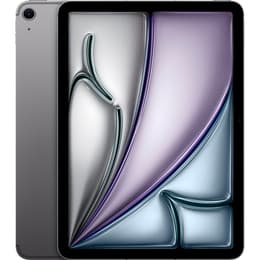
iPad Air 6 (2024, M2 series)
Starting at

Refurbished price:$456.00

Versus $599.00 new

See options

Ratings

The Samsung Galaxy Tab S9 FE, released in October 2023, and the Apple iPad Air (M2 series), launched in May 2024, represent distinct approaches to the tablet experience. While both offer robust platforms for productivity and entertainment, they differ significantly in their operating systems and core hardware. The Galaxy Tab S9 FE operates on Android, providing a customizable interface, whereas the iPad Air runs on Apple's iPadOS, known for its streamlined ecosystem. These differences cater to varying user preferences regarding software flexibility and hardware integration.

Scores

Durability

When considering the long-term usability of a tablet, factors such as software support and physical resilience are key. The Galaxy Tab S9 FE and the iPad Air (M2 series) offer different expectations in these areas.

  • Software Longevity: The iPad Air (M2 series), being an Apple device, typically receives iPadOS updates for an extended period, often exceeding five years from its release. The Galaxy Tab S9 FE, running Android, also benefits from Samsung's commitment to several years of OS and security updates, though the exact duration can vary.
  • Physical Durability: The Galaxy Tab S9 FE features an IP68 rating for dust and water resistance, offering a degree of protection against environmental elements. The iPad Air (M2 series) does not carry an official IP rating, suggesting less inherent resistance to dust and water exposure.
  • Repairability Considerations: The iPad Air (M2 series) has received a low repairability score from independent assessments, indicating challenges in accessing and replacing internal components due to extensive use of adhesive. Information on the Galaxy Tab S9 FE's repairability is less formally documented, but user experiences suggest a solid build.

Release Year

2023

2024

Last OS Compatibility

Yes

Yes

OS

Android

iPadOS

Performance

The performance of a tablet directly impacts its responsiveness and capability to handle various tasks, from everyday browsing to more demanding applications. Both the Galaxy Tab S9 FE and the iPad Air (M2 series) offer distinct performance profiles.

  • Processing Power: The iPad Air (M2 series) is equipped with a powerful processor designed for high-intensity tasks, offering significant speed improvements over previous generations. This translates to smooth operation for complex applications, advanced gaming, and professional creative work. The Galaxy Tab S9 FE utilizes a mid-range processor that capably handles daily tasks, web browsing, media consumption, and light gaming.
  • Multitasking and Responsiveness: The iPad Air (M2 series) provides a highly fluid user experience, allowing for seamless transitions between multiple applications and efficient handling of demanding workflows. The Galaxy Tab S9 FE offers a responsive experience for typical tablet usage, though intensive multitasking with numerous heavy applications may occasionally present minor delays.
  • Storage and Memory: The iPad Air (M2 series) offers a range of storage options starting from 128GB and going up to 1TB, paired with 8GB of RAM. The Galaxy Tab S9 FE comes with 6GB or 8GB of RAM and storage options of 128GB or 256GB, with the added flexibility of expandable storage via a microSD card.

Memory (GB)

6 GB

8 GB

Screen quality

The display is a primary interface for any tablet, and both devices offer different visual experiences tailored to their respective ecosystems.

  • Display Technology and Clarity: The iPad Air (M2 series) features a Liquid Retina IPS LCD display, known for its color accuracy and wide viewing angles, available in 11-inch and 13-inch sizes with high resolutions. The Galaxy Tab S9 FE uses a 10.9-inch TFT LCD panel with a resolution of 2304 x 1440 pixels, providing clear visuals for media consumption and general use.
  • Brightness and Outdoor Visibility: The 11-inch iPad Air (M2 series) offers up to 500 nits of brightness, while the 13-inch model reaches 600 nits, enhancing visibility in various lighting conditions. The Galaxy Tab S9 FE achieves an average brightness of around 562-694.7 nits, which is suitable for indoor use and generally legible in bright sunlight.
  • Refresh Rate: The Galaxy Tab S9 FE features a 90Hz refresh rate, contributing to smoother scrolling and a more fluid visual experience compared to standard 60Hz displays. The iPad Air (M2 series) maintains a 60Hz refresh rate across its models.

Resolution

1440 x 2304

2360 x 1640

Screen type

IPS LCD

Liquid Retina display

Pixel density

250ppp

264ppp

Audiovisual

While tablets are not typically primary photography devices, their camera systems are important for video calls, document scanning, and casual photography. The Galaxy Tab S9 FE and iPad Air (M2 series) offer capable camera setups.

  • Rear Camera Capabilities: The iPad Air (M2 series) includes a 12MP wide rear camera capable of recording 4K video at 60 frames per second, suitable for capturing detailed footage. The Galaxy Tab S9 FE features an 8MP autofocus rear camera, which is functional for general photography and scanning documents.
  • Front Camera and Video Conferencing: Both tablets are equipped with 12MP front-facing cameras. The iPad Air (M2 series) positions its ultra-wide front camera on the landscape edge, which is beneficial for video calls, and supports Center Stage to keep subjects in frame. The Galaxy Tab S9 FE's 12MP front camera is capable of UHD 4K video recording at 30 frames per second, making it well-suited for online meetings.
  • Audio Experience: The iPad Air (M2 series) features stereo speakers and dual microphones, providing clear audio for media consumption and communication. The Galaxy Tab S9 FE also includes stereo speakers, which users report can get quite loud, enhancing the media experience.

Miscellaneous

Beyond core specifications, several practical features contribute to the overall user experience and utility of a tablet.

  • Connectivity Standards: The iPad Air (M2 series) supports Wi-Fi 6E and Bluetooth 5.3, offering advanced wireless performance and efficient accessory connections. The Galaxy Tab S9 FE supports Wi-Fi 6 and Bluetooth 5.3, providing reliable wireless connectivity. Both models offer cellular variants with 5G capabilities.
  • Portability and Build: The 11-inch iPad Air (M2 series) weighs 462g and measures 6.1mm thick, while the 13-inch model is 677g and 6.6mm thick, both featuring an aluminum case. The Galaxy Tab S9 FE weighs 523g and is 6.5mm thick, offering a comparable form factor. The Galaxy Tab S9 FE also boasts an IP68 rating for dust and water resistance.
  • Stylus and Biometrics: The Galaxy Tab S9 FE includes an S Pen in the box, offering a precise writing and drawing experience, and features a side-mounted fingerprint sensor for secure access. The iPad Air (M2 series) supports the Apple Pencil Pro and Apple Pencil (USB-C), and also integrates Touch ID into its power button.

Weight

15 oz

17 oz

Screen size (inches)

10.9

11

Network

Wi-Fi

Wi-Fi

Carrier compatibility

Without SIM Port

Without SIM Port

The Galaxy Tab S9 FE and the iPad Air (M2 series) cater to different user priorities, reflecting their respective ecosystems and design philosophies. Users often praise the Galaxy Tab S9 FE for its inclusive S Pen, robust build quality with IP68 rating, and the flexibility of the Android operating system with expandable storage. Some common criticisms from users include its LCD display not being as vibrant as OLED alternatives and its mid-range processor limiting performance in very demanding applications or heavy multitasking.

Conversely, the iPad Air (M2 series) is frequently lauded for its powerful processor, ensuring smooth performance across a wide range of tasks, and its integration within the Apple ecosystem. The repositioned front camera for landscape video calls is also a well-received improvement. User feedback sometimes points to the 60Hz refresh rate as a drawback compared to devices with higher refresh rates, and its lower repairability score is a consideration for long-term maintenance.

Users prioritizing a versatile tablet with an included stylus, expandable storage, and environmental resistance may find the Galaxy Tab S9 FE well-suited to their needs. Those who value top-tier processing power, a highly optimized software experience, and seamless integration with other Apple devices will likely lean towards the iPad Air (M2 series). Both devices offer compelling features, and choosing between them often comes down to individual preferences for operating system, performance demands, and specific use cases. For those considering an eco-friendly alternative, quality-assured refurbished options for both models can provide a sustainable choice.

See all articles

Our recent comparisons