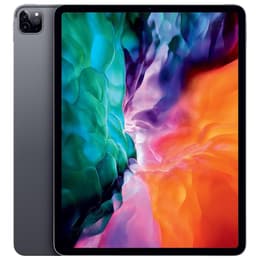

Galaxy Tab S9 FE (10.9", 2023) vs iPad Pro (2020, A12 series)

Galaxy Tab S9 FE (10.9", 2023)
Starting at

Refurbished price:$245.28

Versus $549.00 new

See options
iPad Pro (2020, A12 series)
Starting at

Refurbished price:$371.00

Versus $799.00 new

See options

Ratings

The Galaxy Tab S9 FE, released in October 2023, and the iPad Pro (2020), launched in March 2020, are two distinct tablet offerings designed for different user needs and ecosystems. While both provide a portable computing experience, they diverge significantly in their operating systems, display technologies, and core functionalities. The Galaxy Tab S9 FE operates on Android, offering a versatile and open platform, whereas the iPad Pro runs on Apple's iPadOS, known for its optimized performance and robust app ecosystem. Evaluating these devices as quality-assured refurbished options allows consumers to access advanced technology while making an eco-friendly choice.

Scores

Durability

When considering the longevity of a tablet, software support and physical durability are key factors. These devices offer different timelines for updates and varying levels of resilience.

  • Release Timeline and Software Support: The Galaxy Tab S9 FE, being a newer device from late 2023, benefits from a longer guaranteed software support period. Samsung has committed to providing four major Android OS upgrades and five years of security patches, meaning it will receive updates until Android 17 and security patches until 2028. In contrast, the iPad Pro (2020), released in March 2020, has already received several iPadOS updates and is likely nearing the end of its major OS update cycle, though it can still upgrade to iPadOS 17.2.
  • Physical Durability: The Galaxy Tab S9 FE features an IP68 rating for dust and water resistance, offering a degree of protection against environmental elements. Both tablets are constructed with aluminum frames, contributing to their overall structural integrity. The iPad Pro (2020) does not carry an official IP rating.
  • Practical Lifespan: Users prioritizing extended software longevity will find the Galaxy Tab S9 FE offers a longer runway for receiving the latest features and security enhancements. The iPad Pro (2020) remains a capable device, but its software support window is closing sooner.

Release Year

2023

2020

Last OS Compatibility

Yes

Yes

OS

Android

iPadOS

Performance

The performance of a tablet dictates its ability to handle various tasks, from casual browsing to demanding applications and creative work. Both tablets offer distinct performance profiles.

  • Processor Capabilities: The iPad Pro (2020) is equipped with a powerful processor that, at its release, was noted for its ability to handle demanding applications, complex multitasking, and even outperform some laptops. This allows for smooth operation in professional creative suites and intensive gaming. The Galaxy Tab S9 FE features a processor that provides solid performance for everyday tasks, streaming media, and light gaming. Users report a smooth experience for general use and productivity applications.
  • Multitasking and Responsiveness: Both devices offer configurations with 6GB of RAM, with the Galaxy Tab S9 FE also available in an 8GB RAM variant. The iPad Pro's optimized iPadOS and powerful hardware ensure highly responsive multitasking, allowing users to switch between apps and run multiple applications simultaneously without significant slowdowns. The Galaxy Tab S9 FE also handles multitasking effectively for typical usage scenarios, though it may show limitations with extremely graphics-intensive applications compared to the iPad Pro.
  • Storage Options and Battery Behavior: The Galaxy Tab S9 FE offers internal storage options of 128GB and 256GB, expandable via microSD card. The iPad Pro (2020) provides a wider range of internal storage, from 128GB up to 1TB, without expandable storage. In terms of battery, the Galaxy Tab S9 FE, with its 8000 mAh battery, typically delivers around 10-12 hours of web browsing or over 15 hours of video playback. The 11-inch iPad Pro (2020) has a 7538 mAh battery, while the 12.9-inch model has a 9720 mAh battery, both generally providing around 10 hours of web surfing or 12-15 hours of video playback.

Memory (GB)

6 GB

6 GB

Screen quality

The display is a primary interface for any tablet, influencing everything from media consumption to productivity. These two tablets offer different visual experiences.

  • Display Technology and Resolution: The Galaxy Tab S9 FE features a 10.9-inch IPS LCD display with a resolution of 2304 x 1440 pixels. This provides clear visuals for general use and media. The iPad Pro (2020) comes in two sizes: an 11-inch model with a 2388 x 1668 pixel Liquid Retina IPS LCD and a 12.9-inch model with a 2732 x 2048 pixel Liquid Retina IPS LCD. Both iPad Pro displays offer high pixel density for sharp images and text.
  • Refresh Rate and Brightness: The Galaxy Tab S9 FE offers a 90Hz refresh rate, contributing to smoother scrolling and a more fluid visual experience compared to standard 60Hz displays. The iPad Pro (2020) features a 120Hz ProMotion refresh rate, which provides exceptionally smooth motion and responsiveness, particularly noticeable in fast-paced content and stylus interaction. The iPad Pro (2020) also boasts a brightness of 600 nits, offering strong visibility in various lighting conditions. The Galaxy Tab S9 FE's display is described as bright, suitable for outdoor use.
  • Viewing Experience: The iPad Pro's ProMotion technology and higher peak brightness contribute to a more premium and responsive viewing experience, especially for tasks requiring precision or high-speed visuals. The Galaxy Tab S9 FE's 90Hz display still offers a good balance of smoothness and clarity for everyday entertainment and productivity.

Resolution

1440 x 2304

2388 x 1668

Screen type

IPS LCD

Liquid Retina display

Pixel density

250ppp

264ppp

Audiovisual

While tablets are not typically primary photography devices, their cameras are useful for video calls, document scanning, and occasional photo capture. Both tablets offer capable camera systems.

  • Rear Camera System: The Galaxy Tab S9 FE is equipped with an 8MP wide rear camera, capable of recording Full HD video at 30 frames per second. The iPad Pro (2020) features a more advanced dual-camera setup on the rear, including a 12MP wide lens and a 10MP ultrawide lens, alongside a LiDAR Scanner. This system supports 4K video recording at up to 60 frames per second.
  • Front Camera and Video Capabilities: For video calls and selfies, the Galaxy Tab S9 FE has a 12MP ultrawide front camera that can record 4K video at 30 frames per second. The iPad Pro (2020) includes a 7MP TrueDepth front camera, which also supports features like Face ID. The iPad Pro's LiDAR scanner enhances augmented reality experiences and improves depth sensing for photography.
  • Audio Experience: Both tablets provide a good audio experience for media consumption. The iPad Pro (2020) features a four-speaker audio system that adjusts sound based on orientation, delivering rich and immersive sound. The Galaxy Tab S9 FE also offers stereo speakers, providing clear audio output.

Miscellaneous

Beyond core performance and display, several practical features contribute to the overall user experience of a tablet.

  • Connectivity and Ports: Both tablets support modern wireless standards, including Wi-Fi 6 and Bluetooth (Galaxy Tab S9 FE with Bluetooth 5.3, iPad Pro 2020 with Bluetooth 5.0). Optional 5G connectivity is available for both models, providing faster mobile data speeds where supported. Both devices utilize a USB-C port for charging and data transfer. However, the Galaxy Tab S9 FE's USB-C port operates at USB 2.0 speeds, while the iPad Pro (2020) features a USB 3.1 Gen 2 compatible USB-C port, offering faster data transfer capabilities.
  • Biometric Security and Stylus Integration: The Galaxy Tab S9 FE incorporates a side-mounted fingerprint sensor for secure unlocking. The iPad Pro (2020) uses Face ID, Apple's facial recognition technology, for secure authentication. A notable difference is the stylus inclusion: the Galaxy Tab S9 FE comes with the S Pen in the box, offering immediate creative and productivity tools. The Apple Pencil 2nd Generation, compatible with the iPad Pro (2020), is sold separately.
  • Physical Design and Build: The Galaxy Tab S9 FE weighs approximately 523 grams and has a thickness of 6.5mm. The 11-inch iPad Pro (2020) weighs around 471 grams and is 5.9mm thick, while the 12.9-inch model weighs 641 grams with the same thickness. Both feature an aluminum build, providing a sturdy and premium feel.

Weight

15 oz

16 oz

Screen size (inches)

10.9

11

Network

Wi-Fi

Wi-Fi

Carrier compatibility

Without SIM Port

Without SIM Port

The Galaxy Tab S9 FE and the iPad Pro (2020) cater to different segments of the tablet market, each excelling in specific areas based on user priorities. User feedback often highlights the iPad Pro (2020)'s exceptional performance and fluid display as key strengths, making it a strong contender for demanding creative tasks and a highly responsive user experience. Its advanced camera system, including the LiDAR scanner, is also frequently praised for its capabilities in augmented reality and depth sensing. Some users, however, note the additional cost of accessories like the Apple Pencil.

Conversely, the Galaxy Tab S9 FE receives positive remarks for its included S Pen, offering immediate value for note-taking and drawing without an extra purchase. Its longer software support timeline and IP68 rating for dust and water resistance are also significant advantages for users seeking a more future-proof and durable device. While its performance is considered solid for most tasks, some users acknowledge it may not match the raw power of the iPad Pro for highly intensive applications.

Users prioritizing top-tier performance, a highly responsive 120Hz display, and a robust ecosystem of professional creative applications may find the iPad Pro (2020) well-suited to their needs. Its advanced camera features and Face ID also appeal to those seeking premium functionalities. On the other hand, users who value an included stylus, a longer software update commitment, and environmental resistance will likely lean towards the Galaxy Tab S9 FE. It presents a compelling option for students, casual users, and those seeking a balanced tablet experience with a focus on longevity and practical features. Both tablets, especially as quality-assured refurbished options, offer excellent value for different user profiles.


See all articles

Our recent comparisons