Galaxy Z Flip4 • Unlocked vs Google Pixel Fold • Unlocked

Galaxy Z Flip4 • Unlocked
Starting at

Refurbished price:$206.00

Versus $899.99 new

See options
Google Pixel Fold • Unlocked
Starting at

Refurbished price:$591.00

Versus $1,799.00 new

See options

Ratings

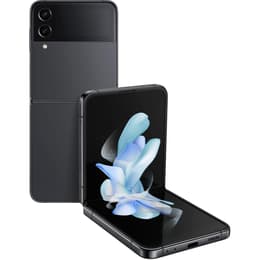
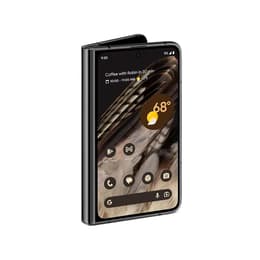
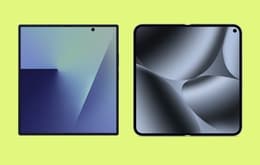
The Samsung Galaxy Z Flip4 (released August 2022) and the Google Pixel Fold (released June 2023) represent distinct approaches to foldable smartphone design. While both offer the versatility of a folding screen, the Z Flip4 features a compact, clamshell form factor that folds vertically, making it smaller when closed. In contrast, the Pixel Fold adopts a book-style design, unfolding horizontally to reveal a larger, tablet-like display. Both devices operate on the Android platform, offering different user experiences tailored to their unique hardware.

Scores

Durability

The longevity of a foldable smartphone is influenced by its physical design and software support. These devices, being foldables, require careful handling compared to traditional slab phones, though both offer water resistance.

  • Release Timeline: The Galaxy Z Flip4 was released in August 2022, making it an earlier model compared to the Google Pixel Fold, which launched in June 2023. This difference in release year impacts their respective software support cycles.
  • Software Support: Samsung typically provides four major Android OS updates and five years of security updates for the Galaxy Z Flip4, meaning it is expected to receive updates up to Android 16 and security patches until 2027. The Google Pixel Fold, being a newer device, is slated to receive five years of OS and security updates from its release, extending its support until at least June 2028.
  • Durability Considerations: Both devices feature IPX8 water resistance, offering protection against submersion. The Z Flip4 incorporates Armor Aluminum and Gorilla Glass Victus+ on its exterior, while the Pixel Fold uses Gorilla Glass Victus. User experiences suggest that while foldables are generally less robust than traditional phones, both models have shown resilience in various tests, though the inner foldable screens are more susceptible to scratches.

Release Year

2022

2023

Last OS Compatibility

Yes

Yes

OS

Android

Android

Foldable

Yes

Yes

Performance

Performance in foldable phones is crucial for handling both standard smartphone tasks and the demands of larger, multi-window interfaces. Both devices are equipped to deliver a responsive user experience.

  • Storage and Memory: The Galaxy Z Flip4 offers storage options of 128GB, 256GB, and 512GB, paired with 8GB of RAM. The Google Pixel Fold comes with 256GB or 512GB of storage and a higher 12GB of RAM. The increased RAM in the Pixel Fold can contribute to smoother multitasking and app switching, especially when utilizing its larger internal display.
  • Everyday Responsiveness: The Z Flip4, powered by a capable processor, handles demanding applications and multitasking smoothly. The Pixel Fold, featuring a different current-generation processor, also provides a fluid experience for daily use, gaming, and running multiple applications simultaneously.
  • Battery Behavior: The Galaxy Z Flip4 has a 3700 mAh battery, which users report typically lasts through a full day of moderate use, though heavy usage may require more frequent charging. The Google Pixel Fold is equipped with a larger 4821 mAh battery. Despite the larger capacity, real-world usage suggests its battery life is comparable to other foldables, often requiring a daily charge with mixed inner and outer screen use.

Memory (GB)

8 GB

12 GB

Screen quality

The display is a central feature of any foldable phone, and these two devices offer distinct viewing experiences both folded and unfolded.

  • Main Display Technology and Size: The Galaxy Z Flip4 features a 6.7-inch Foldable Dynamic AMOLED 2X main display with a resolution of 1080 x 2640 pixels and a 120Hz refresh rate. The Google Pixel Fold unfolds to a larger 7.6-inch Foldable OLED display, offering a resolution of 1840 x 2208 pixels and a 120Hz refresh rate. The Pixel Fold's larger internal screen provides a more expansive canvas for productivity and media consumption.
  • Cover Screen Utility: The Z Flip4 has a 1.9-inch Super AMOLED cover display (260 x 512 pixels) primarily used for notifications, quick actions, and as a camera viewfinder. The Pixel Fold features a more substantial 5.8-inch OLED cover screen (1080 x 2092 pixels) with a 120Hz refresh rate, designed to be fully functional as a regular smartphone display when folded, reducing the need to constantly open the device.
  • Viewing Experience: Both devices offer vibrant colors and deep blacks characteristic of AMOLED/OLED technology. The Pixel Fold's wider aspect ratio on its cover screen makes it more comfortable for one-handed typing and general smartphone use compared to the Z Flip4's smaller external display.

Resolution

1080 x 2640

1840 x 2208

Screen type

Foldable Dynamic AMOLED 2X

Foldable OLED

Audiovisual

Camera capabilities are a significant factor for many smartphone users, and both the Galaxy Z Flip4 and Google Pixel Fold offer versatile camera systems, each with its own strengths.

  • Rear Camera Systems: The Galaxy Z Flip4 is equipped with a dual-camera setup on the rear, featuring a 12 MP wide-angle lens with optical image stabilization (OIS) and a 12 MP ultrawide lens. The Google Pixel Fold boasts a triple-camera system, including a 48 MP wide-angle lens with OIS, a 10.8 MP ultrawide lens, and a 10.8 MP telephoto lens with 5x optical zoom. The Pixel Fold's dedicated telephoto lens provides greater zoom capabilities.
  • Photography Performance: The Z Flip4's main camera delivers good images in various lighting conditions, with improved low-light performance compared to its predecessor. The Pixel Fold, leveraging Google's image processing, is noted for taking consistently balanced photos, with its 48 MP main sensor producing impressive results. The Pixel Fold's 5x optical zoom is a notable advantage for capturing distant subjects.
  • Front Cameras and Video: The Z Flip4 has a 10 MP front camera. The Pixel Fold features an 8 MP front camera on its main screen and a 9.5 MP front camera on its cover screen. Both devices support 4K video recording at 30/60fps. The foldable design of both phones allows for unique photography angles, such as using the main cameras for high-quality selfies via the cover screen.

Main camera

12 megapixels

48 megapixels

Front camera

10 megapixels

8 megapixels

Miscellaneous

Beyond the core features, several practical elements contribute to the overall user experience and daily usability of these foldable devices.

  • Connectivity and Ports: Both the Galaxy Z Flip4 and the Google Pixel Fold support 5G connectivity and utilize USB-C for charging and data transfer. Neither device includes a traditional headphone jack. The Pixel Fold supports Wi-Fi 6E and Bluetooth 5.3, while the Z Flip4 supports Wi-Fi 6 and Bluetooth 5.2.
  • Biometric Security: Both smartphones feature a side-mounted fingerprint sensor for secure unlocking and authentication.
  • Physical Design and Handling: The Galaxy Z Flip4, when folded, is compact and pocketable, measuring 84.9 x 71.9 x 15.9-17.1 mm and weighing 187g. When unfolded, it measures 165.2 x 71.9 x 6.9 mm. The Google Pixel Fold is a larger and heavier device, weighing 283g. Folded, it measures 139.7 x 79.5 x 12.1 mm, and unfolded, it is 158.7 x 139.7 x 5.8 mm. The Pixel Fold's wider and shorter folded form factor makes its cover screen more usable as a primary display.
  • Build Materials: The Z Flip4 uses Armor Aluminum for its frame and Gorilla Glass Victus+ for its exterior panels. The Pixel Fold also incorporates Gorilla Glass Victus on its cover screen and back.

Weight

7 oz

7 oz

Screen size (inches)

6.7

7.6

Network

5G

5G

SIM card

Physical SIM + eSIM

Physical SIM + eSIM

Carrier compatibility

Unlocked

Unlocked

The Samsung Galaxy Z Flip4 and Google Pixel Fold offer distinct foldable experiences, each with its own set of advantages and considerations for users. Common praise for the Galaxy Z Flip4 often centers on its compact, pocketable design when folded, making it a stylish and convenient option for those seeking a smaller device. Users appreciate its improved battery life compared to previous generations and its capable camera system for everyday photography. Some criticisms include the smaller cover screen's limited functionality and the lack of a telephoto camera.

The Google Pixel Fold is frequently lauded for its expansive internal display, which provides a tablet-like experience, and its highly functional outer display that can be used as a full-fledged smartphone. Its camera system, particularly the inclusion of a telephoto lens and Google's image processing, receives positive feedback. However, some users have noted its heavier build and concerns about the durability of foldable screens in general.

Users prioritizing a highly compact and fashionable device that easily fits into smaller pockets may prefer the Galaxy Z Flip4. Its clamshell design offers a unique blend of portability and a full-sized smartphone experience when unfolded. Conversely, individuals who desire a larger, tablet-like screen for productivity, media consumption, and a more versatile external display might find the Google Pixel Fold better suited to their needs. Its robust camera system also appeals to those who value advanced photography features.

Both devices represent innovative steps in smartphone technology. For those considering these models, exploring quality-assured refurbished options can be an eco-friendly alternative to experience advanced foldable technology.
See all articles

Our recent comparisons