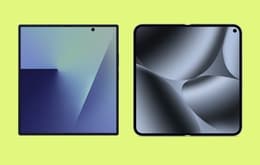
Galaxy Z Flip6 • Unlocked vs Google Pixel 8 Pro • Unlocked

Galaxy Z Flip6 • Unlocked
Starting at

Refurbished price:$339.99

Versus $1,099.00 new

See options
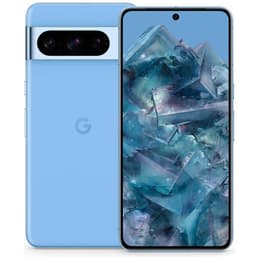
Google Pixel 8 Pro • Unlocked
Starting at

Refurbished price:$296.00

Versus $899.99 new

See options

Ratings

The Samsung Galaxy Z Flip6, released in July 2024, and the Google Pixel 8 Pro, launched in October 2023, represent distinct approaches to the modern smartphone experience. While the Z Flip6 offers a unique foldable clamshell design with a focus on portability and a secondary cover screen, the Pixel 8 Pro provides a traditional, larger slab form factor emphasizing advanced computational photography and a long-term software commitment. Both devices run on the Android operating system, offering a rich ecosystem of applications and services, but cater to different user preferences through their core design and feature sets.

Scores

Durability

Evaluating the practical lifespan of these devices involves considering their release timelines, software support, and physical resilience.

  • Release and Software Support: The Galaxy Z Flip6, launched in July 2024, benefits from Samsung's commitment to providing 7 generations of Android OS updates and 7 years of security updates, ensuring extended software longevity. The Google Pixel 8 Pro, released in October 2023, also offers an impressive 7 years of OS upgrades and security updates, aligning both devices with a long support window.
  • Repairability: The Galaxy Z Flip6 demonstrates a relatively high repairability score of 8 out of 10, with components like the screen being easier to replace than its predecessor, and neatly packed internal parts. In contrast, the Google Pixel 8 Pro has been noted for lower repairability, with some assessments giving it a score of 4.0 out of 10 due to challenges like accessing the battery and a soldered charging port. However, other reports suggest Pixel phones generally score around 6-7 out of 10, partly due to Google providing free manuals and OEM replacement parts.
  • Physical Durability: The Z Flip6 features Corning Gorilla Glass Victus 2 on its cover screen and back panel, with an inner display using ultra-thin glass, and an improved hinge designed to withstand shocks. It also carries an IP48 water and dust resistance rating. The Pixel 8 Pro's display is protected by Corning Gorilla Glass Victus 2, and its overall construction includes a polished glass back and satin metal finishes.

Release Year

2024

2023

Last OS Compatibility

Yes

Yes

OS

Android

Android

Foldable

Yes

No

Performance

The performance of both smartphones is driven by their respective processors, influencing how smoothly they handle daily tasks and demanding applications.

  • Processing Power: The Galaxy Z Flip6 is equipped with a current-generation processor that handles demanding applications and multitasking smoothly, benefiting from a new vapor chamber cooling system for sustained performance. The Google Pixel 8 Pro features a processor optimized for artificial intelligence and efficiency, providing a fluid user interface and reliable performance for everyday use, though it may not always top raw performance benchmarks.
  • Multitasking and Storage: Both devices come with 12 GB of RAM, allowing for efficient multitasking and app management. The Z Flip6 offers storage options of 256 GB or 512 GB. The Pixel 8 Pro provides more varied storage configurations, including 128 GB, 256 GB, 512 GB, and a 1 TB option in certain regions.
  • Battery Behavior: The Galaxy Z Flip6 houses a 4000 mAh battery, which has seen improvements in longevity compared to previous models, often lasting through a full day of typical use. The Pixel 8 Pro features a larger 5050 mAh battery, generally offering all-day power, with some users reporting 5-6 hours of screen-on time. However, some users have reported inconsistent battery performance with the Pixel 8 Pro.

Memory (GB)

12 GB

12 GB

Screen quality

The visual experience on these devices differs significantly due to their distinct display technologies and form factors.

  • Display Technology and Clarity: The Galaxy Z Flip6 features a 6.7-inch Dynamic AMOLED 2X main display with a resolution of 1080 x 2640 pixels, offering deep blacks and vibrant colors. Its 3.4-inch Super AMOLED cover display provides quick access to information and functions. The Pixel 8 Pro boasts a 6.7-inch LTPO AMOLED display with a higher resolution of 1344 x 2992 pixels, delivering sharp and detailed visuals.
  • Brightness and Refresh Rate: The Z Flip6's main display offers a 120 Hz variable refresh rate and a peak brightness of 2600 nits, ensuring smooth scrolling and good visibility outdoors. The Pixel 8 Pro's display also features an adaptive refresh rate, ranging from 1 Hz to 120 Hz, and can reach a peak brightness of up to 2400 nits, making it highly visible in bright conditions.
  • Screen Experience: The Z Flip6's foldable design allows for a compact form factor when closed, while its main screen crease has been significantly minimized for a smoother viewing experience. The Pixel 8 Pro offers a large, flat display with rounded corners, providing an expansive and immersive viewing area.

Resolution

1080 x 2640

1344 x 2992

Screen type

Foldable Dynamic LTPO AMOLED 2X

LTPO OLED

Audiovisual

Both smartphones offer capable camera systems, though they are designed with different photographic priorities in mind.

  • Camera System Configuration: The Galaxy Z Flip6 features a dual-camera setup on the rear, including a 50 MP wide-angle main sensor with optical image stabilization (OIS) and a 12 MP ultra-wide-angle lens. The Google Pixel 8 Pro comes with a more versatile triple-camera system, comprising a 50 MP wide-angle main lens, a 48 MP telephoto lens with 5x optical zoom, and a 48 MP ultra-wide-angle lens.
  • Photography Performance: The Z Flip6's main camera delivers improved performance, capturing photos with good dynamic range and detail in well-lit conditions, and is noted for good video stabilization. However, it may exhibit inconsistencies in portrait mode, low-light noise, and occasional white balance issues. The Pixel 8 Pro's advanced camera system, supported by its processor's AI capabilities, is designed for high-quality computational photography across various scenarios.
  • Video and Audio: The Z Flip6 is capable of sharp 4K video recording at up to 60 frames per second, particularly in good lighting. The Pixel 8 Pro also offers 4K video recording at 24 frames per second and is known for clear phone calls due to Google's audio processing features. The Z Flip6's cover screen allows for high-quality selfies using the main camera.

Main camera

50 megapixels

50 megapixels

Front camera

10 megapixels

10.5 megapixels

Miscellaneous

Beyond the core features, several practical elements contribute to the overall user experience of these devices.

  • Connectivity and Ports: Both the Galaxy Z Flip6 and the Google Pixel 8 Pro support 5G connectivity, Wi-Fi 6 (ax) or Wi-Fi 7 (ax), and Bluetooth 5.3, ensuring fast and reliable wireless communication. Both devices utilize a USB Type-C port for charging and data transfer, and neither includes a traditional 3.5mm headphone jack.
  • Sensors and Security: The Z Flip6 incorporates various sensors and offers secure access. The Pixel 8 Pro features an under-display fingerprint sensor and supports face unlock for convenient and secure authentication. It also includes a unique temperature sensor.
  • Design and Handling: The Galaxy Z Flip6 has dimensions of 71.9 x 165.1 x 6.9 mm when unfolded and weighs 187 g, offering a compact and pocketable experience when folded. The Google Pixel 8 Pro is a larger device, measuring 162.6 x 76.5 x 8.8 mm and weighing 213 g, providing a substantial feel in hand.

Weight

7 oz

7 oz

Screen size (inches)

6.7

6.7

Network

5G

5G

SIM card

Physical SIM + eSIM

Physical SIM + eSIM

Carrier compatibility

Unlocked

Unlocked

Connector

USB-C

USB-C

The Samsung Galaxy Z Flip6 and the Google Pixel 8 Pro cater to different user priorities, each excelling in its own domain. Users often praise the Z Flip6 for its unique foldable form factor, which enhances portability and offers creative photographic opportunities with its cover screen. Its improved battery life and enhanced durability features are also frequently highlighted as positive advancements. However, some users note that while its camera has improved, it may not match the overall versatility of non-foldable flagship cameras.

The Google Pixel 8 Pro is commonly lauded for its exceptional display quality, robust software support with 7 years of updates, and its advanced computational photography capabilities, often driven by its AI-focused processor. User feedback sometimes points to its battery life as a point of contention, with some experiencing inconsistent performance despite the larger capacity. Its repairability is also a noted concern for some.

Users prioritizing a compact, stylish device with a unique interactive experience and strong software longevity will find the Galaxy Z Flip6 well-suited to their needs. Its clamshell design and cover screen functionality offer a distinct way to interact with a smartphone. Conversely, individuals who value a large, high-quality display, a comprehensive camera system with advanced AI features, and a long-term commitment to software updates in a traditional smartphone form factor may lean toward the Google Pixel 8 Pro. Both devices offer a quality-assured refurbished option, providing an eco-friendly alternative for consumers seeking to make informed and sustainable choices.
See all articles

Our recent comparisons