
Compare models
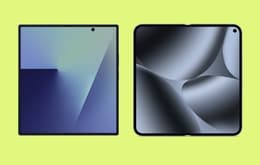
Galaxy Z Fold5 • Unlocked vs Motorola Moto G (2025) • Unlocked
- 1-year warranty
- Free standard shipping
- Free 30-day returns
Differences at a glance
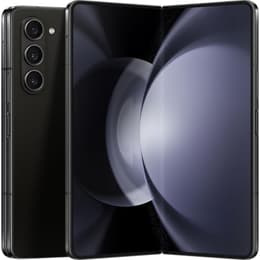
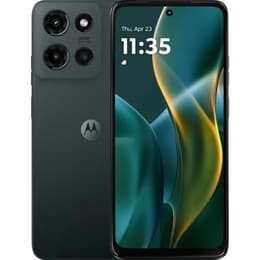
The Samsung Galaxy Z Fold5 (2023) and the Motorola Moto G (2025) represent two fundamentally distinct approaches to modern smartphone engineering. While the Galaxy Z Fold5 offers an innovative dual-screen foldable design aimed at intensive multitasking, the Motorola Moto G provides a traditional slate form factor focused on everyday reliability. Both devices run on the Android operating system, yet they target entirely different user preferences regarding hardware capabilities and physical design.
Available Models
Color
Storage
Scores
Durability
When examining longevity and durability, these two devices offer contrasting build philosophies and software support timelines shaped by their respective release years.
- Software longevity: The Galaxy Z Fold5 benefits from an extensive multi-year software update schedule provided by Samsung, while the Motorola Moto G offers standard security updates typical of its category.
- Build materials: The Galaxy Z Fold5 features aluminum framing and glass protection designed for a folding mechanism, whereas the Motorola Moto G utilizes conventional scratch-resistant glass and a sturdy unibody construction.
- Expected lifespan: Both models are built to endure daily routines, though folding displays require mindful handling compared to traditional rigid slabs.
Release Year
2023
2025
OS
Android
Android
Foldable
Yes
No
Performance
Underneath the surface, hardware configurations dictate how each device manages daily applications, multitasking routines, and power distribution.
- Multitasking capacity: The Galaxy Z Fold5 handles demanding professional apps and split-screen workflows smoothly thanks to its high-capacity memory, whereas the Motorola Moto G manages everyday tasks and standard messaging efficiently with its streamlined hardware setup.
- Storage capacity: Samsung offers expansive internal storage tiers starting at higher thresholds, while Motorola provides standard onboard space supplemented by expandable storage via a memory card slot.
- Battery behavior: The Motorola Moto G's single-screen layout and efficient processor deliver steady day-long endurance, while the Galaxy Z Fold5 manages power across two separate displays depending on how frequently the folding screen is utilized.
Screen quality
The visual experience serves as the most striking differentiator between these two smartphones, shifting from a flexible dual-screen setup to a conventional single panel.
- Display technology: The Galaxy Z Fold5 features vibrant foldable organic light-emitting diode technology paired with a secondary outer cover screen, whereas the Motorola Moto G utilizes a spacious liquid crystal display panel.
- Refresh rate and fluidity: Both devices support high refresh rates to ensure smooth scrolling through web pages, social media feeds, and system menus.
- Outdoor visibility: Samsung's flagship panels achieve high peak brightness levels for clear outdoor legibility, while Motorola's display provides clear viewing for typical indoor and shaded outdoor environments.
Resolution
1812 x 2176
720x1604
Screen type
Foldable Dynamic AMOLED 2X
IPS LCD
Audiovisual
Media capture and audio output capabilities cater to different expectations for photography, video recording, and multimedia playback.
- Camera versatility: The Galaxy Z Fold5 incorporates a flexible multi-lens rear array including ultra-wide and optical zoom options, while the Motorola Moto G focuses on a high-resolution primary sensor supported by a secondary depth helper for everyday snapshots.
- Video and low-light performance: Samsung's advanced image processing handles challenging lighting conditions and high-resolution video stabilization smoothly, whereas Motorola captures clear casual footage for social sharing.
- Media consumption: Both devices deliver balanced stereo sound output for listening to podcasts, watching videos, or handling hands-free calls.
Miscellaneous
Practical physical traits and connectivity standards shape how comfortable each phone feels during daily handling and travel.
- Connectivity options: Both models support modern fifth-generation mobile networks, standard wireless protocols, and dependable Bluetooth pairing.
- Physical dimensions: The Motorola Moto G offers a lightweight, single-hand-friendly slate profile, whereas the Galaxy Z Fold5 is heavier and thicker when folded, expanding into a tablet-sized format when opened.
- Security features: Both devices integrate responsive biometric sensors built into the power button or screen for secure authentication.
Weight
7 oz
7 oz
Screen size (inches)
7.6
6.7
Network
5G
5G
SIM card
Physical SIM + eSIM
Physical SIM + eSIM
Carrier compatibility
Unlocked
Unlocked
What the community thinks
User discussions across online communities highlight distinct preferences for each device. Owners of the Galaxy Z Fold5 frequently praise its expansive tablet-sized inner screen and productivity capabilities, though some note the heavier weight and visible crease along the folding display. Conversely, users of the Motorola Moto G appreciate its straightforward reliability, lightweight daily handling, and dependable battery longevity, while noting that its performance is best suited for essential tasks rather than heavy gaming.
Users prioritizing advanced multitasking, large screen workspace, and versatile photography will find the Galaxy Z Fold5 well-suited to their workflow. Meanwhile, users prioritizing a lightweight traditional phone, straightforward operation, and a quality-assured refurbished option as an eco-friendly, sustainable choice will lean toward the Motorola Moto G. Evaluating personal daily routines remains the most effective way to determine which device matches your needs.