Compare models

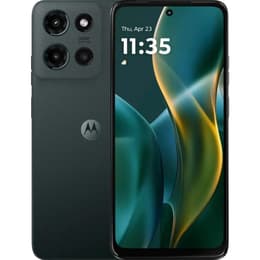
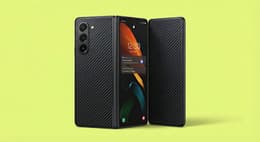
Galaxy Z Fold6 • Unlocked vs Motorola Moto G (2025) • Unlocked

  • 1-year warranty
  • Free standard shipping
  • Free 30-day returns
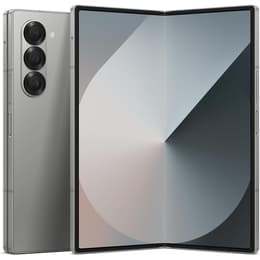
Galaxy Z Fold6 • Unlocked
Starting at

Refurbished price:$925.00

Versus $1,499.00 new

See options

Differences at a glance

The Samsung Galaxy Z Fold6 (2024) and the Motorola Moto G (2025) represent two entirely different concepts in mobile technology, contrasting an advanced foldable flagship device with a practical, traditional candy-bar smartphone. While the Galaxy Z Fold6 provides a dual-screen multitasking layout and high-end capabilities, the Motorola Moto G focuses on everyday utility and straightforward operation. Operating on customized versions of the Android platform, these devices serve vastly different hardware philosophies and user lifestyles.

Available Models

Color

Storage (GB)

Scores

Durability

When evaluating durability and expected lifespan, these two smartphones follow distinct design timelines and software support commitments.

  • Software longevity: The Galaxy Z Fold6 is backed by a multi-year update commitment extending across seven years of operating system upgrades, whereas the Motorola Moto G receives standard support appropriate for its class.
  • Build materials and design protection: The Galaxy Z Fold6 incorporates aluminum frames and specialized glass protection suited for a complex folding hinge structure, while the Motorola Moto G utilizes a robust body with water-repellent styling and durable backing materials.
  • Practical lifespan: Users can expect extended software currency from the flagship foldable, while the Moto G offers dependable service for routine day-to-day communications.

Release Year

2024

2025

OS

Android

Android

Foldable

Yes

No

Performance

Performance capabilities differ significantly between the high-tier multitasking architecture of the foldable device and the streamlined execution of the everyday model.

  • Multitasking and processing power: The Galaxy Z Fold6 handles heavy gaming, intense graphics, and simultaneous multi-window applications smoothly with abundant memory reserves, whereas the Motorola Moto G manages standard daily tools like web browsing, messaging, and media streaming reliably with moderate memory allocation.
  • Storage configurations: The Galaxy Z Fold6 provides extensive onboard storage tiers starting at high capacities without expansion, while the Motorola Moto G offers modest internal storage paired with a dedicated memory card slot for added media flexibility.
  • Battery behavior: The Motorola Moto G benefits from a large battery capacity paired with efficient components to comfortably clear a full day of typical use, while the Galaxy Z Fold6 utilizes a split-cell battery system that balances power across two distinct screens.

Screen quality

Display engineering represents one of the most prominent technical divides between these two mobile devices.

  • Display technology: The Galaxy Z Fold6 features dynamic organic light-emitting diode panels on both its outer cover and its tablet-sized inner folding screen, delivering deep contrast levels and rich colors, while the Motorola Moto G uses a traditional liquid crystal display panel focused on clear text and standard media viewing.
  • Refresh rate and fluidity: Both models support a 120Hz refresh rate to ensure smooth scrolling through menus, web pages, and user interfaces.
  • Outdoor visibility: The Galaxy Z Fold6 achieves exceptionally high peak brightness levels for clear outdoor readability under direct sunlight, whereas the Motorola Moto G offers standard brightness suited for indoor environments and shaded outdoor settings.

Resolution

1856 x 2160

720x1604

Screen type

Foldable Dynamic LTPO AMOLED 2X

IPS LCD

Audiovisual

Optics and multimedia configurations cater to distinct styles of content creation and consumption.

  • Camera versatility: The Galaxy Z Fold6 employs a flexible triple-lens rear array featuring a primary high-resolution sensor, an ultra-wide option, and a dedicated telephoto lens with optical zoom, while the Motorola Moto G equips a dual-lens setup centered on a primary high-megapixel main sensor and a macro option for close-up shots.
  • Video and low-light execution: The flagship foldable captures detailed low-light imagery and high-resolution video formats with advanced stabilization, while the Motorola Moto G handles everyday snapshots and casual video calls reliably in standard lighting conditions.
  • Audio output: Both devices feature stereo speaker configurations for media playback, with the Galaxy Z Fold6 providing an immersive soundstage enhanced by its wide unfolding display layout.

Miscellaneous

Practical daily usability elements shape how each device fits into travel, work, and communication routines.

  • Connectivity standards: Both smartphones support modern 5G connectivity networks, Wi-Fi standards, and Bluetooth pairing for wireless accessories.
  • Physical dimensions and handling: The Motorola Moto G features a traditional candy-bar form factor with a lightweight feel, whereas the Galaxy Z Fold6 adopts a thicker folded profile that transforms into a wider tablet format when opened.
  • Authentication and ports: The Motorola Moto G relies on a side-mounted fingerprint sensor and includes a traditional headphone jack alongside a USB-C port, while the Galaxy Z Fold6 utilizes face recognition and a fingerprint scanner integrated into the side power button without legacy audio ports.

Weight

8 oz

7 oz

Screen size (inches)

7.6

6.7

Network

5G

5G

SIM card

Physical SIM + eSIM

Physical SIM + eSIM

Carrier compatibility

Unlocked

Unlocked

What the community thinks

User feedback highlights distinct preferences for each device across community discussions. Owners of the Galaxy Z Fold6 frequently praise its innovative dual-screen workspace, top-tier multitasking capability, and compact pocketable tablet design. Some users note concerns regarding the visible crease on the main inner screen and the heavier overall weight. Conversely, users of the Motorola Moto G appreciate its dependable daily battery longevity, lightweight construction, and the inclusion of expandable storage via memory cards. Common criticisms for the budget-focused model center on its basic display contrast and modest processing margins for demanding tasks.

Choosing between these options depends heavily on individual workflow priorities. Users prioritizing expansive multitasking space, advanced mobile productivity, and high-end hardware will find the Galaxy Z Fold6 well-suited to their needs. Meanwhile, users prioritizing straightforward communication, reliable daily endurance, and functional simplicity may lean toward the Motorola Moto G. For those seeking an eco-friendly, quality-assured alternative, exploring a refurbished model through Back Market provides a sustainable path to acquiring advanced mobile technology without compromising on reliability.

Our recent comparisons