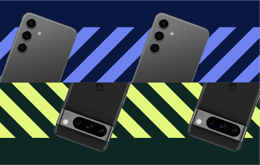

Google Pixel 7 Pro • Unlocked vs iPhone 16e • Unlocked

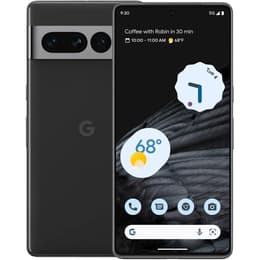
Google Pixel 7 Pro • Unlocked
Starting at

Refurbished price:$221.00

Versus $899.99 new

See options
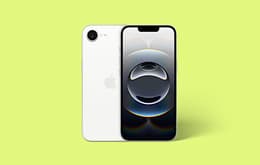
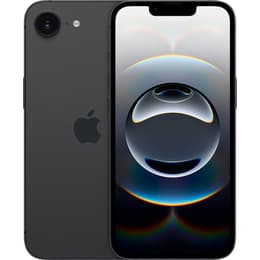
iPhone 16e • Unlocked
Starting at

Refurbished price:$361.00

Versus $599.00 new

See options

Ratings

The Google Pixel 7 Pro, released in October 2022, and the iPhone 16E, introduced in February 2025, represent distinct approaches to the smartphone experience from two major manufacturers. While the Pixel 7 Pro offers a premium Android flagship experience with advanced camera capabilities and a high-resolution display, the iPhone 16E serves as an entry-level iOS device, focusing on core Apple features and a more recent processor. These devices cater to users with different operating system preferences and priorities regarding features and longevity.

Scores

Durability

When evaluating the practical lifespan of these devices, their respective release timelines and software support policies are key considerations.

  • Release Timeline: The Google Pixel 7 Pro launched in October 2022, making it approximately three and a half years old by April 2026. The iPhone 16E, on the other hand, was released in February 2025, positioning it as a much newer device at just over a year old. This age difference directly impacts their remaining software support and overall practical usability.
  • Software Longevity: Google committed to five years of software updates for the Pixel 7 Pro, with security updates extending until October 2027 and Android OS updates until October 2025. The iPhone 16E, being a newer Apple device, benefits from Apple's typically longer support cycle, receiving at least five years of major iOS updates from its release, meaning support is expected to continue until at least February 2030. This extended support means the iPhone 16E will receive new features and security patches for a longer duration.
  • Repairability and Build: Both devices feature robust builds with glass fronts and aluminum frames, offering IP68 water and dust resistance. The iPhone 16E incorporates Ceramic Shield on its front, designed for enhanced durability. While specific repairability scores vary, both are designed to withstand daily use, with the newer iPhone potentially benefiting from more recent material advancements.

Release Year

2022

2025

OS

Android

iOS

Foldable

No

No

Performance

The performance of a smartphone is crucial for daily responsiveness and handling demanding applications, with both devices offering capable hardware for their respective ecosystems.

  • Processor Capabilities: The Google Pixel 7 Pro is powered by the Google Tensor G2, designed to optimize Google's AI and machine learning features, providing smooth performance for everyday tasks, multitasking, and moderate gaming. The iPhone 16E features Apple's A18 chip, which includes a 4-core GPU and is optimized for generative artificial intelligence tasks, offering a responsive experience across iOS applications and more demanding mobile games.
  • System Responsiveness and Multitasking: The Pixel 7 Pro comes with 12GB of RAM, facilitating efficient multitasking and quick app switching. The iPhone 16E, with 8GB of RAM, also handles multitasking smoothly within the optimized iOS environment. Users of both devices can expect fluid navigation and quick app loading times.
  • Battery Behavior: The Pixel 7 Pro houses a 5000 mAh battery, generally providing a full day of use for most users, though heavy usage might require more frequent charging. The iPhone 16E is noted for having the longest battery life among 6.1-inch iPhones, with up to 26 hours of video playback, thanks to its 4005 mAh battery and the efficiency of the A18 chip.

Memory (GB)

8 GB

8 GB

Screen quality

The visual experience is a significant factor for many users, and both devices offer vibrant displays, though with some key differences.

  • Display Technology and Resolution: The Google Pixel 7 Pro features a 6.7-inch QHD+ LTPO OLED display with a resolution of 3120 x 1440 pixels, resulting in a high pixel density of 512 ppi. This provides sharp images and text. The iPhone 16E sports a 6.1-inch Super Retina XDR OLED display with a resolution of 2532 x 1170 pixels and 460 ppi, offering clear visuals.
  • Refresh Rate and Smoothness: The Pixel 7 Pro boasts a 120Hz adaptive refresh rate, allowing for smoother scrolling and more fluid animations, especially noticeable in gaming and fast-paced content. The iPhone 16E maintains a standard 60Hz refresh rate, which provides a consistent experience but lacks the ultra-smoothness of higher refresh rate displays.
  • Brightness and Viewing Experience: Both displays offer HDR support for enhanced contrast and color. The Pixel 7 Pro delivers good brightness for outdoor visibility. The iPhone 16E offers 800 nits typical max brightness and can reach up to 1200 nits peak brightness for HDR content, ensuring good visibility in various lighting conditions. The iPhone 16E also features a notch design for its front camera system.

Resolution

1440 x 3120

2532x1170

Screen type

LTPO AMOLED

Super Retina XDR

Audiovisual

Both smartphones prioritize photography, but they approach their camera systems with different hardware configurations and computational photography philosophies.

  • Rear Camera System: The Google Pixel 7 Pro is equipped with a versatile triple-camera setup, including a 50MP wide-angle main lens, a 12MP ultrawide lens with a broad field of view, and a 48MP telephoto lens capable of 5x optical zoom and up to 30x Super Res Zoom. This provides extensive flexibility for various photographic scenarios, from wide landscapes to distant subjects. The iPhone 16E features a single 48MP Fusion main camera with an f/1.6 aperture, which uses sensor cropping to achieve 2x optical quality telephoto zoom. It also supports Night mode and Portrait mode.
  • Photography Performance: The Pixel 7 Pro is renowned for its computational photography, delivering detailed images with accurate colors and strong low-light performance across its lenses. The iPhone 16E's 48MP Fusion camera significantly improves photo quality over its predecessors, especially in low light, and is capable of capturing high-resolution photos. However, it lacks dedicated ultrawide or macro capabilities.
  • Video Recording and Audio: Both devices offer strong video recording capabilities. The Pixel 7 Pro can record 4K video at 30 or 60 frames per second, with good stabilization. The iPhone 16E supports 4K Dolby Vision video recording at various frame rates, including 24, 25, 30, or 60 fps, and features a 12MP TrueDepth front camera capable of 4K video. Both provide clear audio capture for calls and recordings, and offer a good media consumption experience through their speakers.

Main camera

50 megapixels

48MP

Front camera

10.8 megapixels

TrueDepth 12MP

Miscellaneous

Beyond core features, several practical elements contribute to the overall user experience and differentiate these two devices.

  • Connectivity Options: Both smartphones support 5G connectivity for fast mobile data. The Pixel 7 Pro includes Wi-Fi 6 and Bluetooth 5.2. The iPhone 16E features Wi-Fi 6 with 2x2 MIMO and Bluetooth 5.3, along with an Apple C1 cellular modem designed for improved power efficiency.
  • Ports and Biometrics: The Pixel 7 Pro utilizes a USB-C port for charging and data transfer and features an under-display optical fingerprint scanner for secure unlocking, alongside face unlock. The iPhone 16E has transitioned to a USB-C port and relies on Face ID for biometric authentication. It also includes an Action Button, which is customizable for quick access to various functions.
  • Design and Handling: The Pixel 7 Pro has a distinctive camera bar design and weighs 212g. The iPhone 16E, with its 6.1-inch display, is a more compact device, weighing 167g, making it lighter and potentially easier for one-handed use. Both devices feature premium build materials, including glass and aluminum.

Weight

7 oz

167 oz

Screen size (inches)

6.7

6.1

Network

5G

5G

SIM card

Physical SIM + eSIM

eSIM

Carrier compatibility

Unlocked

Unlocked

Choosing between the Google Pixel 7 Pro and the iPhone 16E involves weighing priorities between operating system ecosystems, camera versatility, and long-term software support. Users often praise the Pixel 7 Pro for its exceptional camera system, particularly its telephoto capabilities and computational photography, which consistently produce high-quality images. Its QHD+ 120Hz OLED display is also a frequent highlight, offering a smooth and immersive visual experience. Some criticisms for the Pixel 7 Pro have included its battery life, which, while generally good, may not always match the endurance of some competitors for very heavy users.

The iPhone 16E, on the other hand, receives commendation for its robust performance driven by the A18 chip and its integration with Apple Intelligence, offering a responsive and intelligent user experience. Its significantly longer software support timeline is a strong advantage for users seeking extended device longevity. The improved battery life for a 6.1-inch iPhone is also a notable positive. However, some users might find the 60Hz display a drawback compared to devices with higher refresh rates, and its single rear camera, while capable, offers less photographic versatility than multi-lens systems.

Users prioritizing a highly versatile camera system with advanced zoom capabilities and a high-refresh-rate display may find the Google Pixel 7 Pro well-suited to their needs. Conversely, individuals who value extended software support, a compact form factor, and seamless integration within the Apple ecosystem, along with strong core performance and battery life, may lean toward the iPhone 16E. Both devices offer a quality-assured refurbished option, providing an eco-friendly alternative for consumers looking to make informed and sustainable choices.

See all articles

Our recent comparisons