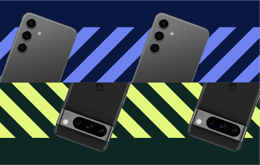
Google Pixel 9 Pro • Unlocked vs iPhone 15 • Locked AT&T

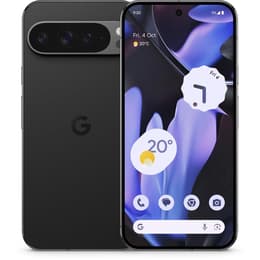
Google Pixel 9 Pro • Unlocked
Starting at

Refurbished price:$435.86

Versus $899.99 new

See options
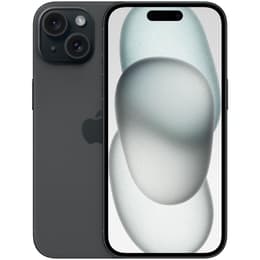
iPhone 15 • Locked AT&T
Starting at

Refurbished price:$348.00

Versus $729.00 new

See options

Ratings

The Google Pixel 9 Pro, released in late 2024, and the iPhone 15, launched in late 2023, represent distinct approaches to the premium smartphone experience. While both devices offer advanced features and robust performance, they cater to different user preferences through their respective operating systems and hardware philosophies. The Pixel 9 Pro runs on Android, emphasizing Google's artificial intelligence capabilities and a versatile camera system, whereas the iPhone 15 operates on iOS, focusing on a streamlined user experience and integrated ecosystem. Key differentiators include their display technologies, camera configurations, and software support timelines.

Scores

Durability

When considering the longevity of these devices, both the Google Pixel 9 Pro and the iPhone 15 offer substantial software support and durable builds, though with some differences in their expected practical lifespans.

  • Release Timeline: The Google Pixel 9 Pro, having been released in late 2024, benefits from a more recent launch, potentially extending its relevance in terms of hardware and software compatibility compared to the iPhone 15, which was released in September 2023.
  • OS Support Duration: Google has committed to an impressive seven years of software updates for the Pixel 9 Pro, ensuring it will receive major Android versions and security patches well into the future. The iPhone 15, while also receiving consistent iOS updates, typically has a slightly shorter, though still extensive, support period.
  • Durability Features: Both devices feature robust construction. The Pixel 9 Pro incorporates Gorilla Glass Victus 2 on its front and back, alongside an IP68 rating for dust and water resistance. The iPhone 15 features a Ceramic Shield front cover and a color-infused glass back, also boasting an IP68 rating for splash, water, and dust resistance. User experiences suggest both are built to withstand daily use, with the Pixel 9 Pro's frame noted by some users as potentially slippery.

Release Year

2024

2023

Last OS Compatibility

Yes

Yes

OS

Android

iOS

Foldable

No

No

Performance

The performance of a smartphone is crucial for daily tasks, from browsing to demanding applications. Both the Google Pixel 9 Pro and the iPhone 15 deliver smooth experiences, but they achieve this through different hardware configurations.

  • System Responsiveness: The Pixel 9 Pro is equipped with a current-generation processor designed by Google, which, combined with its substantial 16GB of RAM, allows for seamless multitasking and efficient handling of complex applications and AI features. The iPhone 15, powered by its own advanced processor and 6GB of RAM, provides a highly optimized and fluid experience within the iOS ecosystem, ensuring apps launch quickly and run smoothly.
  • Battery Behavior: The Pixel 9 Pro houses a 4700mAh battery, which is designed to provide over 24 hours of typical use on a single charge. It supports 27W wired charging and various wireless charging standards. The iPhone 15 features a 3349mAh battery, offering up to 20 hours of video playback and around 10-11 hours of general usage in independent tests. It supports 20W wired charging and 15W MagSafe wireless charging.
  • Storage Options: Both devices offer a range of internal storage capacities to suit different user needs. The Pixel 9 Pro is available with 128GB, 256GB, 512GB, or 1TB of storage. The iPhone 15 comes with options for 128GB, 256GB, or 512GB of internal storage.

Memory (GB)

16 GB

6 GB

Screen quality

The visual experience on a smartphone is largely defined by its display, and both the Google Pixel 9 Pro and the iPhone 15 offer high-quality screens with distinct characteristics.

  • Display Technology and Clarity: The Pixel 9 Pro features a 6.3-inch LTPO OLED display with a resolution of 2856 x 1280 pixels, resulting in a pixel density of 495 ppi, providing sharp and detailed visuals. The iPhone 15 comes with a 6.1-inch Super Retina XDR OLED display, offering a resolution of 2556 x 1179 pixels and a pixel density of 460 ppi, delivering vibrant colors and deep blacks.
  • Brightness and Refresh Rate: The Pixel 9 Pro's display boasts a peak brightness of up to 3,000 nits, ensuring excellent visibility even in bright outdoor conditions, and features a dynamic 120Hz refresh rate for smooth scrolling and responsive interactions. The iPhone 15 offers a peak outdoor brightness of up to 2,000 nits and a typical brightness of 1,000 nits, providing clear viewing in various lighting. However, its refresh rate is a standard 60Hz.
  • Viewing Experience: The Pixel 9 Pro's larger screen and higher refresh rate may appeal to users who prioritize immersive media consumption and gaming. The iPhone 15 introduces the Dynamic Island, an interactive area at the top of the display that adapts to alerts and activities, enhancing the user interface.

Resolution

1280 x 2856

1179 x 2556

Screen type

LTPO OLED

Super Retina XDR OLED

Audiovisual

Both the Google Pixel 9 Pro and the iPhone 15 are equipped with advanced camera systems, each excelling in different aspects of mobile photography and videography.

  • Camera System Capabilities: The Pixel 9 Pro features a versatile triple-camera setup on the rear, including a 50MP main sensor, a 48MP ultrawide lens with a 123-degree field of view and macro autofocus, and a 48MP periscope telephoto lens offering 5x optical zoom. Its front camera is a high-resolution 42MP sensor with autofocus. The iPhone 15 has a dual-camera system with a 48MP main camera that uses a quad-pixel sensor to enable a 2x telephoto zoom, and a 12MP ultrawide camera with a 120-degree field of view. Its front-facing TrueDepth camera is 12MP.
  • Photography Performance: The Pixel 9 Pro is known for its computational photography, offering features like Night Sight, Astrophotography, and Portrait Mode, with a tendency for warmer, more contrasty images. It also includes 'Pro Controls' for manual adjustments. The iPhone 15 utilizes features like Photonic Engine, Deep Fusion, and Smart HDR 5 to produce detailed and well-exposed photos, often with cooler, more neutral tones.
  • Video Recording Quality: The Pixel 9 Pro offers advanced video features such as Video Boost, which can upscale videos to 8K resolution via cloud processing, and Cinematic Blur. The iPhone 15 provides 4K Dolby Vision video recording at up to 60fps, Cinematic mode up to 4K HDR at 30fps, and Action mode for stabilized footage, with users often praising its video stabilization.

Main camera

50 megapixels

48 megapixels

Front camera

42 megapixels

12 megapixels

Miscellaneous

Beyond core performance and camera, several practical elements contribute to the overall user experience of these smartphones.

  • Connectivity and Ports: Both devices support 5G cellular connectivity, Wi-Fi 6, and Bluetooth 5.3 for modern wireless communication. A notable difference lies in their wired connectivity: the Pixel 9 Pro features a USB-C port, while the iPhone 15 also adopts USB-C, marking a significant change for Apple, though its data transfer speeds are limited to USB 2.0.
  • Sensors and Biometrics: The Pixel 9 Pro includes an under-display ultrasonic fingerprint sensor for secure unlocking, alongside other standard sensors. The iPhone 15 relies on Face ID for biometric authentication, utilizing its TrueDepth camera system.
  • Design and Handling: The Pixel 9 Pro measures 152.8 x 72 x 8.5 mm and weighs 199 grams, featuring an aluminum and glass construction. The iPhone 15 is slightly more compact and lighter at 147.6 x 71.6 x 7.8 mm and 171 grams, with an aluminum design and a Ceramic Shield front. Both devices are designed to be comfortable to hold, though some users find the Pixel 9 Pro's frame to be slippery.

Weight

7 oz

171 oz

Screen size (inches)

6.3

6.1

Network

5G

5G

SIM card

Physical SIM + eSIM

eSIM

Carrier compatibility

Unlocked

AT&T

Connector

USB-C

USB-C (USB 2)

The Google Pixel 9 Pro and the iPhone 15 each offer compelling smartphone experiences, tailored to different user priorities. User feedback often praises the Pixel 9 Pro for its advanced AI features, particularly in photography, and its long-term software support. Many appreciate the versatility of its triple camera system, including the dedicated telephoto lens and high-resolution front camera. Some users, however, have noted the slipperiness of its frame.

The iPhone 15 is frequently lauded for its seamless iOS ecosystem, robust build quality with Ceramic Shield, and consistent performance. Its introduction of the Dynamic Island and the switch to USB-C were well-received, though some users might desire a higher display refresh rate or faster USB-C data transfer speeds.

Users prioritizing cutting-edge computational photography, extensive AI integration, and a longer software update commitment may find the Google Pixel 9 Pro well-suited to their needs. Its higher display refresh rate and larger RAM capacity also make it appealing for those who engage in demanding tasks or prefer a smoother visual experience. Conversely, individuals who value a highly integrated and intuitive operating system, strong video capabilities, and a slightly more compact and lighter design might lean towards the iPhone 15. Both devices represent excellent choices, and considering a quality-assured refurbished option for either model can be an eco-friendly alternative to purchasing new, allowing users to make an informed and sustainable choice that aligns with their specific requirements.

See all articles

Our recent comparisons