Google Pixel 9 Pro • Unlocked vs iPhone 16 Plus • Unlocked

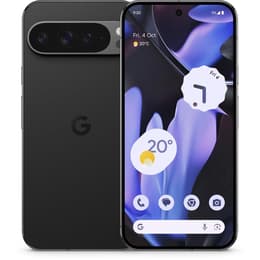
Google Pixel 9 Pro • Unlocked
Starting at

Refurbished price:$435.86

Versus $899.99 new

See options
iPhone 16 Plus • Unlocked
Starting at

Refurbished price:$575.98

Versus $829.00 new

See options

Ratings

The Google Pixel 9 Pro and the iPhone 16 Plus, both released in late 2024, represent distinct approaches to the premium smartphone experience. While the Pixel 9 Pro operates on the Android platform, emphasizing advanced computational photography and AI-driven features, the iPhone 16 Plus runs on iOS, focusing on a streamlined user experience and robust ecosystem integration. Key differentiators include their operating systems, camera philosophies, and display technologies.

Scores

Durability

When considering the long-term usability of these devices, their respective software support policies and physical durability are important factors.

  • Software Longevity: The Google Pixel 9 Pro offers an extended software support period, with Google committing to seven years of OS and security updates, ensuring the device remains current and secure until at least August 2031. In contrast, the iPhone 16 Plus typically receives major iOS updates for approximately five to six years from its release, with current iOS 26.4 support indicating continued updates.
  • Physical Durability: Both devices feature robust construction. The iPhone 16 Plus incorporates a Ceramic Shield front cover and an aluminum design with a color-infused glass back, alongside an IP68 rating for water and dust resistance. The Pixel 9 Pro utilizes Gorilla Glass Victus 2 for both its front and back, complemented by a polished-finish metal frame and an IP68 rating.
  • Repairability: While specific repairability scores can vary, both manufacturers design their devices with a degree of modularity to facilitate repairs, though official repair channels are generally recommended for complex issues.

Release Year

2024

2024

Last OS Compatibility

Yes

Yes

Foldable

No

No

Performance

Both the Google Pixel 9 Pro and the iPhone 16 Plus are equipped with current-generation processors designed for efficient and responsive operation, though their real-world performance characteristics cater to slightly different user priorities.

  • System Responsiveness: The iPhone 16 Plus, powered by its A18 Bionic chip, delivers consistently smooth performance across applications, from everyday tasks to demanding games and video editing. The Pixel 9 Pro, featuring its Tensor G4 processor, also handles multitasking and intensive applications effectively, with a focus on optimizing AI and machine learning tasks directly on the device.
  • Battery Behavior: The iPhone 16 Plus is noted for its strong battery performance, with a 4674 mAh capacity often allowing for extended usage, frequently lasting into a second day for many users. The Pixel 9 Pro, with a 4700 mAh battery, also provides good endurance, with many users reporting a full day of heavy use and some extending to over a day on a single charge. However, some Pixel 9 Pro users have reported instances of faster battery drain or overheating during intensive tasks.
  • Storage and Multitasking: The Pixel 9 Pro typically comes with 16GB of RAM, supporting extensive multitasking and keeping numerous applications active in the background. The iPhone 16 Plus features 8GB of RAM, which, combined with iOS's memory management, provides a fluid experience for most users. Both devices offer storage options up to 512GB, with the iPhone 16 Plus also available in 128GB and 256GB, and the Pixel 9 Pro offering 128GB, 256GB, and 512GB.

Memory (GB)

16 GB

8 GB

Screen quality

Both smartphones offer high-quality displays, but they differ in certain specifications that impact the visual experience.

  • Display Technology and Clarity: The iPhone 16 Plus features a 6.7-inch Super Retina XDR OLED display, providing deep blacks, vibrant colors, and a resolution of 2796 x 1290 pixels at 460 ppi, resulting in sharp and detailed visuals. The Google Pixel 9 Pro comes with a 6.3-inch LTPO OLED display, offering a resolution of 1280 x 2856 pixels and similarly rich colors and contrast.
  • Brightness and Refresh Rate: The Pixel 9 Pro's display can reach a peak brightness of up to 3000 nits, making it highly visible even in bright outdoor conditions, and features a variable refresh rate of 1-120Hz for smooth scrolling and animations. The iPhone 16 Plus offers a peak outdoor brightness of 2000 nits and maintains a standard 60Hz refresh rate, which some users might find less fluid compared to higher refresh rate displays.
  • Screen Size and Features: The iPhone 16 Plus provides a larger 6.7-inch screen, which is beneficial for media consumption and productivity, and includes the Dynamic Island for interactive alerts and activities. The Pixel 9 Pro's 6.3-inch display offers a more compact form factor while still providing ample screen real estate.

Resolution

1280 x 2856

1290 x 2796

Screen type

LTPO OLED

Super Retina XDR OLED

Audiovisual

Both devices are equipped with advanced camera systems, each with its own strengths in photography and videography.

  • Rear Camera Systems: The Google Pixel 9 Pro boasts a versatile triple-camera setup, including a 50MP main sensor, a 48MP ultrawide lens with autofocus and macro capabilities, and a 48MP telephoto lens offering 5x optical zoom. The iPhone 16 Plus features an advanced dual-camera system, comprising a 48MP Fusion Main camera that also enables 2x optical quality telephoto zoom, and a 12MP Ultra Wide camera with a 120° field of view.
  • Photography Features: The Pixel 9 Pro excels in computational photography with features like Night Sight, Astrophotography, Portrait Mode, Face Unblur, and AI-driven editing tools such as Magic Editor and 'Add Me'. The iPhone 16 Plus leverages Apple's Photonic Engine and Smart HDR 5 for detailed and color-accurate photos, offering next-generation portraits and new Photographic Styles.
  • Video Capabilities and Audio: For video, the Pixel 9 Pro supports 4K 60fps recording and offers 'Video Boost' for cloud-based 8K upscaling, Night Sight Video, and Audio Magic Eraser for improved sound. The iPhone 16 Plus records 4K Dolby Vision video at up to 60fps, with Cinematic mode, Action mode, and Spatial video recording for immersive content. Both devices provide quality microphone performance for calls and video recording.

Main camera

50 megapixels

48 megapixels

Front camera

42 megapixels

12 megapixels

Miscellaneous

Beyond core features, several practical elements contribute to the overall user experience of these smartphones.

  • Connectivity and Ports: Both the Pixel 9 Pro and iPhone 16 Plus support 5G cellular connectivity and the latest Wi-Fi 7 (802.11be) standard, along with Bluetooth 5.3 for wireless accessories. The iPhone 16 Plus has transitioned to a USB-C port, aligning with broader industry standards. The Pixel 9 Pro also features a USB-C port.
  • Biometric Security: The iPhone 16 Plus relies on Face ID for secure facial recognition. The Pixel 9 Pro offers both an in-display fingerprint sensor and Face Unlock for biometric authentication.
  • Design and Handling: The iPhone 16 Plus measures 160.9 x 77.8 x 7.8 mm and weighs 199 grams, offering a substantial yet balanced feel. The Pixel 9 Pro is slightly more compact at 72 x 152.8 x 8.5 mm and also weighs 199 grams, providing a comfortable grip for its screen size. The iPhone 16 Plus also introduces an Action Button, customizable for various functions, and a dedicated Camera Control button.

Weight

7 oz

7030 oz

Screen size (inches)

6.3

6.7

Network

5G

5G

SIM card

Physical SIM + eSIM

eSIM

Carrier compatibility

Unlocked

Unlocked

Connector

USB-C

USB-C (USB 2)

User feedback for the Google Pixel 9 Pro often praises its exceptional camera capabilities, particularly its AI-driven photography features and long software support. Many users appreciate its clean Android experience and the performance of its Tensor G4 chip for everyday tasks. However, some common concerns include occasional reports of overheating, inconsistent battery drain for certain usage patterns, and some users experiencing connectivity issues or software glitches.

The iPhone 16 Plus is frequently lauded for its outstanding battery life, robust performance, and the seamless integration within the Apple ecosystem. Users often highlight the reliability of iOS and the quality of its dual-camera system. Criticisms sometimes point to the 60Hz refresh rate of its display, which is not as fluid as some competitors or Apple's Pro models, and the absence of a dedicated telephoto lens for optical zoom beyond 2x.

Users prioritizing an extensive software update commitment, advanced computational photography, and a highly customizable Android experience may find the Google Pixel 9 Pro well-suited to their needs. Conversely, individuals who value exceptional battery endurance, a consistently smooth and integrated operating system, and a larger display for media consumption might lean towards the iPhone 16 Plus. Both devices offer compelling features for different user profiles, and choosing a quality-assured refurbished option for either model can be a sustainable choice for consumers.

See all articles

Our recent comparisons