
Compare models

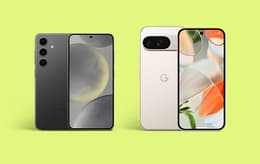
Google Pixel 9 • Unlocked vs iPhone 17 Pro • Unlocked

  • 1-year warranty
  • Free standard shipping
  • Free 30-day returns
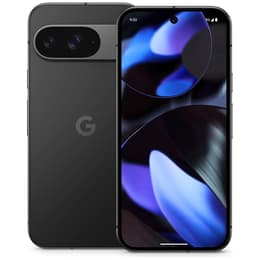
Google Pixel 9 • Unlocked
Starting at

Refurbished price:$400.00

Versus $799.00 new

See options
iPhone 17 Pro • Unlocked
Starting at

Refurbished price:$987.00

Versus $1,099.00 new

See options

Differences at a glance

The Google Pixel 9 (2024) and the Apple iPhone 17 Pro (2025) represent prominent entries from leading smartphone ecosystems. While they occupy slightly different release windows and price categories, both devices deliver high-tier mobile experiences in a compact form factor. The primary differentiators lie in their distinct operating systems, camera layouts, and hardware integration. Choosing between them depends largely on personal preference for either Android or iOS, alongside specific hardware priorities.

Available Models

Color

Storage (GB)

Scores

Durability

Both smartphones are built for long-term daily service, offering robust physical protection and extended software support timelines.

  • Software Longevity: The Google Pixel 9 receives operating system updates for seven years from release, matching the long-term support window provided by Apple for the iPhone 17 Pro.
  • Build Durability: Both models feature high-grade glass fronts, metallic frames, and IP68 water and dust resistance ratings to withstand everyday environmental exposure.
  • Expected Lifespan: Thanks to powerful internal components and ample memory, both devices are equipped to maintain responsive daily performance over several years of ownership.

Release Year

2024

2025

Last OS Compatibility

Yes

Yes

OS

Android

iOS

Foldable

No

No

Performance

Everyday operations, multitasking, and heavy application usage are handled smoothly across both platforms, though their memory and storage configurations differ.

  • Processor Capability: Both handsets utilize current-generation processing architecture that loads demanding apps quickly and handles multi-tasking without noticeable hesitation.
  • Battery Behavior: The Google Pixel 9 features a 4700 mAh battery designed to last through a full day of mixed use, while the iPhone 17 Pro balances its power consumption efficiently to match typical daily usage demands.
  • Storage and RAM: The Pixel 9 starts with 12GB of RAM and standard storage tiers, whereas the iPhone 17 Pro begins at higher baseline storage capacities coupled with equivalent memory for smooth background app management.

Screen quality

Visual output and outdoor readability are strong points for both devices, featuring advanced panel technologies and high refresh rates.

  • Display Technology: The Google Pixel 9 utilizes a vibrant OLED panel, while the iPhone 17 Pro employs an LTPO Super Retina XDR display capable of scaling its refresh rate dynamically.
  • Brightness and Clarity: Both screens reach high peak brightness levels exceeding 2,700 nits, ensuring clear readability under direct sunlight and sharp rendering of text and media.
  • Viewing Experience: Both models offer a 6.3-inch screen size with a 120Hz refresh rate, delivering fluid scrolling and smooth animations for gaming and video consumption.

Resolution

1080 x 2424

2622x1206

Screen type

OLED

Super Retina XDR

Audiovisual

Photography and video recording capabilities are heavily emphasized on both models, utilizing multi-lens arrays and advanced computational processing.

  • Camera Systems: The Google Pixel 9 features a dual-lens rear setup focusing on a high-resolution main sensor and a wide-angle lens, while the iPhone 17 Pro incorporates a versatile triple-lens array including a dedicated optical zoom lens.
  • Low-Light and Video: Both devices capture detailed images in challenging lighting conditions and support high-definition video recording with advanced stabilization features.
  • Audio and Media: Built-in stereo speakers on both handsets deliver clear sound output for hands-free calls and media playback, supported by sensitive multi-microphone arrays.

Main camera

50 megapixels

48 megapixels

Front camera

10.5 megapixels

18 megapixels

Miscellaneous

Physical handling and connectivity features shape the day-to-day usability of each smartphone in various environments.

  • Connectivity: Both phones support 5G network bands, modern Wi-Fi standards, and Bluetooth for reliable peripheral connections.
  • Biometrics and Ports: The Pixel 9 relies on an ultrasonic in-screen fingerprint sensor and face unlock, whereas the iPhone 17 Pro uses 3D face recognition; both charge via standard USB-C ports.
  • Dimensions and Weight: Both devices share a compact 6.3-inch footprint with balanced weights around 200 grams, making them comfortable for single-handed use and pocket storage.

Weight

7 oz

206 oz

Screen size (inches)

6.3

6.3

Network

5G

5G

SIM card

Physical SIM + eSIM

eSIM

Carrier compatibility

Unlocked

Unlocked

Connector

USB-C

USB-C

What the community thinks

User feedback on community forums highlights distinct preferences for each device. Owners of the Google Pixel 9 frequently praise its clean software interface, intuitive artificial intelligence integrations, and reliable everyday battery performance. On the other hand, iPhone 17 Pro users often emphasize the build refinement, reliable video recording tools, and seamless integration within the broader Apple ecosystem. Common criticisms for both models typically focus on high retail acquisition costs when purchasing brand new hardware.

Users prioritizing deep customization, Google ecosystem integration, and a straightforward interface may prefer the Pixel 9. Conversely, users invested in Apple services who prioritize triple-lens camera versatility will find the iPhone 17 Pro well-suited to their needs. For those seeking a quality-assured refurbished option, Back Market provides these models as sustainable choices that reduce electronic waste while maintaining high performance standards.
Our recent comparisons