
Press releases
Compare models
Differences at a glance
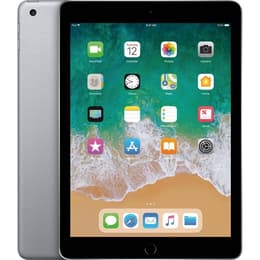
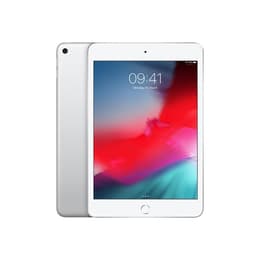
The iPad 2017 (5th generation) and the iPad Mini 2019 (5th generation) represent two distinct approaches to Apple's tablet lineup, released in March 2017 and March 2019, respectively. While both operate on Apple's iPadOS, they cater to different user preferences primarily through their screen size, internal processing power, and subsequent software longevity. The iPad Mini 2019 offers a more compact form factor with a newer processor, while the iPad 2017 provides a larger display for general use.
Color
Storage
The practical lifespan of a tablet is significantly influenced by its release timeline and ongoing software support. The iPad 2017, powered by the A9 chip and released in March 2017, received its last major iPadOS update with iPadOS 16.7.15, released in March 2026, and does not support iPadOS 17 or later. This means its software support has concluded, potentially limiting compatibility with future applications and security updates. In contrast, the iPad Mini 2019, featuring the A12 Bionic chip and released in March 2019, continues to receive updates, supporting iPadOS 26 as of April 2026. This provides a considerably longer period of software relevance and security. Regarding physical durability and repairability, both models generally present challenges due to Apple's construction methods, which often involve significant adhesive, leading to low repairability scores.
Release Year
Last OS Compatibility
OS
Maximum Operating System supported
Performance is a key differentiator between these two tablets, largely due to their respective processors and RAM configurations. The iPad 2017 is equipped with an A9 processor and 2GB of RAM, which capably handles everyday tasks such as web browsing, email, and light media consumption. However, it may exhibit slower app loading times and reduced fluidity when multitasking or running more demanding applications. The iPad Mini 2019, on the other hand, features a more advanced A12 Bionic processor and 3GB of RAM, delivering a noticeable boost in overall system responsiveness. This allows for smoother multitasking, faster app launches, and a more capable experience with graphically intensive games and productivity applications. While the iPad 2017 has a larger battery capacity (32.4 Wh), the iPad Mini 2019's more efficient A12 Bionic chip and smaller display often result in comparable or even superior real-world battery endurance for typical usage.
Processor
The display experience varies between these two iPad models, primarily in size, lamination, and advanced features. The iPad 2017 features a 9.7-inch IPS LCD Retina display with a resolution of 2048 x 1536 pixels, resulting in a pixel density of 264 pixels per inch (ppi). This display is not fully laminated and lacks an anti-reflective coating, which can lead to a slight gap between the glass and the display panel, and increased reflections in bright environments. The iPad Mini 2019, while smaller at 7.9 inches, also boasts a 2048 x 1536 pixel resolution, but its smaller size yields a higher pixel density of 326 ppi, resulting in sharper text and images. Crucially, the iPad Mini 2019's display is fully laminated, reducing glare and making the content appear closer to the surface. It also includes True Tone technology for automatic white balance adjustment and supports a wider P3 color gamut, offering more vibrant and accurate colors.
Resolution
True Tone
Pro-Motion
Screen type
Pixel density
Brightness
Speakers
The camera systems and overall audio-visual experience differ between these two tablets, with the iPad Mini 2019 offering notable enhancements. Both devices feature an 8-megapixel rear camera capable of recording 1080p video, suitable for casual photography and document scanning. However, the front-facing cameras present a significant distinction. The iPad 2017 includes a 1.2-megapixel front camera, which is adequate for basic video calls. The iPad Mini 2019, on the other hand, is equipped with a 7-megapixel front camera, providing a substantial upgrade for clearer video calls, better selfies, and improved performance in various lighting conditions. For audio, both tablets feature stereo speakers. The iPad Mini 2019's speakers are noted for providing a good media consumption experience.
Beyond core performance and display, several practical elements distinguish these two iPad models. For connectivity, both support Wi-Fi 802.11ac. However, the iPad Mini 2019 features Bluetooth 5.0 and offers Gigabit LTE on its cellular models, providing faster and more reliable wireless connections compared to the iPad 2017's Bluetooth 4.2 and standard LTE. Both tablets retain the Lightning port for charging and data transfer, along with a 3.5mm headphone jack, offering compatibility with a wide range of accessories. Security on both devices is handled by Touch ID fingerprint recognition. In terms of physical characteristics, the iPad 2017 is a larger and heavier device, with a 9.7-inch screen and weighing approximately 469 grams for the Wi-Fi model. The iPad Mini 2019 is considerably more compact and lighter, featuring a 7.9-inch display and weighing around 300.5 grams for the Wi-Fi model, making it more portable and easier for one-handed use. A key functional difference is that the iPad Mini 2019 supports the first-generation Apple Pencil, enabling note-taking and creative tasks, a feature not available on the iPad 2017.
Weight
Width
Height
Depth
Screen size (inches)
Network
Carrier compatibility
Wi-Fi technology
Bluetooth Version
Face ID
Touch ID
Connector
User sentiment often highlights the iPad 2017 as a capable entry-level tablet, praised for its larger screen size which is beneficial for media consumption and general browsing, especially for those who do not require the latest performance. Common criticisms, however, point to its aging processor and the display's lack of lamination, which can affect viewing quality in certain conditions. The iPad Mini 2019 is frequently lauded for its exceptional portability, robust performance for its size, and the improved display quality with True Tone and P3 wide color. Users appreciate its ability to handle demanding applications and its suitability for note-taking with Apple Pencil support. Criticisms often revolve around its somewhat dated design with thick bezels and the continued use of a Lightning port instead of USB-C.
For users prioritizing a larger screen for basic tasks and media viewing, and who are less concerned with cutting-edge performance or the latest software updates, the iPad 2017 may be a suitable option. Conversely, individuals seeking a highly portable device with strong performance for more demanding applications, gaming, and creative work, coupled with longer software support and Apple Pencil compatibility, will find the iPad Mini 2019 better aligned with their needs. Both models are available as quality-assured refurbished options, providing an eco-friendly alternative for consumers looking to make an informed and sustainable choice.