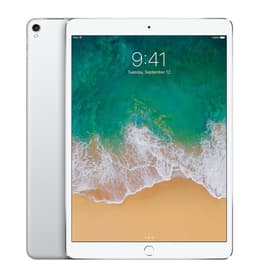
iPad 5 (2017, A9 series) vs iPad Pro (2017, A10 series)

iPad 5 (2017, A9 series)
Starting at

Refurbished price:$60.32

Versus $329.00 new

See options
iPad Pro (2017, A10 series)
Starting at

Refurbished price:$104.00

Versus $649.00 new

See options

Ratings

The iPad 2017, also known as the 5th generation iPad, and the iPad Pro 2017 (10.5-inch model) were both released in the same year, offering distinct experiences within Apple's tablet lineup. The iPad 2017, launched in March, served as an accessible entry point, while the iPad Pro 10.5-inch, introduced in June, aimed at more demanding users with enhanced features. Both devices run on Apple's iPadOS, providing a consistent software ecosystem, but differ significantly in their hardware capabilities and intended use cases.

Scores

Durability

When considering the longevity of these tablets, several factors come into play, primarily their release timelines and ongoing software support.

  • Release Timeline: The iPad 2017 (5th generation) was released in March 2017, while the iPad Pro 10.5-inch followed in June 2017. This slight difference in launch dates means the iPad Pro benefits from a marginally longer period of potential software updates.
  • OS Support: The iPad 2017 supports up to iPadOS 16.7.15, as of March 2026, but does not support iPadOS 17. In contrast, the iPad Pro 10.5-inch is upgradeable to iPadOS 17.2. This indicates that the iPad Pro will receive software updates for a longer duration, extending its functional lifespan for users who require the latest features and security patches.
  • Practical Lifespan: Both devices are built with durable aluminum frames and glass fronts. However, the iPad Pro's more advanced internal components and extended software support suggest it may offer a more capable experience for a longer period, especially for tasks that benefit from newer software optimizations.

Release Year

2017

2017

Last OS Compatibility

No

No

OS

iPadOS

iPadOS

Maximum Operating System supported

iPadOS 16

iPadOS 17

Performance

The performance of these two tablets varies considerably due to their different internal components, impacting how they handle demanding applications and multitasking.

  • Processing Power: The iPad 2017 is equipped with a capable processor that handles everyday tasks, web browsing, and standard applications smoothly. The iPad Pro 10.5-inch, however, features a more advanced processor designed for higher performance, allowing for smoother operation with intensive applications, complex multitasking, and graphic-heavy games.
  • Multitasking and Responsiveness: The iPad Pro 10.5-inch benefits from a larger amount of internal memory, which contributes to more fluid multitasking and quicker app switching. Users of the iPad 2017 may experience slight delays when switching between multiple demanding applications.
  • Storage Options: The iPad 2017 was available with 32GB or 128GB of storage. The iPad Pro 10.5-inch offered more generous storage configurations, starting at 64GB and going up to 512GB, providing more room for large files, applications, and media.

Memory (GB)

2 GB

4 GB

Processor

Apple A9

Apple A10X Fusion

Screen quality

The display is a key differentiator between these two tablets, with the iPad Pro offering several advanced technologies for an enhanced visual experience.

  • Display Technology: Both tablets feature LED-backlit IPS LCD Retina displays with a pixel density of 264 ppi. However, the iPad Pro 10.5-inch incorporates ProMotion technology, enabling a variable refresh rate up to 120Hz for smoother scrolling and more responsive interactions. The iPad 2017 has a standard refresh rate.
  • Visual Clarity and Features: The iPad Pro's display also includes Wide Color (P3) for more vibrant and accurate colors, and True Tone technology, which automatically adjusts the display's white balance to match ambient light. The iPad 2017 lacks these features. Additionally, the iPad Pro's screen is fully laminated and has an anti-reflective coating, reducing glare and improving outdoor visibility, while the iPad 2017's display is not fully laminated and lacks this coating, making it more prone to reflections.
  • Screen Size: The iPad 2017 features a 9.7-inch display, while the iPad Pro 2017 offers a slightly larger 10.5-inch screen within a similar physical footprint due to reduced bezels.

Resolution

2048 x 1536

2224 x 1668

True Tone

No

Yes

Pro-Motion

No

Yes

Screen type

Retina display

Retina display

Pixel density

264ppp

264ppp

Brightness

500 nits brightness

600 nits brightness max

Sound quality

Speakers

Stereo speakers

Four speaker audio

Audiovisual

The camera systems on these two tablets reflect their different positioning, with the iPad Pro offering more advanced capabilities for photography and video recording.

  • Rear Camera: The iPad 2017 features an 8-megapixel rear camera capable of recording 1080p HD video. The iPad Pro 10.5-inch comes with a more advanced 12-megapixel rear camera that supports 4K video recording and includes optical image stabilization for clearer photos and smoother videos.
  • Front Camera: For video calls and selfies, the iPad 2017 has a 1.2-megapixel front-facing camera that records 720p video. The iPad Pro 10.5-inch is equipped with a 7-megapixel front-facing camera, offering higher resolution for video conferencing and improved image quality.
  • Audio Experience: The iPad Pro 10.5-inch features a four-speaker audio system, providing a more immersive sound experience for media consumption. The iPad 2017 has stereo speakers, but they are both located on one side, which can affect the audio experience when holding the tablet in landscape orientation.

Miscellaneous

Beyond core specifications, several practical elements contribute to the overall user experience and differentiate these two iPad models.

  • Connectivity: Both tablets support Wi-Fi 802.11ac with MIMO and Bluetooth 4.2. Cellular models for both devices offer LTE connectivity.
  • Ports and Accessories: Both devices utilize the Lightning port for charging and data transfer. However, the iPad Pro 10.5-inch's Lightning port supports USB 3.0 speeds for faster data transfer. The iPad Pro also includes a Smart Connector for accessories like the Smart Keyboard and supports the first-generation Apple Pencil, features not available on the iPad 2017.
  • Physical Characteristics: The iPad 2017 measures 240 x 169.5 x 7.5 mm and weighs 469g (Wi-Fi model). The iPad Pro 10.5-inch is slightly larger but thinner and similarly weighted at 250.6 x 174.1 x 6.1 mm and 469g (Wi-Fi model). Both include Touch ID for secure authentication.

Weight

16 oz

16 oz

Width

6.6 in

6.8 in

Height

9.4 in

9.8 in

Depth

0.2 in

0.2 in

Screen size (inches)

9.7

10.5

Network

Wi-Fi

Wi-Fi

Carrier compatibility

Without SIM Port

Without SIM Port

Wi-Fi technology

Wi-Fi 6 802.11a/b/g/n/ac

Wi-Fi 6 802.11a/b/g/n/ac

Bluetooth Version

Bluetooth 4.2

Bluetooth 4.2

Face ID

No

No

Touch ID

Yes

Yes

Connector

Lightning connector

Lightning connector

User feedback for the iPad 2017 often highlights its solid performance for everyday tasks and its reliable battery life as key strengths. Common criticisms include the lack of a laminated display, which can lead to reflections, and the absence of support for advanced accessories like the Apple Pencil or Smart Keyboard. Users generally found it to be a capable device for general consumption and light productivity.

The iPad Pro 10.5-inch, on the other hand, is frequently praised for its exceptional display with ProMotion technology, powerful performance for demanding applications, and its versatile camera system. Its compatibility with the Apple Pencil and Smart Keyboard also makes it a favored choice for those seeking a more productive and creative tool. Some initial concerns revolved around the software limitations at launch, which have largely been addressed with subsequent iPadOS updates.

Users prioritizing a tablet for general media consumption, web browsing, and basic applications will find the iPad 2017 well-suited to their needs. Its straightforward functionality and robust build make it a practical choice. Conversely, users who require a more powerful device for creative work, advanced multitasking, or who value a superior visual and audio experience, will likely lean toward the iPad Pro 10.5-inch. Its advanced display features, enhanced processing power, and accessory support cater to a more professional or intensive user profile. Both models are available as quality-assured refurbished options, providing an eco-friendly alternative for consumers.


See all articles

Our recent comparisons