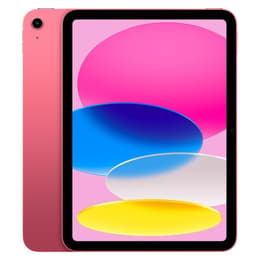
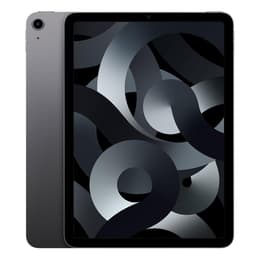
iPad 10 (2022, A14 series) vs iPad Air 5 (2022, M1 series)

iPad 10 (2022, A14 series)
Starting at

Refurbished price:$282.00

Versus $349.00 new

See options
iPad Air 5 (2022, M1 series)
Starting at

Refurbished price:$297.00

Versus $599.00 new

See options

Ratings

The iPad (10th generation), released in October 2022, and the iPad Air (5th generation), launched in March 2022, represent distinct tiers within Apple's tablet lineup. While both devices share a similar modern design aesthetic and operate on iPadOS, the iPad Air incorporates a more powerful internal processor and a more advanced display, catering to different user needs. Both models offer a consistent software experience through Apple's iPadOS.

Scores

Durability

When considering the long-term usability of these tablets, several factors contribute to their expected lifespan.

  • Release Timeline and Age: The iPad Air (5th generation) was released in March 2022, while the iPad (10th generation) followed in October 2022. This seven-month difference means the iPad Air is slightly older, though both are relatively recent models.
  • OS Support Duration: Apple typically provides 5 to 7 years of major iPadOS updates for its devices, with security updates potentially extending beyond that. Given their 2022 release dates, both models are expected to receive several more years of software support, ensuring access to new features and security enhancements. The iPad Air, with its more capable processor, may theoretically receive support for a slightly longer duration, aligning with the longer support cycles seen for devices with more powerful chips.
  • Repairability: Both the iPad (10th generation) and the iPad Air (5th generation) generally receive low repairability scores from independent assessments. This is primarily due to the extensive use of strong adhesive to secure internal components, making disassembly challenging and increasing the risk of damage during repairs, particularly for battery replacement.

Release Year

2022

2022

Last OS Compatibility

Yes

Yes

OS

iPadOS

iPadOS

Maximum Operating System supported

iPadOS 18

iPadOS 18

Performance

The performance capabilities of these two iPads are a primary differentiator, influencing how they handle various tasks.

  • Processor Capabilities: The iPad (10th generation) is equipped with a capable processor that handles everyday applications, web browsing, and light gaming smoothly. It provides a responsive experience for general use and multitasking. The iPad Air (5th generation), however, features a significantly more powerful processor, which offers a substantial boost in performance. This translates to faster app loading, smoother multitasking with numerous applications open, and a more fluid experience in demanding tasks such as advanced video editing, graphic design, or graphically intensive games.
  • RAM Implications: The iPad (10th generation) includes 4GB of RAM, which is sufficient for typical tablet usage and ensures a good experience with most applications. The iPad Air (5th generation) doubles this with 8GB of RAM, allowing it to manage more complex workflows and keep a greater number of applications active in the background without needing to reload them. This is particularly beneficial for professionals or users who frequently switch between heavy applications.
  • Storage Options: Both models are available with 64GB or 256GB of internal storage. The choice of storage capacity depends on individual user needs, with 64GB being suitable for lighter use and cloud-based storage, while 256GB provides ample space for larger applications, media, and documents.

Memory (GB)

4 GB

8 GB

Processor

Apple A14 Bionic

Apple M1

Screen quality

Both tablets feature Liquid Retina displays, but there are key distinctions in their underlying technology and visual output.

  • Display Technology and Clarity: Both devices feature a 10.9-inch Liquid Retina IPS LCD display with a resolution of 2360 by 1640 pixels, resulting in a pixel density of 264 pixels per inch (ppi). This provides sharp text and clear images for general viewing.
  • Color Accuracy and Lamination: The iPad Air (5th generation) benefits from a fully laminated display with an anti-reflective coating and support for the P3 wide color gamut. This lamination reduces the gap between the glass and the display, making content appear closer to the surface and improving touch responsiveness. P3 wide color provides a broader range of colors, which is advantageous for creative tasks like photo and video editing. The iPad (10th generation) has a non-laminated display and supports the sRGB color standard, which is suitable for everyday use but offers less color vibrancy and can exhibit more reflections compared to the Air.
  • Brightness and Refresh Rate: Both models offer a peak brightness of 500 nits, ensuring good visibility in various indoor lighting conditions. Both also feature a standard 60Hz refresh rate, providing a smooth experience for most interactions, though not as fluid as higher refresh rate displays found on some other tablets.

Resolution

2360 x 1640

2360 x 1640

True Tone

Yes

Yes

Pro-Motion

No

No

Screen type

Liquid Retina display

Liquid Retina display

Pixel density

264ppp

264ppp

Brightness

500 nits brightness

500 nits brightness

Sound quality

Speakers

Stereo speakers

Stereo speakers

Audiovisual

The camera systems on both iPads are designed for versatility, with some notable differences in their front-facing capabilities.

  • Rear Camera System: Both the iPad (10th generation) and the iPad Air (5th generation) are equipped with a 12MP Wide rear camera with an f/1.8 aperture. This camera is capable of capturing detailed photos in good lighting and supports 4K video recording at various frame rates. They also include features like Smart HDR 3 for improved dynamic range.
  • Front Camera and Video Calls: The iPad Air (5th generation) features a 12MP Ultra Wide front camera with Center Stage, which automatically adjusts to keep subjects in frame during video calls. This camera is positioned on the shorter edge of the tablet, which is typical for most tablets. The iPad (10th generation) also has a 12MP Ultra Wide front camera with Center Stage, but it is uniquely positioned on the longer, landscape edge of the device. This placement is particularly beneficial for video conferencing, as it naturally centers the user when the tablet is used horizontally with a keyboard.
  • Audio Experience: Both tablets offer stereo speakers, providing a decent audio experience for media consumption. The iPad (10th generation) has speakers on the shorter sides, while the iPad Air (5th generation) also features stereo speakers, with some users noting the iPad 10th Gen's preference for bottom speakers.

Miscellaneous

Beyond core performance and display, several practical features contribute to the overall user experience of these tablets.

  • Connectivity Options: Both devices support Wi-Fi 6 for fast wireless internet and offer optional 5G connectivity for cellular models, providing high-speed mobile data access. The iPad (10th generation) features Bluetooth 5.2, while the iPad Air (5th generation) uses Bluetooth 5.0.
  • Port Types and Speeds: Both iPads have a USB-C port. However, the iPad Air (5th generation) features a USB-C 3.1 Gen 2 port, offering data transfer speeds up to 10 Gbps, which is beneficial for quickly moving large files or connecting to high-speed external accessories. The iPad (10th generation) uses a USB-C 2.0 port, with data transfer speeds limited to 480 Mbps.
  • Authentication and Accessories: Both models integrate Touch ID into the top button for secure and convenient authentication. The iPad Air (5th generation) supports the Apple Pencil (2nd generation), which attaches magnetically and charges wirelessly. The iPad (10th generation) supports the Apple Pencil (1st generation), requiring a USB-C to Apple Pencil Adapter for charging and pairing.
  • Physical Characteristics: The iPad Air (5th generation) is slightly thinner and lighter, measuring 6.1 mm thick and weighing around 461-462 grams. The iPad (10th generation) is 7 mm thick and weighs approximately 477-481 grams. Both feature an aluminum build.

Weight

16 oz

16 oz

Width

7 in

7 in

Height

9.7 in

9.7 in

Depth

0.2 in

0.2 in

Screen size (inches)

10.9

10.9

Network

Wi-Fi

Wi-Fi

Carrier compatibility

Without SIM Port

Without SIM Port

Wi-Fi technology

Wi-Fi 6 802.11ax

Wi-Fi 6 802.11ax

Bluetooth Version

Bluetooth 5.2

Bluetooth 5.0

Face ID

No

No

Touch ID

Yes

Yes

Connector

USB Type-C

USB Type-C

User feedback often highlights the iPad Air (5th generation) for its robust performance, with many appreciating the power of its internal processor for demanding applications and multitasking. Users frequently praise its laminated display for improved visual quality and reduced reflections, especially for creative work. Some common criticisms, however, point to its front camera placement on the shorter edge, which can be less ideal for landscape video calls.

The iPad (10th generation) is generally well-received for its modern design, which aligns with the more premium iPad models, and its unique landscape-oriented front camera, which is a significant advantage for video conferencing. Users find its performance more than adequate for everyday tasks, browsing, and casual gaming. Criticisms often revolve around its non-laminated display, which can feel less premium, and the slower data transfer speeds of its USB-C port. The accessory compatibility for the Apple Pencil (1st generation) is also a point of contention for some.

Users prioritizing high-performance tasks, advanced creative work, and a more refined display experience may find the iPad Air (5th generation) better suited to their needs. Its powerful processor and P3 wide color display make it a strong contender for those who push their tablet's capabilities. Conversely, users primarily focused on general productivity, media consumption, and frequent video calls will likely appreciate the iPad (10th generation) for its practical landscape camera and capable everyday performance. Both devices offer a quality-assured refurbished option, providing an eco-friendly alternative for consumers.

See all articles

Our recent comparisons