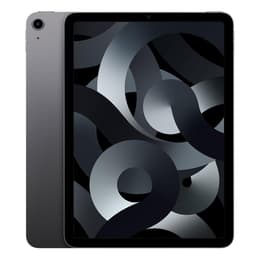
iPad 11 (2025, A16 series) vs iPad Air 5 (2022, M1 series)

iPad 11 (2025, A16 series)
Starting at

Refurbished price:$309.00

Versus $349.00 new

See options
iPad Air 5 (2022, M1 series)
Starting at

Refurbished price:$297.00

Versus $599.00 new

See options

Ratings

The iPad 2025 A16 Series and the iPad Air 2022 M1 Series represent distinct tiers within Apple's tablet lineup, released three years apart. While both devices offer the versatility of iPadOS, they cater to different user needs through their internal components and design philosophies. The iPad Air 2022, launched in March 2022, features a more powerful processor and a refined design, whereas the hypothetical iPad 2025, expected to arrive in 2025, would likely serve as an updated entry-level option with a capable, yet less intensive, chip.

Scores

Durability

When considering the practical lifespan of these two tablets, their release timelines and Apple's software support policies are key factors.

  • Release Timeline: The iPad Air 2022 M1 Series was released in March 2022, while the iPad 2025 A16 Series is a hypothetical model expected in 2025. This three-year difference means the 2025 model will inherently receive software updates for a longer period.
  • OS Support: Both devices run iPadOS, and Apple typically provides several years of major software updates. The iPad Air 2022, currently running iPadOS 26.4.1, is expected to continue receiving updates for a significant duration [4]. The iPad 2025, being a newer device, will benefit from an extended update cycle, potentially offering an additional two to three years of software longevity compared to the 2022 Air.
  • Repairability: Both models are designed with Apple's standard construction, offering similar repairability profiles. The practical lifespan for both devices is generally several years, depending on usage and care, with the newer model having a slight edge in long-term software support.

Release Year

2025

2022

Last OS Compatibility

Yes

Yes

OS

iPadOS

iPadOS

Maximum Operating System supported

iPadOS 18

iPadOS 18

Performance

The performance capabilities of these two iPads are a primary differentiator, largely due to their respective processors.

  • Processor Capabilities: The iPad Air 2022 M1 Series is equipped with a powerful processor that delivers robust performance, suitable for demanding applications, advanced multitasking, and graphically intensive games [3, 4]. This allows for smooth operation even with professional-grade creative software. The iPad 2025 A16 Series, while featuring a capable processor, is expected to offer performance well-suited for everyday tasks, media consumption, and moderate productivity, handling most apps and light gaming without issue.
  • Multitasking and Responsiveness: The iPad Air 2022 benefits from 8GB of RAM, which contributes to its ability to manage numerous applications simultaneously and switch between them fluidly [1, 4]. The iPad 2025 A16 Series is likely to feature 4GB or 6GB of RAM, providing a responsive experience for typical user workflows but potentially showing limitations with very heavy multitasking or complex professional applications.
  • Battery Behavior: Both models are designed to offer all-day battery life under typical usage conditions, with up to 10 hours of web surfing or video playback [1]. The efficiency of their respective processors contributes to sustained performance without frequent recharging.

Memory (GB)

6 GB

8 GB

Processor

Apple A16

Apple M1

Screen quality

Both tablets feature Liquid Retina displays, but there are subtle differences in their visual experience and underlying technology.

  • Display Technology and Clarity: Both the iPad Air 2022 M1 Series and the iPad 2025 A16 Series feature 10.9-inch Liquid Retina IPS displays with a resolution of 2360 by 1640 pixels, resulting in a pixel density of 264 pixels per inch (ppi) [1, 6, 15]. This provides clear text and vibrant images for general viewing. The iPad Air 2022's display is fully laminated and includes an anti-reflective coating, which can enhance the viewing experience by reducing glare in bright environments [1, 3]. The iPad 2025, as a base model, may not include the fully laminated display, potentially leading to a slightly less direct feel when interacting with the screen [16].
  • Brightness and Color: Both displays offer 500 nits of peak brightness and support P3 wide color, ensuring good visibility in various lighting conditions and accurate color reproduction for media consumption and creative work [1, 5, 6].
  • Refresh Rate: Both models feature a standard 60Hz refresh rate [6, 19]. This provides a smooth experience for most content, though it does not offer the adaptive high refresh rates found in more premium tablet displays.

Resolution

2360 x 1640

2360 x 1640

True Tone

Yes

Yes

Pro-Motion

No

No

Screen type

Liquid Retina display

Liquid Retina display

Pixel density

264ppp

264ppp

Brightness

500 nits brightness

500 nits brightness

Sound quality

Speakers

Stereo speakers (landscape)

Stereo speakers

Audiovisual

The camera systems on both iPads are designed for versatility, focusing on video calls, document scanning, and casual photography.

  • Camera System Capabilities: Both the iPad Air 2022 M1 Series and the iPad 2025 A16 Series are expected to feature a 12MP Wide camera on the rear and a 12MP Ultra Wide camera on the front [1, 5, 7, 15]. The front camera on both models supports Center Stage, which automatically keeps subjects in the frame during video calls.
  • Photography and Video Performance: The rear 12MP camera on both devices is capable of capturing detailed photos and recording 4K video at up to 60 frames per second [5]. They perform well in good lighting conditions, suitable for everyday use and scanning documents. The front camera provides clear video for communication and selfies.
  • Audio Quality: Both iPads include stereo speakers, providing a balanced audio experience for media consumption [1, 5]. They also feature dual microphones for clear audio input during calls and recordings.

Miscellaneous

Beyond core performance and display, several practical elements contribute to the overall user experience of these tablets.

  • Connectivity Options: Both the iPad Air 2022 M1 Series and the iPad 2025 A16 Series support Wi-Fi 6 for fast wireless internet access and Bluetooth 5.0 or 5.2 for connecting accessories [1, 5, 7, 15]. Cellular models of both devices offer 5G connectivity for high-speed mobile data [1, 5, 7, 15].
  • Port Types and Accessories: Both tablets utilize a USB-C port for charging and connecting peripherals [1, 4, 7, 15]. However, the iPad Air 2022's USB-C port supports faster data transfer speeds (USB 3.1 Gen 2, up to 10 Gbps) compared to the iPad 2025, which is likely to have USB 2.0 speeds [4, 9, 16]. Both support the Apple Pencil (2nd generation for Air, 1st generation or USB-C for base iPad) and external keyboards.
  • Security and Design: Both devices feature Touch ID integrated into the top button for secure authentication [1, 4, 7, 15]. The iPad Air 2022 has a thinner and lighter design (6.1 mm thick, 461g) compared to the iPad 2025, which is expected to be slightly thicker and heavier (7 mm thick, 477g) [1, 2, 5, 15]. Both are constructed with an aluminum unibody.

Weight

1 oz

16 oz

Width

7.07 in

7 in

Height

9.79 in

9.7 in

Depth

0.28 in

0.2 in

Screen size (inches)

11

10.9

Network

Wi-Fi

Wi-Fi

Carrier compatibility

Without SIM Port

Without SIM Port

Wi-Fi technology

Wi-Fi 6 802.11ax

Wi-Fi 6 802.11ax

Bluetooth Version

Bluetooth 5.3

Bluetooth 5.0

Face ID

No

No

Touch ID

Yes

Yes

Connector

USB Type-C

USB Type-C

Users often praise the iPad Air 2022 M1 Series for its exceptional performance, sleek design, and robust capabilities, making it a strong contender for those seeking a powerful and portable tablet. Common feedback highlights its ability to handle demanding tasks with ease, often drawing comparisons to more expensive professional models [18, 19]. Some users, however, note the 60Hz display as a point of consideration, especially when compared to devices with higher refresh rates [19].

The iPad 2025 A16 Series, while still speculative, is anticipated to be lauded for its updated design over previous base models and its capable performance for everyday use. It is expected to be a reliable device for general productivity, media consumption, and casual gaming. Potential criticisms might revolve around its display not being fully laminated or its USB-C port offering slower data transfer speeds compared to the Air model [16].

Users prioritizing raw processing power for creative work, advanced multitasking, or future-proofing their device for several years will find the iPad Air 2022 M1 Series well-suited to their needs. Its M1 chip provides a significant performance advantage. Conversely, users primarily focused on web browsing, streaming, note-taking, and light productivity, who value a modern design and solid performance for general use, may lean toward the iPad 2025 A16 Series. Both devices offer a quality-assured refurbished option, providing an eco-friendly alternative for consumers.

See all articles

Our recent comparisons