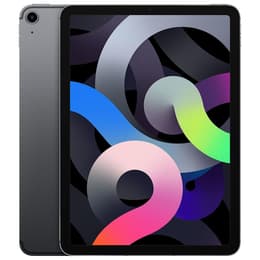
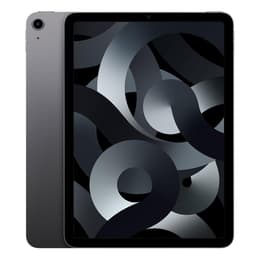
iPad Air 4 (2020, A14 series) vs iPad Air 5 (2022, M1 series)

iPad Air 4 (2020, A14 series)
Starting at

Refurbished price:$249.00

Versus $599.00 new

See options
iPad Air 5 (2022, M1 series)
Starting at

Refurbished price:$297.00

Versus $599.00 new

See options

Ratings

The iPad Air 2020 (4th Generation) and the iPad Air 2022 (5th Generation) represent two successive iterations in Apple's mid-range tablet lineup. While both devices share a similar design aesthetic and operate on the iPadOS platform, the iPad Air 2022 introduces a significantly more powerful internal processor and an upgraded front-facing camera, setting it apart from its predecessor.

Scores

Durability

When considering the long-term usability of these tablets, their release timelines and the duration of software support are key factors.

  • Release Timeline: The iPad Air 2020 was released in October 2020, while the iPad Air 2022 followed in March 2022. This two-year difference means the 2022 model inherently has a longer potential lifespan for receiving the latest software updates.
  • OS Support Duration: Apple typically provides major iPadOS updates for approximately five to seven years from a device's release. Given this pattern, the iPad Air 2022, with its more advanced M1 Series processor, is expected to receive software support for a longer period, potentially extending its functional life by one to two years compared to the iPad Air 2020.
  • Practical Lifespan: Both models feature durable aluminum unibody constructions. While repairability scores are generally similar, the extended software support and more powerful internals of the iPad Air 2022 suggest it will remain capable of handling demanding applications and new iPadOS features for a longer practical lifespan.

Release Year

2020

2022

Last OS Compatibility

Yes

Yes

OS

iPadOS

iPadOS

Maximum Operating System supported

iPadOS 18

iPadOS 18

Performance

The performance capabilities of these two iPad Air models are a primary differentiator, largely due to their internal processing units and memory configurations.

  • Processor Capabilities: The iPad Air 2020 is equipped with a capable processor that handles everyday tasks, web browsing, media consumption, and many productivity applications smoothly. The iPad Air 2022, however, features a more advanced processor, delivering a substantial increase in processing power and graphics performance. This translates to noticeably faster app loading, smoother multitasking, and enhanced performance for graphically intensive games and professional-grade applications like video editing or 3D design.
  • Multitasking and Responsiveness: The iPad Air 2020 comes with 4GB of RAM, which is sufficient for general multitasking. The iPad Air 2022 doubles this to 8GB of RAM, allowing it to keep more applications active in the background and switch between them with greater fluidity, reducing instances of apps needing to reload.
  • Storage Options: Both models offer identical storage configurations, typically available in 64GB and 256GB options.
  • Battery Behavior: Both devices generally provide similar battery life under typical usage scenarios, often lasting a full day of mixed use.

Memory (GB)

4 GB

8 GB

Processor

Apple A14 Bionic

Apple M1

Screen quality

The display experience on both iPad Air models is largely consistent, offering a high-quality visual output for various activities.

  • Display Technology: Both the iPad Air 2020 and iPad Air 2022 feature a 10.9-inch Liquid Retina IPS LCD display. This technology provides vibrant colors and wide viewing angles.
  • Resolution and Clarity: Each tablet offers a resolution of 2360 x 1640 pixels, resulting in a pixel density of 264 pixels per inch. This delivers sharp text and clear images, suitable for reading, browsing, and media consumption.
  • Brightness and Features: Both displays achieve a typical brightness of 500 nits, making them adequately bright for indoor use and generally visible outdoors, though direct sunlight can still pose a challenge. They also include True Tone technology, which adjusts the display's color temperature to match ambient light, and support the P3 wide color gamut for more accurate color reproduction. Neither model features a high refresh rate display.

Resolution

2360 x 1640

2360 x 1640

True Tone

Yes

Yes

Pro-Motion

No

No

Screen type

Liquid Retina display

Liquid Retina display

Pixel density

264ppp

264ppp

Brightness

500 nits brightness

500 nits brightness

Sound quality

Speakers

Stereo speakers

Stereo speakers

Audiovisual

The camera systems on the iPad Air 2020 and iPad Air 2022 share some similarities but also feature a notable upgrade in the front-facing camera.

  • Rear Camera: Both tablets are equipped with a 12-megapixel wide-angle rear camera. This camera is capable of capturing detailed photos and recording 4K video at up to 60 frames per second, making them suitable for general photography and video tasks.
  • Front Camera: A key difference lies in the front camera. The iPad Air 2020 features a 7-megapixel FaceTime HD camera. The iPad Air 2022 upgrades to a 12-megapixel Ultra Wide front camera with Center Stage. Center Stage automatically keeps subjects in the frame during video calls, which is particularly useful for virtual meetings or family calls.
  • Audio Experience: Both models provide stereo speakers, offering a decent audio experience for media consumption. The microphone quality is generally clear for video calls and voice recordings.

Miscellaneous

Beyond core performance and display, several practical elements contribute to the overall user experience of these iPad Air models.

  • Connectivity: Both devices support Wi-Fi 6 and Bluetooth 5.0 for wireless connections. For cellular models, the iPad Air 2020 supports LTE, while the iPad Air 2022 introduces 5G connectivity, offering faster mobile data speeds where available.
  • Port Type: Both generations utilize a USB-C port for charging and connecting accessories. However, the USB-C port on the iPad Air 2022 offers faster data transfer speeds, which can be beneficial for users who frequently transfer large files or connect external storage.
  • Biometric Security: Both tablets integrate Touch ID into the top button for secure authentication, allowing for convenient unlocking and purchases. Neither model includes Face ID.
  • Physical Design: The dimensions and weight of both models are nearly identical, maintaining a thin and portable form factor. They both support the 2nd generation Apple Pencil and Apple's Magic Keyboard and Smart Keyboard Folio accessories.

Weight

16 oz

16 oz

Width

7 in

7 in

Height

9.7 in

9.7 in

Depth

0.2 in

0.2 in

Screen size (inches)

10.9

10.9

Network

Wi-Fi

Wi-Fi

Carrier compatibility

Without SIM Port

Without SIM Port

Wi-Fi technology

Wi-Fi 6 802.11ax

Wi-Fi 6 802.11ax

Bluetooth Version

Bluetooth 5.0

Bluetooth 5.0

Face ID

No

No

Touch ID

Yes

Yes

Connector

USB Type-C

USB Type-C

User feedback for both the iPad Air 2020 and iPad Air 2022 generally highlights their strong performance and versatile design. Users of the iPad Air 2020 often praise its capable performance for everyday tasks, its vibrant display, and its compatibility with accessories like the Apple Pencil and Magic Keyboard. Common criticisms for the 2020 model sometimes include the desire for more RAM for intensive multitasking and the eventual end of software support.

The iPad Air 2022 receives significant acclaim for its powerful internal processor, which users report makes it exceptionally fast and capable for demanding applications, often comparing its performance favorably to more premium tablets. The upgraded front camera with Center Stage is also a frequently lauded feature for improving video call experiences. Some users, however, note that the base storage option can feel limited for the device's capabilities, and the lack of a high refresh rate display is occasionally mentioned.

Users prioritizing a capable and well-rounded tablet for general productivity, media consumption, and light creative work will find the iPad Air 2020 well-suited to their needs. It remains a strong performer for many common applications. Conversely, users who require significant processing power for professional applications, extensive multitasking, or who desire the enhanced video calling experience of Center Stage and longer software support will likely find the iPad Air 2022 to be a more fitting choice. For those seeking a sustainable choice, both models are available as quality-assured refurbished options, offering an eco-friendly alternative to purchasing new.

See all articles

Our recent comparisons