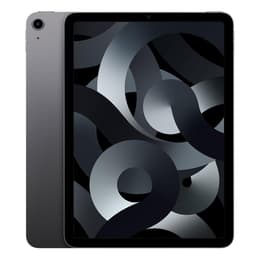
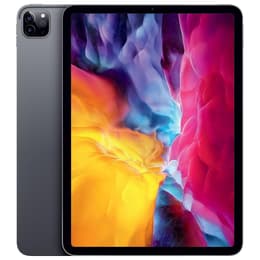
iPad Air 5 (2022, M1 series) vs iPad Pro (2020, A12 series)

iPad Air 5 (2022, M1 series)
Starting at

Refurbished price:$297.00

Versus $599.00 new

See options
iPad Pro (2020, A12 series)
Starting at

Refurbished price:$371.00

Versus $799.00 new

See options

Ratings

The iPad Air (2022), also known as the 5th generation iPad Air, and the iPad Pro (2020) are both powerful tablet computers from Apple, designed to offer a premium user experience. The iPad Air (2022), released in March 2022, features Apple's M1 chip, bringing advanced performance to the Air lineup. The iPad Pro (2020), released two years earlier in March 2020, is powered by the A12Z Bionic chip and was available in both 11-inch and 12.9-inch display sizes. While both devices run on iPadOS and support the Apple Pencil and Magic Keyboard, the Air (2022) benefits from a newer processor generation, while the Pro (2020) introduced advanced display technology and a more comprehensive camera system for its time. [19, 21]

Scores

Durability

When considering the longevity of these tablets, several factors come into play, including their release timelines, operating system support, and overall build quality. The iPad Air (2022) has an inherent advantage in terms of future software support due to its newer release date and more recent processor. [19]

  • Release Timeline: The iPad Air (2022) was released in March 2022, two years after the iPad Pro (2020), which was released in March 2020. This difference in release date typically means the Air (2022) will receive software updates for a longer period. [1, 3, 19]
  • Software Longevity: Both devices are compatible with current iPadOS versions. However, the iPad Air (2022) is anticipated to receive software updates for a longer duration due to its M1 chip, which is a newer generation processor. [1, 3, 19, 21] Users report that iPads generally maintain strong performance for several years. [19]
  • Practical Lifespan: The M1 chip in the Air (2022) is noted for its ability to handle future applications and updates, suggesting a robust practical lifespan. [19] The iPad Pro (2020) is also considered durable, especially when protected by a case, and many users find it highly capable even after several years. [19, 21]

Release Year

2022

2020

Last OS Compatibility

Yes

Yes

OS

iPadOS

iPadOS

Maximum Operating System supported

iPadOS 18

iPadOS 18

Performance

Both the iPad Air (2022) and the iPad Pro (2020) offer strong performance, but they feature different generations of Apple's custom silicon. The iPad Air (2022) incorporates a more recent processor, while the iPad Pro (2020) features a powerful chip from its release year. [19, 21]

  • Processor Capabilities: The iPad Air (2022) is equipped with a current-generation processor, which provides a significant boost in performance compared to its predecessor and offers desktop-class performance. [6, 16, 20] This allows for smooth multitasking, efficient handling of demanding applications, and fluid gaming experiences. The iPad Pro (2020) features a powerful processor with an eight-core CPU and GPU, designed to handle intensive tasks like 4K video editing and 3D modeling. [3, 13, 25, 34]
  • RAM and Storage: The iPad Air (2022) comes with 8GB of RAM, which contributes to its ability to manage multiple applications simultaneously without slowdowns. [18, 24, 26] Storage options for the Air (2022) are 64GB and 256GB. [1, 2] The iPad Pro (2020) features 6GB of RAM across all models, ensuring consistent performance for professional workflows. [3, 13, 23, 35] It offers more storage flexibility with options ranging from 128GB up to 1TB. [3, 13, 25]
  • Overall Responsiveness: Both devices offer a highly responsive user experience. The iPad Air (2022)'s newer processor ensures that it remains fast and capable for years to come. [26] The iPad Pro (2020), despite being older, still provides a very smooth visual experience, especially with its display technology. [14]

Memory (GB)

8 GB

6 GB

Processor

Apple M1

Apple A12Z Bionic

Screen quality

The display is a key component of any tablet, and both the iPad Air (2022) and iPad Pro (2020) offer high-quality viewing experiences, though with distinct differences in technology and features. [19, 21]

  • Display Technology and Clarity: Both tablets feature Liquid Retina IPS displays, providing vibrant colors and clear visuals. [6, 19, 21] The iPad Air (2022) has a 10.9-inch display with a resolution of 2360 x 1640 pixels. [2, 6, 18] The iPad Pro (2020) is available in 11-inch (2388 x 1668 pixels) and 12.9-inch (2732 x 2048 pixels) sizes, offering slightly higher resolutions on the larger model. [3, 9, 14] Both displays have a pixel density of 264 pixels per inch. [14, 21, 24]
  • Brightness and Refresh Rate: The iPad Air (2022) offers a peak brightness of 500 nits, which is suitable for various lighting conditions. [4, 6, 24] A key differentiator is the refresh rate: the iPad Air (2022) has a standard 60Hz refresh rate. [39] In contrast, the iPad Pro (2020) features ProMotion technology, providing an adaptive refresh rate up to 120Hz, which results in smoother scrolling and more fluid motion, particularly noticeable during fast-paced content or with the Apple Pencil. [14, 39]
  • Viewing Experience: Both displays support Wide Color (P3) and True Tone technology for accurate color representation and comfortable viewing that adjusts to ambient lighting. [4, 14, 21] The iPad Pro (2020) also offers a higher peak brightness of 600 nits, which can be beneficial for outdoor use or in brightly lit environments. [3, 14, 28]

Resolution

2360 x 1640

2388 x 1668

True Tone

Yes

Yes

Pro-Motion

No

Yes

Screen type

Liquid Retina display

Liquid Retina display

Pixel density

264ppp

264ppp

Brightness

500 nits brightness

600 nits brightness max

Sound quality

Speakers

Stereo speakers

Four speaker audio

Audiovisual

The camera systems on the iPad Air (2022) and iPad Pro (2020) cater to different user needs, with the Pro model offering more advanced features for its time, while the Air focuses on essential capabilities and improved video conferencing. [19, 21]

  • Rear Camera System: The iPad Air (2022) features a single 12MP wide camera on the rear, capable of 4K video recording. [1, 4, 15] The iPad Pro (2020) includes a more comprehensive dual-camera setup on the rear, consisting of a 12MP wide camera and a 10MP ultra-wide camera. [3, 13, 25] Additionally, the iPad Pro (2020) incorporates a LiDAR scanner, which enhances augmented reality experiences and improves depth sensing for photography. [3, 7, 25, 30]
  • Front Camera and Video Calls: The iPad Air (2022) boasts a 12MP ultra-wide front camera with Center Stage. This feature automatically keeps the user in the frame during video calls, making for a more natural conferencing experience. [12, 15, 16, 20] The iPad Pro (2020) features a 7MP TrueDepth front camera, which also supports Face ID for secure authentication. [3, 25]
  • Photography and Video Quality: Both tablets can capture sharp and colorful images in good lighting conditions and record 4K video. [15, 21] The iPad Pro (2020)'s additional ultra-wide lens and LiDAR scanner provide more versatility for creative photography and augmented reality applications. [3, 7]
  • Audio for Media and Communication: The iPad Air (2022) features landscape stereo speakers, providing a good audio experience for media consumption. [20, 21] The iPad Pro (2020) offers a four-speaker audio system, which generally provides a richer and fuller sound experience. [3, 39] Both devices include studio-quality microphones for clear audio during calls and recordings. [7, 25]

Miscellaneous

Beyond core performance and display, several practical elements differentiate the iPad Air (2022) and iPad Pro (2020), impacting daily usability and connectivity. [19]

  • Connectivity Options: Both tablets support Wi-Fi 6 and Bluetooth 5.0 for robust wireless connections. [2, 5, 10, 13] The iPad Air (2022) offers optional 5G cellular connectivity, providing faster mobile data speeds where available. [1, 12, 16, 20] The iPad Pro (2020) offers optional LTE cellular connectivity. [13]
  • Port Types: Both devices feature a USB-C port. The iPad Air (2022)'s USB-C port offers faster transfer speeds, up to 10 Gbps, which is beneficial for transferring large files and connecting to external displays up to 6K resolution. [15, 31, 37] The iPad Pro (2020) also has a USB-C port, supporting USB 3.1 Gen 2 speeds. [13, 34]
  • Biometric Security: The iPad Air (2022) integrates Touch ID into its top button for secure authentication. [4, 15, 20, 24] The iPad Pro (2020) features Face ID for facial recognition-based unlocking and authentication. [3, 37]
  • Weight and Dimensions: The iPad Air (2022) measures 247.6 x 178.5 x 6.1 mm and weighs approximately 460g for the Wi-Fi model. [2, 10, 17, 18, 22] The 11-inch iPad Pro (2020) has similar dimensions at 247.6 x 178.5 x 5.9 mm and weighs around 471g. [9, 36] The larger 12.9-inch iPad Pro (2020) measures 280.6 x 214.9 x 5.9 mm and weighs 641g. [5, 14, 36]

Weight

16 oz

16 oz

Width

7 in

7 in

Height

9.7 in

9.7 in

Depth

0.2 in

0.2 in

Screen size (inches)

10.9

11

Network

Wi-Fi

Wi-Fi

Carrier compatibility

Without SIM Port

Without SIM Port

Wi-Fi technology

Wi-Fi 6 802.11ax

Wi-Fi 6 802.11ax

Bluetooth Version

Bluetooth 5.0

Bluetooth 5.0

Face ID

No

Yes

Touch ID

Yes

No

Connector

USB Type-C

USB Type-C

User sentiment often highlights the iPad Air (2022) as a highly capable device that brings many premium features to a broader audience. Many users appreciate its powerful processor and improved front camera for video calls. Some common feedback notes that while its display is excellent, it lacks the smoother refresh rate found in the Pro models. The iPad Pro (2020), despite being an older model, is still praised for its robust performance, advanced display technology, and versatile camera system, particularly the inclusion of the LiDAR scanner. Users often point to its ProMotion display as a significant advantage for tasks involving the Apple Pencil or for general content consumption. A frequent observation is that the A12Z Bionic chip remains highly capable for most professional tasks, even years after its release. [14, 38, 39]

Users prioritizing a more recent processor for long-term software support and demanding applications, along with an enhanced front camera for video conferencing, may find the iPad Air (2022) well-suited to their needs. Its balance of performance and features makes it a strong choice for students, creative professionals, and everyday users who value a modern and efficient tablet experience. Conversely, users who value a smoother display experience with a 120Hz refresh rate, a more versatile rear camera system with LiDAR, and Face ID for authentication, might lean towards the iPad Pro (2020). Its larger storage options also cater to those with extensive media or project files. Both devices offer a premium tablet experience, and choosing between them often comes down to whether a superior display and advanced camera features (Pro 2020) or a newer, more powerful core processor (Air 2022) aligns better with individual priorities. For those seeking an eco-friendly alternative, quality-assured refurbished options for both models provide a sustainable choice without compromising on performance.


See all articles

Our recent comparisons