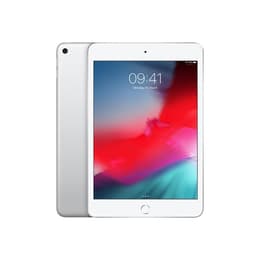
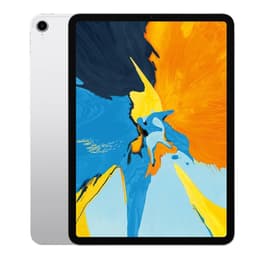
iPad mini 5 (2019, A12 series) vs iPad Pro (2018, A12 series)

iPad mini 5 (2019, A12 series)
Starting at

Refurbished price:$165.95

Versus $599.00 new

See options
iPad Pro (2018, A12 series)
Starting at

Refurbished price:$269.00

Versus $949.00 new

See options

Ratings

The iPad Mini (5th generation), released in March 2019, and the iPad Pro (3rd generation), launched in October 2018, represent distinct approaches within Apple's tablet lineup. While both devices operate on Apple's iPadOS, providing a consistent software environment, they diverge significantly in their design philosophy and hardware capabilities. The primary differentiators lie in their physical size, display technology, and overall performance capabilities, catering to different user needs and preferences.

Scores

Durability

When considering the long-term usability of these tablets, their release timelines and ongoing software support are key factors. The iPad Mini (2019) was introduced in March 2019, while the iPad Pro (2018) models debuted in October 2018. Both devices have received consistent iPadOS updates since their release, with both models currently supporting iPadOS 17.

  • Software Longevity: Both tablets are expected to continue receiving major iPadOS updates for several more years. The iPad Mini (5th gen) and iPad Pro (2018) are listed as supporting iPadOS 18 and potentially iPadOS 19, indicating a similar expected practical lifespan in terms of software compatibility. Users can anticipate access to new features and security enhancements for a comparable duration.
  • Physical Design: The iPad Mini (2019) retains a more traditional iPad design with a home button and thicker bezels, while the iPad Pro (2018) introduced a more modern, all-screen design with thinner bezels. The physical durability of both models is generally robust, though the larger screen of the Pro models might be perceived as more vulnerable to impact.
  • Repairability: Historically, Apple tablets have presented moderate repairability challenges due to their construction. However, the availability of parts and expertise for both models remains good, especially through quality-assured refurbished options.

Release Year

2019

2018

Last OS Compatibility

Yes

Yes

OS

iPadOS

iPadOS

Maximum Operating System supported

iPadOS 18

iPadOS 18

Performance

The performance capabilities of the iPad Mini (2019) and iPad Pro (2018) are driven by different iterations of Apple's A12 series chips, leading to distinct real-world experiences. The iPad Mini (2019) features the A12 Bionic chip, while the iPad Pro (2018) is equipped with the more powerful A12X Bionic chip.

  • Processing Power: The iPad Mini (2019) provides smooth performance for everyday tasks, web browsing, and most applications, including casual gaming and light content creation. The iPad Pro (2018), with its A12X Bionic chip, is designed for more demanding workflows, offering a significant boost in multi-threaded tasks and graphics performance.
  • Multitasking and Responsiveness: The iPad Mini (2019) comes with 3GB of RAM, which is sufficient for typical tablet usage and switching between a few applications. The iPad Pro (2018) offers 4GB of RAM in most configurations, with the 1TB storage model featuring 6GB of RAM. This increased memory allows the iPad Pro to handle a greater number of active applications simultaneously without slowdowns, making it more suitable for users who frequently juggle complex tasks or work with large files.
  • Storage Options: The iPad Mini (2019) is available with 64GB or 256GB of internal storage. The iPad Pro (2018) offers a wider range of storage options, including 64GB, 256GB, 512GB, and 1TB.

Memory (GB)

3 GB

4 GB

Processor

Apple A12 Bionic

Apple A12X Bionic

Screen quality

The display is a primary point of differentiation between these two tablets, impacting everything from media consumption to professional work. Both tablets feature True Tone technology, which adjusts the display's white balance to match the ambient light, and support for the P3 wide color gamut, offering vibrant and accurate colors.

  • Display Technology and Size: The iPad Mini (2019) features a 7.9-inch Retina IPS LCD display with a resolution of 2048 x 1536 pixels, resulting in a pixel density of 326 pixels per inch (ppi). This compact size is ideal for portability and reading. The iPad Pro (2018), on the other hand, offers larger Liquid Retina IPS LCD displays in 11-inch (2388 x 1668 pixels) and 12.9-inch (2732 x 2048 pixels) sizes, both with 264 ppi.
  • Brightness: The iPad Mini (2019) has a maximum brightness of 500 nits. The iPad Pro (2018) models boast a higher peak brightness of 600 nits, which can be beneficial for outdoor use or in brightly lit environments.
  • Refresh Rate: A significant advantage of the iPad Pro (2018) is its ProMotion technology, which allows for an adaptive refresh rate of up to 120Hz. This results in smoother scrolling, more responsive touch input, and a more fluid visual experience compared to the standard 60Hz refresh rate of the iPad Mini (2019).

Resolution

2048 x 1536

2388 x 1668

True Tone

Yes

Yes

Pro-Motion

No

Yes

Screen type

Retina display

Liquid Retina display

Pixel density

326ppp

264ppp

Brightness

500 nits brightness

600 nits brightness

Sound quality

Speakers

Stereo speakers

Four speaker audio

Audiovisual

The camera systems on both the iPad Mini (2019) and iPad Pro (2018) are designed for different use cases, reflecting their overall form factors and intended purposes.

  • Rear Camera Capabilities: The iPad Mini (2019) features an 8-megapixel rear camera capable of recording 1080p HD video. The iPad Pro (2018) is equipped with a more advanced 12-megapixel rear camera, offering 4K video recording at up to 60 frames per second. This makes the Pro model more suitable for users who require higher resolution and more detailed video capture.
  • Front Camera and Security: Both tablets include a 7-megapixel front-facing camera. However, the iPad Pro (2018) integrates this with its TrueDepth camera system, enabling Face ID for secure authentication and features like Animoji and Memoji. The iPad Mini (2019) relies on Touch ID for biometric security.
  • Audio Experience: The iPad Mini (2019) provides stereo speakers. The iPad Pro (2018) enhances the audio experience with a quad-speaker system, delivering richer and more immersive sound, which is particularly beneficial for media consumption and video calls.

Miscellaneous

Beyond core performance and display, several practical elements differentiate the iPad Mini (2019) and iPad Pro (2018), influencing their daily usability and compatibility with accessories.

  • Connectivity: Both devices support Wi-Fi 802.11ac with MIMO and Bluetooth 5.0. Cellular models of both tablets offer Gigabit-class LTE for faster mobile data speeds.
  • Ports and Accessories: The iPad Mini (2019) utilizes a Lightning port for charging and data transfer and retains a 3.5mm headphone jack. It supports the 1st generation Apple Pencil. In contrast, the iPad Pro (2018) features a versatile USB-C port, allowing for broader connectivity with external displays, cameras, and other peripherals, but it lacks a headphone jack. It supports the 2nd generation Apple Pencil, which attaches magnetically and charges wirelessly.
  • Biometric Authentication and Design: The iPad Mini (2019) uses Touch ID integrated into its home button for secure unlocking. The iPad Pro (2018) features Face ID, enabling facial recognition for unlocking and secure payments, and boasts a more modern, all-screen design with thinner bezels. The iPad Mini (2019) is significantly lighter at approximately 300 grams and thinner at 6.1 mm, making it highly portable. The iPad Pro (2018) models are larger and heavier, with the 11-inch model weighing around 468 grams and the 12.9-inch model around 631 grams, both with a thickness of 5.9 mm.

Weight

10 oz

16 oz

Width

5.3 in

7 in

Height

9.1 in

9.7 in

Depth

0.2 in

0.2 in

Screen size (inches)

7.9

11

Network

Wi-Fi + 4G

Wi-Fi

Carrier compatibility

Unlocked

Without SIM Port

Wi-Fi technology

Wi-Fi 6 802.11a/b/g/n/ac

Wi-Fi 6 802.11a/b/g/n/ac

Bluetooth Version

Bluetooth 5.0

Bluetooth 5.0

Face ID

No

Yes

Touch ID

Yes

No

Connector

Lightning connector

USB Type-C

The iPad Mini (2019) and iPad Pro (2018) cater to distinct user profiles, a sentiment frequently echoed across various user forums. Users often praise the iPad Mini (2019) for its exceptional portability, making it an ideal companion for reading, note-taking on the go, and casual media consumption. Its compact size and lighter weight are significant advantages for those who prioritize single-handed use and easy transport.

Conversely, the iPad Pro (2018) receives commendation for its powerful performance, larger and more advanced display with ProMotion technology, and versatile USB-C connectivity. These features make it well-suited for creative professionals, students, or anyone requiring a tablet for demanding applications, extensive multitasking, or as a laptop alternative. Common criticisms for the Mini often point to its older design with thicker bezels and the Lightning port, while the Pro's larger size and weight might be a drawback for users seeking maximum portability.

Users prioritizing extreme portability, a traditional home button, and a compact form factor for tasks like reading or light browsing may find the iPad Mini (2019) well-suited to their needs. Those who require a larger screen for creative work, a smoother visual experience, more robust processing power for professional applications, and modern connectivity will likely lean toward the iPad Pro (2018). Both devices offer a quality-assured refurbished option, providing an eco-friendly alternative for consumers.


See all articles

Our recent comparisons