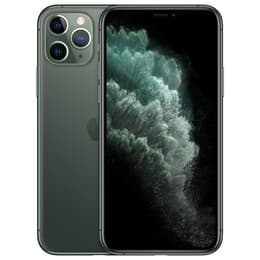
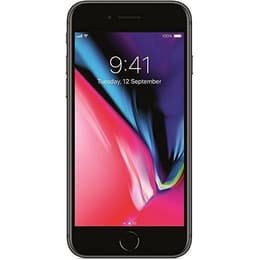

iPhone 11 Pro • Unlocked vs iPhone 8 Plus • Unlocked

iPhone 11 Pro • Unlocked
Starting at

Refurbished price:$200.00

Versus $749.00 new

See options
iPhone 8 Plus • Unlocked
Starting at

Refurbished price:$118.00

Versus $239.00 new

See options

Ratings

The iPhone 11 Pro, released in September 2019, and the iPhone 8 Plus, launched in September 2017, represent different generations of Apple's smartphone lineup. While both devices operate on Apple's iOS ecosystem, the iPhone 11 Pro introduced significant advancements in display technology, camera capabilities, and overall performance. These differences cater to varying user needs, from those prioritizing cutting-edge features to those seeking a more traditional iPhone experience.

Scores

Durability

When considering the longevity of these devices, their respective release timelines and software support are key factors.

  • Release Timeline: The iPhone 11 Pro was released two years after the iPhone 8 Plus, giving it a natural advantage in terms of its lifecycle. The iPhone 8 Plus was discontinued in April 2020, while the iPhone 11 Pro was discontinued in October 2020.
  • Software Longevity: The iPhone 11 Pro is capable of running more recent iOS versions, extending its access to the latest features and security updates. The iPhone 8 Plus received its last major iOS update with iOS 16 and continues to receive security updates, but it does not support iOS 17 or later versions. This means the iPhone 11 Pro will maintain compatibility with new applications and system enhancements for a longer period.
  • Durability Features: The iPhone 11 Pro features a stainless steel frame and a more advanced glass construction, contributing to its overall resilience. It also boasts an IP68 water resistance rating, allowing it to withstand submersion up to 4 meters for 30 minutes, compared to the iPhone 8 Plus's IP67 rating for 1 meter for 30 minutes.

Release Year

2019

2017

Last OS Compatibility

Yes

No

OS

iOS

iOS

Foldable

No

No

Performance

Performance is a significant area of distinction, impacting everything from app responsiveness to demanding tasks.

  • Processing Power: The iPhone 11 Pro features a more advanced internal processor, which translates to noticeably faster app loading times, smoother multitasking, and enhanced performance in graphically intensive games and applications. This allows for more efficient handling of complex computations and augmented reality experiences.
  • Multitasking and Responsiveness: With 4GB of RAM, the iPhone 11 Pro offers improved multitasking capabilities compared to the iPhone 8 Plus's 3GB of RAM, allowing users to switch between multiple open applications more seamlessly without experiencing slowdowns.
  • Battery Behavior: Despite having a slightly larger battery capacity (3046 mAh) than the iPhone 8 Plus (2691 mAh), the iPhone 11 Pro's more efficient processor and optimized software lead to significantly longer battery life in real-world usage. Users can expect several additional hours of screen-on time, making it better suited for extended use without frequent recharging. Both devices support wireless charging and fast charging, though the iPhone 11 Pro includes an 18W fast charger in the box, while the iPhone 8 Plus requires a separate purchase for faster charging speeds.

Memory (GB)

4 GB

3 GB

Screen quality

The visual experience differs considerably between these two models, primarily due to their display technologies.

  • Display Technology: The iPhone 11 Pro features a 5.8-inch Super Retina XDR OLED display, which offers deep blacks, vibrant colors, and excellent contrast. In contrast, the iPhone 8 Plus uses a 5.5-inch Retina HD IPS LCD display. OLED technology allows for individual pixels to be turned off completely, resulting in true black levels that LCD panels cannot achieve.
  • Resolution and Clarity: The iPhone 11 Pro boasts a higher resolution of 2436x1125 pixels at 458 pixels per inch (ppi), providing a sharper and more detailed image compared to the iPhone 8 Plus's 1920x1080 resolution at 401 ppi.
  • Brightness and HDR: The iPhone 11 Pro's display can reach up to 800 nits typical brightness and 1200 nits peak brightness for HDR content, making it significantly brighter and more suitable for outdoor visibility and HDR media consumption. The iPhone 8 Plus has a typical maximum brightness of 625 nits. Both displays support True Tone technology, which adjusts the white balance to match ambient lighting, and wide color (P3) for accurate color reproduction.

Resolution

1125 x 2436

1080 x 1920

Screen type

Super Retina XDR OLED

Retina IPS LCD

Audiovisual

The camera systems represent one of the most substantial upgrades in the iPhone 11 Pro.

  • Rear Camera System: The iPhone 11 Pro features a versatile triple-lens rear camera system, including a 12MP Ultra Wide, Wide, and Telephoto lens. This allows for greater photographic flexibility, including a wider field of view and enhanced optical zoom capabilities. The iPhone 8 Plus has a dual 12MP camera system with Wide and Telephoto lenses.
  • Photography Features: The iPhone 11 Pro introduced advanced features like Night mode for significantly improved low-light photography, Deep Fusion for enhanced detail and texture in medium to low light, and next-generation Smart HDR. While the iPhone 8 Plus offers Portrait mode and Portrait Lighting, its low-light performance and overall image processing are less advanced.
  • Video and Front Camera: Both devices can record 4K video at up to 60 frames per second. However, the iPhone 11 Pro offers extended dynamic range for video and cinematic video stabilization across all its rear cameras. The front-facing camera on the iPhone 11 Pro is a 12MP TrueDepth camera capable of 4K video recording and slow-motion selfies, a notable upgrade from the iPhone 8 Plus's 7MP FaceTime HD camera.

Main camera

12 megapixels

12 megapixels

Front camera

12 megapixels

7 megapixels

Miscellaneous

Beyond the core features, several practical elements differentiate these two smartphones.

  • Connectivity: Both devices support Gigabit-class LTE and Bluetooth 5.0. The iPhone 11 Pro features Wi-Fi 6 (802.11ax), offering faster and more efficient wireless connectivity compared to the iPhone 8 Plus's Wi-Fi 5 (802.11ac). The iPhone 11 Pro also includes an Ultra Wideband (U1) chip for improved spatial awareness.
  • Physical Design and Handling: The iPhone 11 Pro is slightly smaller and lighter, measuring 144 x 71.4 x 8.1mm and weighing 188g, compared to the iPhone 8 Plus at 158.4 x 78.1 x 7.5mm and 202g. The iPhone 11 Pro features a more modern, all-screen design with a notch, while the iPhone 8 Plus retains the traditional Home button with Touch ID.
  • Authentication: The iPhone 11 Pro relies on Face ID for secure authentication, whereas the iPhone 8 Plus uses Touch ID via its physical Home button.

Weight

7 oz

7 oz

Screen size (inches)

5.8

5.5

Network

LTE

LTE

SIM card

Physical SIM + eSIM

Physical SIM

Carrier compatibility

Unlocked

Unlocked

Connector

Lightning

Lightning

The iPhone 11 Pro and iPhone 8 Plus cater to different user expectations and priorities. Users frequently praise the iPhone 11 Pro for its significantly improved camera system, particularly its Night mode and versatile triple lenses, as well as its vibrant OLED display and extended battery life. Common criticisms for the iPhone 11 Pro are less prevalent but sometimes relate to its initial cost or the design of the camera bump.

The iPhone 8 Plus is often appreciated by users for its familiar design, including the physical Home button and Touch ID, which some prefer over Face ID. Its performance was considered robust for its time, and it still handles everyday tasks adequately. However, frequent concerns for the iPhone 8 Plus revolve around its aging battery performance and the cessation of major iOS updates, which impacts its long-term software support and access to new features.

Users prioritizing a modern, high-quality display, advanced photography capabilities, and longer software support will find the iPhone 11 Pro well-suited to their needs. Its superior performance and battery efficiency also make it a strong choice for demanding users. Conversely, individuals who prefer a traditional iPhone design with a physical Home button, or those with more modest performance requirements for everyday communication and basic apps, may find the iPhone 8 Plus still meets their needs. For those considering either device, exploring quality-assured refurbished options can provide an eco-friendly alternative to extend the life of these capable smartphones.

See all articles

Our recent comparisons