iPhone 14 Pro • Unlocked vs OnePlus 12 • Unlocked

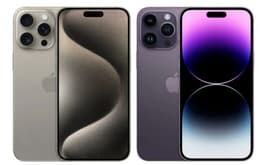
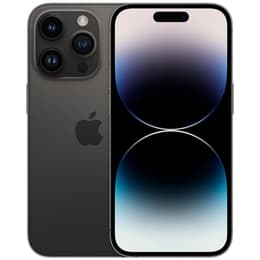
iPhone 14 Pro • Unlocked
Starting at

Refurbished price:$354.99

Versus $999.00 new

See options
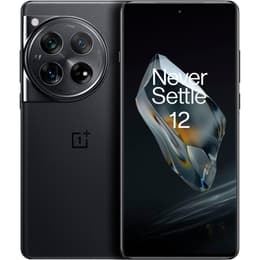
OnePlus 12 • Unlocked
Starting at

Refurbished price:$746.99

Versus $1,200.00 new

See options

Ratings

The iPhone 14 Pro, released in September 2022, and the OnePlus 12, launched globally in January 2024, represent distinct approaches to high-end smartphone design and functionality. While both devices offer premium experiences, they differentiate themselves through their operating systems, camera philosophies, and overall user interfaces. The iPhone 14 Pro operates on Apple's iOS, known for its integrated ecosystem, whereas the OnePlus 12 runs on Android, offering more customization. Key distinctions lie in their display technologies, camera systems, and battery capacities, catering to varied user preferences.

Scores

Durability

When considering the longevity of a smartphone, several factors come into play, including software support, physical durability, and the expected practical lifespan of components. The iPhone 14 Pro and OnePlus 12 offer different timelines and approaches to these aspects.

  • Release Timeline and Age: The iPhone 14 Pro was released in September 2022, making it an earlier model compared to the OnePlus 12, which had its global launch in January 2024. This difference in release dates inherently means the iPhone 14 Pro has already received a portion of its software update cycle.
  • Software Longevity: Apple typically provides iOS updates for approximately 5-6 years from a device's release. The iPhone 14 Pro launched with iOS 16 and is expected to receive updates for several more years. In contrast, the OnePlus 12 offers four years of Android updates and an additional year of security patches, totaling five years of software support. This means the OnePlus 12 is projected to receive major Android updates until at least Android 18.
  • Durability Features: The iPhone 14 Pro features a Ceramic Shield front cover and an IP68 rating for dust and water resistance, indicating it can withstand submersion up to 6 meters for 30 minutes. The OnePlus 12 is protected by Gorilla Glass Victus 2 on the front and carries an IP65 rating, signifying protection against dust and low-pressure water jets.

Release Year

2022

2023

Last OS Compatibility

Yes

Yes

OS

iOS

Android

Foldable

No

No

Performance

Both the iPhone 14 Pro and the OnePlus 12 are equipped with powerful internal components designed for smooth operation, though they achieve this through different hardware and software optimizations.

  • Processor Capabilities: The iPhone 14 Pro is powered by Apple's A16 Bionic chip, which provides robust performance for demanding applications, multitasking, and graphics-intensive gaming. The OnePlus 12 features the Snapdragon 8 Gen 3 Mobile Platform, a current-generation processor known for its efficiency and capability in handling complex tasks and high-performance gaming.
  • System Responsiveness and Multitasking: The iPhone 14 Pro comes with 6GB of RAM, which, combined with iOS's optimization, ensures fluid app switching and responsive user interactions. The OnePlus 12 offers higher RAM configurations, starting from 12GB and going up to 24GB, contributing to its ability to manage numerous applications simultaneously and maintain smooth performance over extended periods.
  • Storage Options: The iPhone 14 Pro is available with storage capacities ranging from 128GB to 1TB. The OnePlus 12 also offers various storage options, typically starting at 256GB and going up to 1TB, utilizing UFS 4.0 for faster data transfer speeds.

Memory (GB)

6 GB

16 GB

Screen quality

The visual experience on both devices is a highlight, with each offering advanced display technologies tailored for clarity, brightness, and smooth interactions.

  • Display Technology and Resolution: The iPhone 14 Pro features a 6.1-inch Super Retina XDR OLED display with a resolution of 2556x1179 pixels, resulting in a pixel density of approximately 460 pixels per inch (ppi). This OLED panel delivers deep blacks and vibrant colors. The OnePlus 12 boasts a larger 6.82-inch LTPO AMOLED display with a 2K resolution (3168x1440 pixels), offering a sharp viewing experience with around 510 ppi.
  • Brightness and Refresh Rate: The iPhone 14 Pro's display can reach a typical maximum brightness of 1000 nits, with peak brightness for HDR content up to 1600 nits, and an impressive 2000 nits for outdoor use. It also features ProMotion technology, offering an adaptive refresh rate from 1Hz to 120Hz for smooth scrolling and power efficiency. The OnePlus 12's display is notable for its high peak brightness of up to 4500 nits, enhancing outdoor visibility and HDR effects. It also utilizes LTPO technology for an adaptive refresh rate ranging from 1Hz to 120Hz.
  • Special Features: The iPhone 14 Pro introduced the Dynamic Island, an interactive area around the front camera cutout that displays alerts and background activities. The OnePlus 12's display incorporates ProXDR technology for more accurate brightness adjustments and features Aqua Touch, allowing for use even with wet fingers.

Resolution

1179 x 2556

1440 x 3168

Screen type

LTPO Super Retina XDR OLED

LTPO AMOLED

Audiovisual

Both smartphones offer advanced camera systems, each with its own strengths in capturing photos and videos across various conditions.

  • Rear Camera Systems: The iPhone 14 Pro features a triple camera setup, including a 48MP main sensor with sensor-shift optical image stabilization, a 12MP ultrawide lens, and a 12MP telephoto lens with 3x optical zoom. The 48MP main camera uses pixel binning to produce detailed 12MP images by default, but can capture full 48MP ProRAW files. The OnePlus 12 also has a versatile triple camera system, co-developed with Hasselblad. It includes a 50MP main camera with a Sony LYT-808 sensor and OIS, a 48MP ultrawide camera, and a 64MP periscope telephoto camera offering 3x optical zoom.
  • Photography Performance: The iPhone 14 Pro is praised for producing vibrant and well-detailed images, particularly in good lighting conditions, with improvements in low-light performance for the main sensor. Its telephoto lens also shows significant improvements in detail and color. The OnePlus 12's camera system is noted for producing true-to-life photos with good detail and handling different lighting effectively, with its 64MP telephoto camera being a standout.
  • Video Recording and Front Camera: Both devices offer high-quality video recording capabilities. The iPhone 14 Pro supports 4K video recording at various frame rates, including Cinematic mode and Action mode. Its front-facing camera is a 12MP sensor with autofocus. The OnePlus 12 features a 32MP front camera.

Main camera

48 megapixels

50 megapixels

Front camera

12 megapixels

32 megapixels

Miscellaneous

Beyond core performance and display, several practical features and design elements distinguish these two smartphones, influencing daily usability and connectivity.

  • Connectivity and Ports: The iPhone 14 Pro supports 5G connectivity and Wi-Fi 6, and uses a Lightning port for charging and data transfer. It also includes Bluetooth 5.3. The OnePlus 12 offers 5G, Wi-Fi 7, and Bluetooth 5.4, and features a USB-C 3.2 port, providing modern connectivity standards.
  • Biometric Security and Sensors: The iPhone 14 Pro relies on Face ID for secure facial recognition. It also includes a LiDAR scanner. The OnePlus 12 incorporates an in-display fingerprint sensor for biometric authentication. It also features an IR blaster, allowing it to function as a universal remote.
  • Physical Design and Handling: The iPhone 14 Pro has dimensions of 147.5 x 71.5 x 7.85 mm and weighs 206g, offering a more compact form factor. It features a stainless steel frame and a glass back. The OnePlus 12 is a larger device, measuring 164.3 x 75.8 x 9.15 mm and weighing 220g, providing a more expansive screen experience. Its design includes a glass back and metal frame, with a matte finish that resists fingerprints.
  • Audio: Both devices offer stereo speakers. The OnePlus 12 also supports Dolby Atmos and Spatial Audio for an enhanced media consumption experience.

Weight

7 oz

8 oz

Screen size (inches)

6.1

6.82

Network

5G

5G

SIM card

eSIM

Physical SIM

Carrier compatibility

Unlocked

Unlocked

Connector

Lightning

USB-C

The iPhone 14 Pro and OnePlus 12 cater to different user priorities, each excelling in specific areas. Users frequently praise the iPhone 14 Pro for its integrated ecosystem, consistent camera performance, and the innovative Dynamic Island feature. Its compact size and robust build quality are also commonly highlighted as positive attributes. Some users, however, might find its battery life to be less extensive compared to some Android counterparts, and the Lightning port may be a consideration for those preferring USB-C.

The OnePlus 12 receives commendation for its exceptional battery life, often lasting a full day or more even with heavy use, and its rapid charging capabilities. Its large, bright display and versatile camera system, particularly the telephoto lens, are also frequently cited as strong points. Some users note that while the camera is capable, color consistency across lenses can sometimes vary. The software update policy, while generous, is not as extended as some competitors, which is a point of discussion among users.

Users prioritizing a highly optimized software experience, a compact form factor, and a strong ecosystem integration may find the iPhone 14 Pro well-suited to their needs. Those who value a larger display, extended battery life, faster charging, and greater customization options within the Android ecosystem might lean towards the OnePlus 12. Both devices offer a premium smartphone experience, and choosing between them often comes down to individual preferences regarding operating system, design, and specific feature emphasis. For those seeking a quality-assured refurbished option, both models are available, offering a sustainable choice for consumers.

See all articles

Our recent comparisons