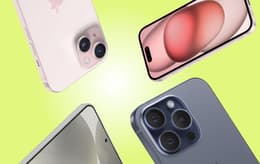
iPhone 15 • Locked AT&T vs iPhone SE (2022) • Locked Verizon

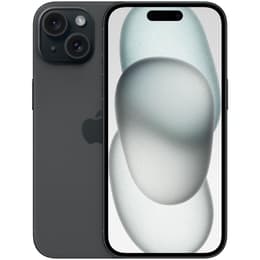
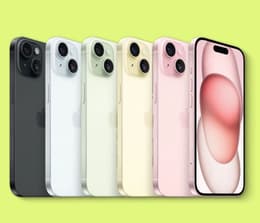
iPhone 15 • Locked AT&T
Starting at

Refurbished price:$347.00

Versus $729.00 new

See options
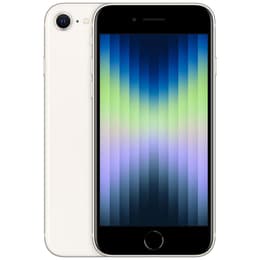
iPhone SE (2022) • Locked Verizon
Starting at

Refurbished price:$124.00

Versus $429.00 new

See options

Ratings

The iPhone 15, released in September 2023, and the iPhone SE (2022), launched in March 2022, represent distinct approaches within Apple's smartphone lineup. While both operate on Apple's iOS platform, the iPhone 15 offers a more contemporary design and advanced features, whereas the iPhone SE (2022) maintains a classic form factor with updated internal components. The primary differentiators lie in their display technology, camera capabilities, and overall design philosophy.

Scores

Durability

When considering the practical lifespan of these devices, several factors come into play, including their release timelines, software support, and repairability.

  • Release Timeline and Software Support: The iPhone 15, being a newer device from September 2023, benefits from a longer expected period of major iOS updates and security patches compared to the iPhone SE (2022), which was released in March 2022. Apple typically provides 5-7 years of major iOS updates and up to 7 years of security updates for its iPhones. The iPhone 15 is expected to receive updates until approximately 2031, while the iPhone SE (2022) was discontinued in February 2025 but is still eligible for iOS 26 as of September 2025. This means the iPhone 15 offers a longer guaranteed software longevity.
  • Repairability: The iPhone 15 initially received a repairability score of 4 out of 10, which was later promoted to 7 out of 10 due to software improvements that facilitate part calibration. The iPhone SE (2022) generally has a repairability score around 5.5 out of 10, with some sources indicating 6 or 7 out of 10. Its design, shared with older iPhone models, means that common components like the screen and battery are relatively accessible for repair, though the home button can be challenging.
  • Expected Practical Lifespan: Both devices are built with durable materials, but the iPhone 15 features Ceramic Shield front cover for enhanced drop performance. The iPhone SE (2022) uses strong glass similar to the iPhone 13 series on its back, but not Ceramic Shield. Users prioritizing the longest possible software support and the latest durability enhancements may find the iPhone 15 to offer a slightly extended practical lifespan.

Release Year

2023

2022

Last OS Compatibility

Yes

Yes

OS

iOS

iOS

Foldable

No

No

Performance

The performance of a smartphone is crucial for daily tasks, app responsiveness, and handling demanding applications. Both devices offer robust performance for their respective generations.

  • Processor Capabilities: The iPhone 15 is equipped with a current-generation processor that was previously featured in the iPhone 14 Pro models. This allows it to handle demanding apps, complex multitasking, and graphics-intensive games with fluidity and efficiency. The iPhone SE (2022) incorporates a powerful processor from the iPhone 13 series. This enables it to manage everyday tasks, run modern applications, and support gaming smoothly, often described as a highly capable chip for its class.
  • System Responsiveness and Multitasking: The iPhone 15 features 6GB of RAM, contributing to seamless app switching and efficient background process management. This ensures a highly responsive user experience even with numerous applications open. The iPhone SE (2022) comes with 4GB of RAM. While capable for most users, those who frequently juggle many applications or engage in intensive multitasking might notice a difference in how quickly the system reloads content compared to devices with more RAM.
  • Storage Options: The iPhone 15 offers storage configurations of 128GB, 256GB, and 512GB, providing ample space for apps, photos, and videos for most users. The iPhone SE (2022) is available with 64GB, 128GB, or 256GB of internal storage. Users with extensive media libraries or a large number of applications may find the 64GB option restrictive over time.

Memory (GB)

6 GB

4 GB

Screen quality

The visual experience is a significant aspect of smartphone usage, and the displays on these two iPhones present notable differences.

  • Display Technology and Clarity: The iPhone 15 features a 6.1-inch Super Retina XDR OLED display, offering deep blacks, vibrant colors, and excellent contrast. Its resolution of 2556x1179 pixels results in a sharp 460 pixels per inch (ppi). In contrast, the iPhone SE (2022) has a smaller 4.7-inch Retina IPS LCD display with a resolution of 1334x750 pixels, yielding a pixel density of 326 ppi. While the LCD provides good color accuracy, the OLED technology in the iPhone 15 delivers a more immersive visual experience, particularly for media consumption.
  • Brightness and Outdoor Visibility: The iPhone 15 boasts impressive brightness levels, with a typical maximum of 1000 nits and a peak outdoor brightness of up to 2000 nits, making it highly visible even in direct sunlight. The iPhone SE (2022) offers a maximum brightness of 625 nits. This difference means the iPhone 15 will generally provide better readability and a more comfortable viewing experience in bright outdoor conditions.
  • Refresh Rate and Smoothness: Both the iPhone 15 and iPhone SE (2022) feature a standard 60Hz refresh rate. This refresh rate provides a consistent and smooth experience for everyday scrolling and navigation. However, neither device offers the higher refresh rates (e.g., 90Hz or 120Hz) found in some other smartphones, which can provide an even smoother visual flow, particularly in fast-paced content or gaming.

Resolution

1179 x 2556

750 x 1334

Screen type

Super Retina XDR OLED

Retina IPS LCD

Audiovisual

The camera systems on both iPhones are designed to capture quality images and videos, though they differ significantly in their capabilities and features.

  • Rear Camera System: The iPhone 15 features an advanced dual-camera system, highlighted by a 48-megapixel main camera with a wide f/1.6 aperture and sensor-shift optical image stabilization, capable of capturing detailed photos and offering a 2x telephoto zoom option through sensor cropping. It also includes a 12-megapixel ultra-wide camera. The iPhone SE (2022) is equipped with a single 12-megapixel wide camera with an f/1.8 aperture and optical image stabilization. The iPhone 15's larger sensor and higher megapixel count allow for greater detail and improved low-light performance.
  • Photography Performance: The iPhone 15 excels in various lighting conditions, producing sharp images with natural colors and improved detail, especially in low-light scenarios. Its computational photography benefits from its more advanced processor, enabling features like enhanced portrait modes and better HDR processing. The iPhone SE (2022), while having a single lens, leverages its powerful internal processor to deliver good image quality with accurate color reproduction in well-lit environments. However, its low-light performance is less capable than the iPhone 15.
  • Video Recording and Front Camera: Both devices offer capable video recording. The iPhone 15 supports 4K video recording at various frame rates, including 60 frames per second, with advanced stabilization. It has a 12-megapixel front camera with an f/1.9 aperture. The iPhone SE (2022) also records 4K video up to 60 frames per second and features a 7-megapixel front camera with an f/2.2 aperture. The iPhone 15's front camera generally provides more detail and better low-light performance for selfies and video calls.

Main camera

48 megapixels

12 megapixels

Front camera

12 megapixels

7 megapixels

Miscellaneous

Beyond the core features, several practical elements contribute to the overall user experience and daily usability of these smartphones.

  • Connectivity and Ports: Both the iPhone 15 and iPhone SE (2022) support 5G cellular connectivity and Wi-Fi 6 (802.11ax) for fast wireless speeds. A significant difference lies in their charging and data ports: the iPhone 15 has adopted a USB-C port, offering greater versatility and compatibility with a wider range of accessories. The iPhone SE (2022) retains the Lightning port. Both support Bluetooth, with the iPhone 15 featuring Bluetooth 5.3 and the iPhone SE (2022) using Bluetooth 5.0.
  • Biometric Authentication and Design: The iPhone 15 utilizes Face ID for secure facial recognition, integrated into its Dynamic Island notification area. It features a modern, all-screen design with a 6.1-inch display and a durable aluminum frame with a color-infused glass back. The iPhone SE (2022) maintains the classic iPhone design with a physical home button that integrates Touch ID for fingerprint authentication. Its smaller 4.7-inch display and more compact dimensions (138.4 x 67.3 x 7.3 mm, 144g) make it a lighter and more pocketable device compared to the iPhone 15 (147.6 x 71.6 x 7.8 mm, 171g).
  • Durability Features: The iPhone 15 comes with an IP68 rating, meaning it can withstand submersion in water up to 6 meters for 30 minutes. The iPhone SE (2022) has an IP67 rating, allowing for submersion up to 1 meter for 30 minutes. Both offer good dust and splash resistance, but the iPhone 15 provides a higher level of water protection.

Weight

171 oz

3 oz

Screen size (inches)

6.1

4.7

Network

5G

5G

SIM card

eSIM

Physical SIM + eSIM

Carrier compatibility

AT&T

Verizon

Connector

USB-C (USB 2)

Lightning

The iPhone 15 and iPhone SE (2022) cater to different user preferences, each offering a distinct set of advantages. Users often praise the iPhone 15 for its modern design, vibrant OLED display with Dynamic Island, significantly upgraded camera system, and the convenience of USB-C connectivity. Its enhanced battery life and longer software support are also frequently highlighted as strong points. Some common criticisms, though less frequent, might revolve around its 60Hz refresh rate, which some users feel is a missed opportunity for a device in its category.

The iPhone SE (2022) is frequently lauded for its compact size, the familiarity and reliability of Touch ID, and its powerful internal processor, which delivers excellent performance for its form factor. However, its smaller battery capacity is a common concern for heavy users, often requiring more frequent charging. The older display technology and larger bezels are also noted as areas where it differs significantly from more contemporary models.

Users prioritizing a modern, expansive display, advanced camera capabilities, and the latest connectivity standards like USB-C will likely find the iPhone 15 well-suited to their needs. Its longer expected software support also makes it a compelling choice for those seeking maximum longevity. Conversely, users who prefer a compact device, appreciate the traditional home button with Touch ID, and value a highly capable processor in a smaller form factor may lean toward the iPhone SE (2022). Both devices offer a quality experience within the Apple ecosystem, and choosing a quality-assured refurbished option for either model can provide an eco-friendly alternative for consumers.
See all articles

Our recent comparisons