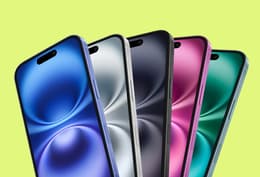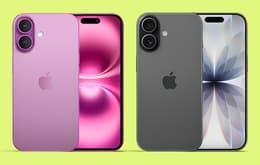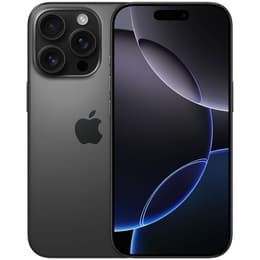
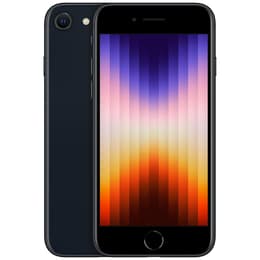

iPhone 16 Pro • Unlocked vs iPhone SE (2022) • Locked AT&T

iPhone 16 Pro • Unlocked
Starting at

Refurbished price:$621.98

Versus $999.00 new

See options
iPhone SE (2022) • Locked AT&T
Starting at

Refurbished price:$102.00

Versus $429.00 new

See options

Ratings

The iPhone 16 Pro, released in September 2024, represents Apple's advanced flagship smartphone, while the iPhone SE (2022), launched in March 2022, offers a more compact and traditional iPhone experience. These devices cater to different user preferences, primarily differing in their display technology, camera capabilities, and overall performance. Both run on Apple's iOS operating system, ensuring a consistent software experience, though the 16 Pro benefits from a newer processor and extended software support.

Scores

Durability

The expected lifespan and ongoing support for a smartphone are crucial considerations for many users.

  • Release Timeline: The iPhone 16 Pro was released in September 2024, making it a relatively new device. The iPhone SE (2022) was released in March 2022, positioning it as an older model in Apple's lineup.
  • Software Longevity: Given its newer release, the iPhone 16 Pro is expected to receive iOS updates for a longer duration, likely extending several years beyond the iPhone SE (2022). The iPhone SE (2022) originally shipped with iOS 15.4 and is upgradeable to iOS 17.2, but its update cycle will conclude sooner than the 16 Pro's.
  • Repairability: The iPhone 16 Pro has an iFixit repairability score of 7 out of 10, a significant improvement over previous Pro models. This is attributed to a dual-entry design, a hard steel case for the battery, and iOS 18's Repair Assistant features. The iPhone SE (2022) has a repairability score of around 5.5 to 6 out of 10, with its screen and battery being relatively accessible for replacement, though adhesive use can add complexity.

Release Year

2024

2022

Last OS Compatibility

Yes

Yes

Foldable

No

No

Performance

Performance is a key area where these two iPhones diverge, impacting everything from app responsiveness to demanding tasks.

  • Processor Capabilities: The iPhone 16 Pro is powered by the Apple A18 Pro chip, featuring a 6-core CPU, 6-core GPU, and a 16-core Neural Engine. This advanced processor delivers enhanced performance, particularly for AI-related tasks, demanding applications, and graphics-intensive gaming. The iPhone SE (2022) utilizes the Apple A15 Bionic chip, which includes a hexa-core CPU, 4-core GPU, and a 16-core Neural Engine. While still capable of handling everyday tasks smoothly, it offers a generation older performance compared to the 16 Pro.
  • System Responsiveness and Multitasking: The iPhone 16 Pro comes with 8GB of RAM, contributing to smoother multitasking and faster app loading, even with numerous applications open simultaneously. The iPhone SE (2022) has 4GB of RAM, which is sufficient for general use but may show limitations when switching between many active applications or running very demanding software.
  • Battery Behavior: The iPhone 16 Pro features a 3582 mAh battery, offering significantly improved endurance. Users report it can last through a full day of heavy use, with some tests showing over 20 hours of HD video streaming. The iPhone SE (2022) has a 2018 mAh battery. Its battery life is considered decent for its compact size, providing up to 15 hours of video playback, but heavy users may find themselves needing to charge more frequently.

Memory (GB)

8 GB

4 GB

Screen quality

The visual experience on these devices is distinct, largely due to differences in display technology and size.

  • Display Technology and Clarity: The iPhone 16 Pro features a 6.3-inch Super Retina XDR OLED display with a resolution of 2622 by 1206 pixels at 460 ppi. This OLED technology provides deep blacks, vibrant colors, and excellent contrast. In contrast, the iPhone SE (2022) has a 4.7-inch Retina HD IPS LCD display with a 1334 by 750-pixel resolution at 326 ppi. While offering good color accuracy, LCD technology does not achieve the same level of contrast or true black as OLED.
  • Brightness and Refresh Rate: The 16 Pro's display offers a typical brightness of 1000 nits and a peak HDR brightness of 2000 nits, making it highly visible even in bright outdoor conditions. It also features ProMotion technology, providing an adaptive refresh rate up to 120Hz for smoother scrolling and more fluid animations. The iPhone SE (2022) has a maximum typical brightness of 625 nits, which is adequate for most indoor and outdoor use but less bright than the 16 Pro. Its display operates at a standard 60Hz refresh rate.
  • Screen Size and Viewing Experience: The larger, edge-to-edge display of the iPhone 16 Pro, combined with thinner bezels, offers a more immersive viewing experience for media consumption and productivity. The iPhone SE (2022) maintains a compact form factor with a smaller screen and thicker bezels, which some users prefer for one-handed use and a classic iPhone aesthetic.

Resolution

1206 x 2622

750 x 1334

Screen type

LTPO Super Retina XDR OLED

Retina IPS LCD

Audiovisual

The camera systems on the iPhone 16 Pro and iPhone SE (2022) cater to different levels of photographic ambition and capability.

  • Camera System Configuration: The iPhone 16 Pro boasts a versatile triple-camera system on the rear, including a 48MP wide lens with sensor-shift optical image stabilization (OIS), a 48MP ultra-wide lens with a 120-degree field of view, and a 12MP 5x telephoto lens with 3D sensor-shift OIS. The iPhone SE (2022) features a single 12MP wide rear camera with optical image stabilization.
  • Photography Features and Performance: The 16 Pro's advanced sensors and computational photography capabilities, including Smart HDR, Deep Fusion, and Photographic Styles, deliver exceptional detail, dynamic range, and low-light performance. The 48MP sensors allow for high-resolution photos and improved macro photography. The iPhone SE (2022) benefits from the A15 Bionic chip's computational photography, offering Smart HDR 4, Deep Fusion, and Portrait mode for human subjects. However, it lacks a dedicated Night Mode, which can impact low-light image quality.
  • Video Recording and Front Camera: The iPhone 16 Pro supports 4K Dolby Vision video recording at up to 120 frames per second, ProRes video, and Spatial video recording, along with improved audio recording features. Its front camera is a 12MP sensor with OIS. The iPhone SE (2022) can record 4K video at up to 60 frames per second and features a 7MP front camera.

Main camera

48 megapixels

12 megapixels

Front camera

12 megapixels

7 megapixels

Miscellaneous

Beyond core features, several practical elements differentiate these two devices in daily use.

  • Connectivity and Ports: The iPhone 16 Pro supports the latest Wi-Fi 7 standard, along with 5G and Bluetooth 5.3, offering faster and more reliable wireless connections. It features a USB-C port for charging and data transfer. The iPhone SE (2022) supports Wi-Fi 6, 5G (sub-6 GHz), and Bluetooth 5.0. It retains the Lightning port.
  • Biometric Security and Design: The iPhone 16 Pro utilizes Face ID for secure authentication and features a modern, edge-to-edge display with a Dynamic Island. Its build includes a durable titanium frame and Ceramic Shield front. The iPhone SE (2022) features the classic Home button with Touch ID for fingerprint authentication and has a more traditional design with an aluminum frame and glass front and back.
  • Physical Characteristics: The iPhone 16 Pro measures 149.6 x 71.5 x 8.25 mm and weighs 199 grams. The iPhone SE (2022) is more compact and lighter at 138.4 x 67.3 x 7.3 mm and 144 grams, making it easier for one-handed operation for some users. The 16 Pro also introduces a new Camera Control button for quick access to camera functions.

Weight

7030 oz

3 oz

Screen size (inches)

6.3

4.7

Network

5G

5G

SIM card

eSIM

Physical SIM + eSIM

Carrier compatibility

Unlocked

AT&T

Connector

USB-C (USB 3)

Lightning

The iPhone 16 Pro and iPhone SE (2022) cater to distinct user needs and preferences within the Apple ecosystem. Users frequently praise the iPhone 16 Pro for its exceptional camera system, vibrant and fluid display, and robust performance, making it well-suited for demanding tasks, creative work, and immersive media consumption. Some users note its weight and the occasional app not fully utilizing the 120Hz refresh rate as minor points of feedback.

Conversely, the iPhone SE (2022) is often lauded for its compact size, the familiarity and convenience of Touch ID, and its capable performance for everyday use, especially considering its position in the market. Criticisms often revolve around its older design, smaller LCD display, and the absence of a dedicated Night Mode for photography.

Users prioritizing the latest technological advancements, superior camera capabilities, a large and immersive display, and extended software support will find the iPhone 16 Pro aligns with their needs. This device is particularly suitable for professionals, content creators, and those who engage in graphics-intensive gaming or demanding applications. For individuals who value a smaller form factor, the traditional Home button experience, and solid performance for general smartphone tasks, the iPhone SE (2022) remains a practical choice. It serves well for students, those seeking a reliable secondary device, or users who prefer a more classic iPhone feel.

Both models are available as quality-assured refurbished options, providing an eco-friendly alternative for consumers looking to make informed and sustainable choices.
See all articles

Our recent comparisons