Compare models
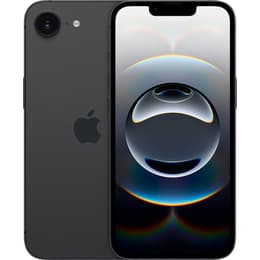
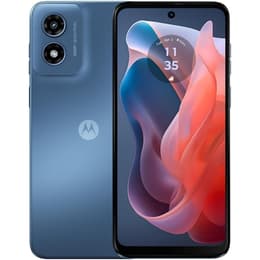
iPhone 16e • Unlocked vs Motorola Moto G Play (2024) • Unlocked
- 1-year warranty
- Free standard shipping
- Free 30-day returns
Differences at a glance
The iPhone 16e, released in February 2025, and the Motorola Moto G Play 2024, launched in January 2024, represent distinct approaches to smartphone design and functionality. While the iPhone 16e offers a premium experience within Apple's ecosystem, the Moto G Play 2024 focuses on core smartphone features with an emphasis on battery longevity and expandable storage. These devices cater to different user priorities, with the iPhone running on iOS and the Moto G Play on Android.
Available Models
Color
Storage (GB)
Scores
Durability
The longevity of a smartphone is influenced by its build, software support, and the availability of repairs. These two devices offer different trajectories in terms of their expected practical lifespan.
- Release Timeline and Software Support: The iPhone 16e was released in February 2025 and was supplied with iOS 18.3, supporting iOS 26. However, it was discontinued in March 2026, in favor of the iPhone 17e. This means its direct software support window from Apple might be shorter than typical flagship iPhones, though it still supports recent iOS versions. The Motorola Moto G Play 2024, released in January 2024, launched with Android 13 and is expected to receive one major software update to Android 14.
- Durability Features: The iPhone 16e features a Ceramic Shield front cover and an aerospace-grade aluminum body, contributing to its splash, water, and dust resistance with an IP68 rating. The Moto G Play 2024 utilizes Corning Gorilla Glass 3 for screen protection and has a plastic build.
- Practical Lifespan: Users prioritizing the latest software updates and a robust build might find the iPhone 16e offers a more extended premium experience, despite its discontinuation. The Moto G Play 2024, with its more limited software update policy, is designed for users who may upgrade more frequently or prioritize initial functionality over long-term software evolution.
Release Year
2025
2024
OS
iOS
Android
Foldable
No
No
Performance
Performance in smartphones is about how smoothly tasks are handled, from everyday browsing to more demanding applications. The iPhone 16e and Moto G Play 2024 approach this with different hardware foundations.
- Processing Capabilities: The iPhone 16e is equipped with an advanced processor, designed to handle demanding applications and multitasking with efficiency. This allows for smooth navigation, quick app loading, and responsive gaming experiences. The Moto G Play 2024 features a processor that capably manages daily tasks like web browsing, social media, and light gaming. Users may notice occasional stutters during intensive use or when switching between many applications.
- Storage and Multitasking: The iPhone 16e offers internal storage options up to 512 GB, providing ample space for applications, photos, and videos. Its system memory is designed to support fluid multitasking. The Moto G Play 2024 comes with 64 GB of internal storage, which can be expanded significantly up to 1 TB using a microSD card, offering flexibility for users with large media libraries.
- Battery Behavior: The iPhone 16e is noted for its extended battery life, offering up to 26 hours of video playback. The Moto G Play 2024 features a large 5000 mAh battery, which typically provides extensive usage time, often lasting through a full day of heavy use.
Screen quality
The display is a primary interface for any smartphone, and the visual experience can vary significantly based on the underlying technology and specifications. Both devices offer distinct screen characteristics.
- Display Technology and Clarity: The iPhone 16e features a 6.1-inch Super Retina XDR OLED display, providing deep blacks, vibrant colors, and high contrast. Its resolution of 2532 x 1170 pixels results in a sharp image with 460 pixels per inch. The Moto G Play 2024 has a 6.5-inch LCD display with a resolution of 1600 x 720 pixels, offering clear visuals for everyday content.
- Brightness and Refresh Rate: The iPhone 16e's display can reach up to 800 nits typical brightness and 1200 nits peak brightness for HDR content, ensuring good visibility in various lighting conditions. It operates at a standard 60Hz refresh rate. The Moto G Play 2024 offers a maximum brightness of 500 nits and features a 90Hz refresh rate, which provides a smoother scrolling experience compared to a 60Hz display.
- Viewing Experience: The iPhone 16e's OLED panel and higher pixel density deliver a more immersive and detailed viewing experience, particularly for high-resolution media. The Moto G Play 2024's larger LCD screen and 90Hz refresh rate offer a comfortable viewing experience for general use and casual media consumption.
Resolution
2532x1170
720 x 1600
Screen type
Super Retina XDR
IPS LCD
Audiovisual
Camera capabilities are a key consideration for many users, and both the iPhone 16e and Moto G Play 2024 offer different photographic tools for capturing moments.
- Rear Camera System: The iPhone 16e is equipped with a 48 MP Fusion main camera, which can also provide a 2x optical-quality zoom by cropping the sensor. This system is designed for detailed photos and offers features like Night mode and Smart HDR. The Moto G Play 2024 features a 50 MP main rear camera, capable of capturing detailed images, especially in good lighting conditions. It also includes modes like Night Mode and Spot Color.
- Front Camera and Video: For selfies and video calls, the iPhone 16e includes a 12 MP front camera. It supports 4K video recording at various frame rates. The Moto G Play 2024 has an 8 MP front camera. It records video at 1080p.
- Audio Experience: The iPhone 16e supports Dolby Atmos-tuned Spatial Audio, enhancing the audio experience for media consumption. The Moto G Play 2024 features stereo speakers, providing ample volume for media playback.
Main camera
48MP
50 megapixels
Front camera
TrueDepth 12MP
8 megapixels
Miscellaneous
Beyond the core specifications, several practical features and design elements contribute to the overall user experience and daily usability of a smartphone.
- Connectivity and Ports: The iPhone 16e supports 5G connectivity and Wi-Fi 6, along with Bluetooth 5.3, ensuring fast wireless communication. It features a USB-C port for charging and data transfer. The Moto G Play 2024 supports 4G LTE and Wi-Fi (dual-band AC), with Bluetooth 5.1. It also includes a USB-C port and retains a 3.5mm headphone jack, offering flexibility for audio accessories.
- Biometric Security and Design: The iPhone 16e uses Face ID for secure authentication and features an Action Button for customizable shortcuts. Its design includes an aluminum frame and glass back. The Moto G Play 2024 incorporates a side-mounted fingerprint sensor for unlocking. It has a plastic construction, which contributes to its lighter feel.
- Dimensions and Handling: The iPhone 16e has a 6.1-inch display, contributing to a compact form factor that is comfortable for one-handed use. The Moto G Play 2024, with its 6.5-inch display, offers a larger screen area, which can be beneficial for media consumption and productivity, though it results in a slightly larger device.
Weight
167 oz
6 oz
Screen size (inches)
6.1
6.5
Network
5G
LTE
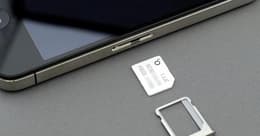
SIM card
eSIM
Physical SIM
Carrier compatibility
Unlocked
Unlocked
Connector
USB-C
USB-C + Jack 3.5mm
What the community thinks
Choosing between the iPhone 16e and the Motorola Moto G Play 2024 involves weighing different priorities. User feedback for the iPhone 16e often praises its powerful performance, vibrant OLED display, and advanced camera capabilities, making it suitable for those who engage in demanding tasks, high-quality photography, and appreciate a premium software experience. Some users might note its discontinuation in early 2026 as a factor, though it still supports recent iOS versions.
The Motorola Moto G Play 2024 is frequently lauded for its exceptional battery life and the inclusion of expandable storage, which are significant advantages for users who prioritize long usage times and ample space for media without relying on cloud services. Common observations suggest that while it handles everyday tasks well, its performance can be less fluid under heavy loads, and its software update commitment is more limited.
Users prioritizing a seamless ecosystem, robust performance for intensive applications, and advanced camera features may find the iPhone 16e well-suited to their needs. Conversely, individuals who value extended battery life, the flexibility of expandable storage, and a larger display for general media consumption, and who are comfortable with a more modest software update cycle, may lean toward the Motorola Moto G Play 2024. Both devices offer distinct advantages, and considering a quality-assured refurbished option for either model can be an eco-friendly alternative to extend their lifecycle.