Compare models

Galaxy A53 5G • Unlocked vs iPhone 17 • Unlocked

  • 1-year warranty
  • Free standard shipping
  • Free 30-day returns
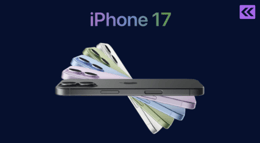
iPhone 17 • Unlocked
Starting at

Refurbished price:$805.59

Versus $929.00 new

See options

Differences at a glance

The Samsung Galaxy A53 5G (2022) and the Apple iPhone 17 (2025) belong to different device tiers and operating system ecosystems, representing Android and iOS respectively. While the Galaxy A53 5G targets everyday reliability, the iPhone 17 integrates newer hardware capabilities and a higher-tier processing architecture. Choosing between them involves weighing software preference, device age, and target functionality.

Available Models

Color

Storage

Scores

Durability

When evaluating structural longevity and software support, both devices handle multi-year usage differently based on their launch timelines and update policies.

    Release timeline and age: The Galaxy A53 5G launched in early 2022, whereas the iPhone 17 arrived in late 2025, placing them several years apart in generational development.
    Software support: The Galaxy A53 5G receives multi-year Android OS upgrades, while the iPhone 17 benefits from Apple's extended iOS support window typical of recent flagship hardware.
    Repairability: Both models feature standard modular internal layouts supported by widespread repair networks, contributing to steady practical lifespans when maintained properly.

Release Year

2022

2025

Last OS Compatibility

Yes

Yes

OS

Android

iOS

Foldable

No

No

Performance

System responsiveness and day-to-day task execution reflect the divergent hardware generations and internal architectures of these two smartphones.

    Processor capabilities: The iPhone 17 handles demanding gaming, complex rendering, and heavy multitasking smoothly, whereas the Galaxy A53 5G manages standard web browsing, messaging, and casual media apps reliably.
    Memory and storage: The iPhone 17 starts with larger base storage capacities and higher memory bandwidth, while the Galaxy A53 5G offers expandable storage via microSD cards alongside standard internal configurations.
    Battery behavior: The Galaxy A53 5G relies on a large capacity cell to comfortably clear a full day of mixed use, while the iPhone 17 utilizes power-efficient internal management to balance daily battery endurance under varied workloads.

Screen quality

Visual output differs in panel technology, peak luminance, and motion fluidity, shaping how media and text appear during daily use.

    Display technology: Both models utilize vibrant OLED panels with deep contrast levels, though the iPhone 17 incorporates an adaptive refresh rate reaching up to 120 Hz alongside a high-frequency static implementation on the Galaxy A53 5G.
    Outdoor brightness: The iPhone 17 reaches significantly higher peak brightness levels for clear visibility under direct sunlight, while the Galaxy A53 5G provides adequate luminance for standard outdoor visibility.
    Screen dimensions: The Galaxy A53 5G features a 6.5-inch viewing area compared to the 6.3-inch display on the iPhone 17, offering slightly different physical footprints for media consumption.

Resolution

1080 x 2400

2622x1206

Screen type

Super AMOLED

Super Retina XDR

Audiovisual

Imaging hardware and computational processing shape the photographic and video capabilities available on each handset.

    Camera systems: The iPhone 17 pairs high-resolution primary and ultra-wide sensors with advanced computational photography, while the Galaxy A53 5G utilizes a multi-lens layout featuring a dedicated main sensor with optical image stabilization.
    Video recording: The iPhone 17 supports smooth stabilization, cinematic features, and high-dynamic-range capture, whereas the Galaxy A53 5G records stable 4K footage suitable for personal sharing.
    Audio output: Stereo speaker setups on both devices deliver balanced sound for calls and media, supported by clear internal microphone arrays.

Main camera

64 megapixels

48 megapixels

Front camera

32 megapixels

18 megapixels

Miscellaneous

Physical design choices and connectivity standards define the practical handling and ecosystem integration of each device.

    Build and handling: The Galaxy A53 5G features a matte plastic back and frame weighing 189 grams, while the iPhone 17 utilizes glass and aluminum materials totaling 177 grams.
    Connectivity: Both models include 5G cellular connectivity, Wi-Fi networking standards, and Bluetooth, with the iPhone 17 adopting a USB-C port alongside the Galaxy A53 5G's standard USB-C connection.
    Biometrics: The Galaxy A53 5G uses an optical in-display fingerprint sensor, while the iPhone 17 relies on facial recognition technology.

Weight

6 oz

185 oz

Screen size (inches)

6.5

6.3

Network

5G

5G

SIM card

Physical SIM

eSIM

Carrier compatibility

Unlocked

Unlocked

What the community thinks

Users evaluating these models often point out that the Galaxy A53 5G provides a dependable, straightforward Android experience with expandable storage. On the other hand, real-world feedback highlights the iPhone 17 for its fluid display performance, robust processing power, and long-term iOS integration. Users prioritizing an open file system, expandable storage, and Android customization may prefer the Galaxy A53 5G. Conversely, users seeking extended software support, intensive gaming performance, and deep Apple ecosystem integration will lean toward the iPhone 17. For consumers looking for a quality-assured refurbished option, exploring sustainable choices on Back Market can make obtaining either device straightforward and environmentally conscious. Ultimately, the right choice depends on whether daily routines align more closely with mid-range Android utility or current-generation flagship iOS capabilities.


Our recent comparisons