
Galaxy S10E • Unlocked vs iPhone 14 Pro Max • Locked AT&T

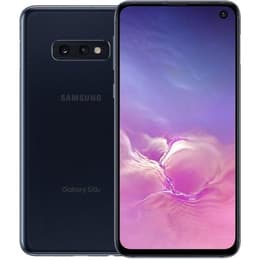
Galaxy S10E • Unlocked
Starting at

Refurbished price:$117.00

Versus $459.00 new

See options
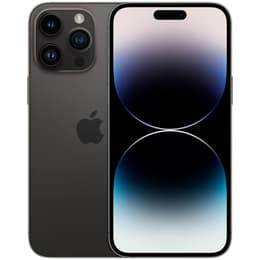
iPhone 14 Pro Max • Locked AT&T
Starting at

Refurbished price:$409.00

Versus $1,399.00 new

See options

Ratings

The Samsung Galaxy S10e, released in March 2019, and the iPhone 14 Pro Max, launched in September 2022, represent distinct eras in smartphone technology. While the Galaxy S10e offers a compact Android experience, the iPhone 14 Pro Max provides a larger, more advanced iOS platform with significant upgrades in display, camera capabilities, and processing power.

Scores

Durability

The longevity of a smartphone is influenced by its release timeline, software support, and physical resilience.

  • Release Timeline: The Galaxy S10e was released in March 2019, making it an older device compared to the iPhone 14 Pro Max, which launched in September 2022 [3, 7]. This age difference impacts the remaining period of official software support.
  • Software Longevity: The Galaxy S10e launched with Android 9.0 Pie and received its last major official update to Android 12 in December 2021, indicating it has reached its end-of-life for new Android operating system updates [4, 15, 35]. In contrast, the iPhone 14 Pro Max, running on iOS, is expected to receive software updates for a longer duration, typically 5-6 years from its release, offering extended access to new features and security patches [Example Output].
  • Physical Durability: The Galaxy S10e features Gorilla Glass 5 on its front and back, along with an aluminum frame, and boasts an IP68 rating for dust and water resistance [3, 17, 22]. The iPhone 14 Pro Max incorporates a Ceramic Shield front cover, a glass back, and a stainless steel frame, also carrying an IP68 rating for dust and water resistance, allowing submersion up to 6 meters for 30 minutes [1, 13, 26, 29]. Repairability scores from iFixit indicate that the Galaxy S10e received a score of 3 out of 10, largely due to the extensive use of adhesive and soldered components, making repairs challenging [19, 25, 31]. The iPhone 14 Pro Max received a repairability score of 6 out of 10, similar to its predecessor, with rear glass replacement noted as particularly difficult [24].

Release Year

2019

2022

Last OS Compatibility

No

Yes

OS

Android

iOS

Foldable

No

No

Performance

Performance in smartphones is determined by the interplay of processing power, memory, and battery efficiency, affecting daily responsiveness and demanding tasks.

  • Processing Capabilities: The Galaxy S10e is powered by either a Samsung Exynos 9820 or a Qualcomm Snapdragon 855 processor, which provided fast and fluid performance for its time, capable of handling demanding apps and multitasking smoothly [5, 16, 32, 34]. The iPhone 14 Pro Max features a significantly newer Apple A16 Bionic chip, offering enhanced processing power for more intensive applications, advanced gaming, and complex computational tasks [2, 13, 18, 21].
  • Multitasking and Storage: The Galaxy S10e was available with 6GB or 8GB of RAM and offered 128GB or 256GB of internal storage, with the option to expand storage via a microSD card up to 512GB [5, 8, 23]. The iPhone 14 Pro Max comes with 6GB of RAM and offers larger internal storage options ranging from 128GB up to 1TB, though it does not support expandable storage [2, 10, 20, 27].
  • Battery Behavior: The Galaxy S10e is equipped with a 3100 mAh battery, which some users found to offer mediocre battery life, often requiring more frequent charging for heavy use, with a full charge taking approximately 1 hour and 35 minutes with 15W fast charging [3, 30, 32, 34]. The iPhone 14 Pro Max has a larger 4323 mAh battery, generally providing good battery life, though intensive use, especially with high screen brightness, can impact its duration [10, 18]. Both devices support wireless charging, with the Galaxy S10e also featuring Wireless PowerShare for charging other compatible devices [17, 33].

Memory (GB)

6 GB

6 GB

Screen quality

The display is a primary interface for smartphone interaction, with key differences in technology, size, and visual fidelity.

  • Display Technology and Clarity: The Galaxy S10e features a 5.8-inch Dynamic AMOLED display with a 2280x1080 (FHD+) resolution and a pixel density of 438 ppi [5, 8, 23]. It supports HDR10+ and offers vibrant colors and strong contrast [5, 16]. The iPhone 14 Pro Max boasts a larger 6.7-inch Super Retina XDR OLED display with a higher resolution of 2796x1290 pixels and a pixel density of 460 ppi [1, 7, 11, 26]. This display also supports HDR and offers deep blacks and vibrant colors.
  • Brightness and Refresh Rate: The Galaxy S10e's screen has a maximum brightness of 1200 nits and a standard 60Hz refresh rate [5, 23]. The iPhone 14 Pro Max features an adaptive ProMotion display with refresh rates up to 120Hz, capable of scaling down to 1Hz for its Always-On display feature, which contributes to smoother scrolling and improved power efficiency [1, 2, 11, 18]. It offers a typical brightness of 1000 nits, with peak brightness reaching 1600 nits for HDR content and up to 2000 nits for outdoor visibility [1, 13, 18].
  • Design and Viewing Experience: The Galaxy S10e has a flat display with a punch-hole cutout for the front camera, providing an edge-to-edge viewing experience [17, 30]. The iPhone 14 Pro Max introduces the Dynamic Island, a re-imagined cutout that integrates system alerts and background activities, enhancing the full-screen experience [2, 12, 18]. The larger screen size of the iPhone 14 Pro Max offers a more expansive viewing area for media consumption and multitasking.

Resolution

1080 x 2280

1290 x 2796

Screen type

Dynamic AMOLED

LTPO Super Retina XDR OLED

Audiovisual

Camera systems are crucial for capturing moments, with varying capabilities in lens configuration, low-light performance, and video recording.

  • Rear Camera System: The Galaxy S10e features a dual-camera setup on the rear, consisting of a 12MP wide-angle lens with optical image stabilization and a 16MP ultra-wide-angle lens [5, 6, 16, 30]. It lacks a dedicated telephoto lens, relying on digital zoom [15, 32]. The iPhone 14 Pro Max comes with a more versatile triple-camera system, including a 48MP main sensor with sensor-shift optical image stabilization, a 12MP ultra-wide lens with a 120-degree field of view, and a 12MP telephoto lens offering 3x optical zoom [13, 20, 26]. It also includes a LiDAR scanner for improved depth sensing [2, 26].
  • Photography Performance: The Galaxy S10e performs well in good lighting conditions, producing detailed photos with accurate colors [16, 30, 34]. Its low-light performance is not as strong compared to more recent devices [30]. The iPhone 14 Pro Max excels in various lighting conditions, including challenging low-light environments, thanks to its larger sensors and advanced image processing capabilities like Photonic Engine and Deep Fusion [13, 21].
  • Video Recording and Front Camera: Both devices offer capable video recording. The Galaxy S10e can record up to 4K at 60 frames per second [5]. The iPhone 14 Pro Max supports 4K video recording at various frame rates, including cinematic mode and ProRes video, offering more advanced video production features [13, 26]. For selfies, the Galaxy S10e has a 10MP front camera [6]. The iPhone 14 Pro Max features a 12MP front camera with autofocus and improved low-light performance [12, 26].

Main camera

12 megapixels

48 megapixels

Front camera

10 megapixels

12 megapixels

Miscellaneous

Beyond core features, several practical elements contribute to the overall user experience, from connectivity to physical design.

  • Connectivity and Ports: The Galaxy S10e supports Wi-Fi 802.11 a/b/g/n/ac/ax and includes a traditional 3.5mm headphone jack, a feature not commonly found in newer flagship phones [6, 30]. It uses a USB-C port for charging and data transfer. The iPhone 14 Pro Max supports 5G cellular connectivity, Wi-Fi 6, and Bluetooth 5.3, offering faster wireless speeds [26, 27]. It utilizes a Lightning port for charging and data, and does not include a 3.5mm headphone jack [7, 26].
  • Biometrics and Sensors: The Galaxy S10e features a side-mounted fingerprint sensor integrated into the power button, along with face unlock [15, 17, 22]. It also includes standard sensors like an accelerometer, gyroscope, proximity sensor, and compass [22]. The iPhone 14 Pro Max relies on Face ID for secure authentication and includes a comprehensive suite of sensors, including an accelerometer, ambient light sensor, proximity sensor, compass, gyroscope, and barometer, as well as a LiDAR scanner [2, 7, 12, 26].
  • Design and Handling: The Galaxy S10e is known for its compact and lightweight design, measuring 142.2 x 69.9 x 7.9 mm and weighing 150 grams, making it comfortable for one-handed use [6, 16, 22]. Its build materials include Gorilla Glass 5 and an aluminum frame [17, 22]. The iPhone 14 Pro Max is a larger and heavier device, with dimensions of 160.7 x 77.6 x 7.85 mm and a weight of 240 grams, featuring a Ceramic Shield front, glass back, and stainless steel frame [1, 7, 12, 26].

Weight

5 oz

8 oz

Screen size (inches)

5.8

6.7

Network

LTE

5G

SIM card

Physical SIM

eSIM

Carrier compatibility

Unlocked

AT&T

Connector

USB-C + Jack 3.5mm

Lightning

User feedback for the Samsung Galaxy S10e often praises its compact size, making it easy to handle and operate with one hand, a characteristic that has become less common in modern smartphones [16, 30, 32]. Its Dynamic AMOLED display was well-regarded for its quality and vibrant colors at the time of its release [16, 30]. Criticisms frequently centered on its battery life, which many users found to be mediocre for heavy usage, and the absence of a telephoto lens, limiting its photographic versatility compared to its siblings [30, 32].

The iPhone 14 Pro Max generally receives high acclaim for its expansive and bright Super Retina XDR display, particularly its adaptive 120Hz refresh rate and the innovative Dynamic Island feature [18]. Users also commend its powerful performance, capable of handling demanding applications and games with ease, and its advanced camera system, which delivers high-quality photos and videos across various conditions [18, 21]. Common concerns sometimes include its larger size and weight, which can make one-handed use challenging for some individuals.

Users prioritizing a compact form factor, a traditional headphone jack, and a familiar Android experience may find the Galaxy S10e well-suited to their needs. Conversely, users who value a large, high-refresh-rate display, cutting-edge camera technology, extended software support, and the iOS ecosystem will likely lean towards the iPhone 14 Pro Max. For those considering either device, exploring quality-assured refurbished options can provide a sustainable choice for acquiring these technologies.


See all articles

Our recent comparisons