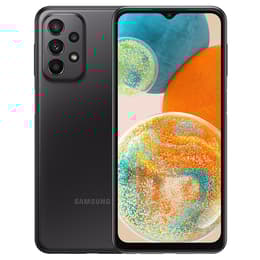
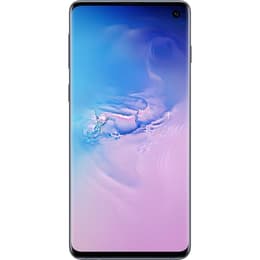
Galaxy A23 5G • Unlocked vs Galaxy S10 • Unlocked

Galaxy A23 5G • Unlocked
Starting at

Refurbished price:$123.00

Versus $279.99 new

See options
Galaxy S10 • Unlocked
Starting at

Refurbished price:$148.00

Versus $669.00 new

See options

Ratings

The Samsung Galaxy A23 5G, released in August 2022, and the Samsung Galaxy S10, launched in March 2019, represent different eras and market segments within Samsung's smartphone lineup. While the Galaxy S10 was a flagship device at its release, the Galaxy A23 5G is a more recent mid-range offering. The primary distinctions lie in their display technology, processing power, and software support timelines, both running on the Android operating system.

Scores

Durability

The expected practical lifespan of a smartphone is significantly influenced by its release date and the manufacturer's software support policy. These two devices have notable differences in this regard.

  • Release Timeline: The Galaxy S10, released in March 2019, is an older device compared to the Galaxy A23 5G, which launched in August 2022. This age difference directly impacts their remaining software support.
  • Software Longevity: The Galaxy S10 received its last major Android update to Android 12 in January 2022 and ceased receiving security patches in March 2023, marking its end of official software support. In contrast, the Galaxy A23 5G, which launched with Android 12, has received updates up to Android 15 and is expected to receive two major Android OS upgrades and four years of security updates from its release.
  • Repairability: The Galaxy S10 received a low repairability score of 3 out of 10 from iFixit, indicating significant challenges in repair due to extensive adhesive, a soldered charging port, and an in-display fingerprint sensor integrated into the screen. The Galaxy A23 5G is considered relatively more repairable, with a score of 6.75 out of 10, allowing for easier replacement of components like the back plate, camera lens covers, and battery.

Release Year

2022

2019

Last OS Compatibility

Yes

No

OS

Android

Android

Foldable

No

No

Performance

Performance is a key differentiator, reflecting the technological advancements over several years and the intended market segment of each device.

  • Processing Capabilities: The Galaxy S10, powered by a flagship-tier processor from its generation, delivers smooth performance for everyday tasks, multitasking, and even demanding applications. Users report it handles browsing, messaging, and YouTube without significant lag. The Galaxy A23 5G features a mid-range processor designed for efficient 5G connectivity and capable daily use. While generally responsive, some users have noted potential sluggishness, particularly with the 4GB RAM variant, when handling more intensive tasks or multiple applications simultaneously.
  • Multitasking and Responsiveness: The Galaxy S10, with its 8GB of RAM, offers robust multitasking capabilities, allowing users to switch between applications fluidly. The Galaxy A23 5G is available with 4GB, 6GB, or 8GB of RAM. Models with higher RAM configurations will provide a smoother experience for users who frequently switch between apps or run more memory-intensive applications.
  • Storage Options: Both devices offer internal storage options, with the Galaxy S10 available in 128GB or 512GB variants, and the Galaxy A23 5G in 64GB or 128GB. Both support expandable storage via a microSD card, which is a practical feature for users who need additional space for photos, videos, or apps.

Memory (GB)

6 GB

8 GB

Screen quality

The visual experience on a smartphone is largely defined by its display, and here the two devices offer distinct characteristics.

  • Display Technology and Resolution: The Galaxy S10 features a 6.1-inch Dynamic AMOLED display with a high 3040x1440 (QHD+) resolution. This technology provides deep blacks, vibrant colors, and excellent contrast, contributing to a premium viewing experience. The Galaxy A23 5G comes with a larger 6.6-inch PLS LCD display with a 2408x1080 (FHD+) resolution. While offering good clarity for its class, it does not match the contrast and color depth of an AMOLED panel.
  • Refresh Rate and Smoothness: The Galaxy S10 has a standard 60 Hz refresh rate, which provides a smooth enough experience for most interactions. The Galaxy A23 5G, despite being a mid-range device, offers a higher 120 Hz refresh rate, resulting in noticeably smoother scrolling and more fluid animations, enhancing the overall user interface experience.
  • Brightness and Outdoor Visibility: The Dynamic AMOLED display of the Galaxy S10 generally offers higher peak brightness, making it more comfortable to view content outdoors or in brightly lit environments. The LCD panel on the Galaxy A23 5G provides adequate brightness for most indoor conditions, but may be less visible under direct sunlight.

Resolution

1080 x 2408

1440 x 3040

Screen type

PLS LCD

Dynamic AMOLED

Audiovisual

Camera capabilities are a significant factor for many users, and both phones offer versatile setups, though with different strengths.

  • Rear Camera System: The Galaxy S10 features a triple-camera system with a 12MP wide-angle lens (with dual aperture and optical image stabilization - OIS), a 12MP telephoto lens (offering 2x optical zoom and OIS), and a 16MP ultra-wide lens. This combination provides flexibility for various shooting scenarios. The Galaxy A23 5G sports a quad-camera setup, highlighted by a 50MP primary sensor with OIS, a 5MP ultra-wide lens, a 2MP macro lens, and a 2MP depth sensor.
  • Photography Performance: The Galaxy S10's camera system, while older, was a flagship performer, capable of taking detailed and well-exposed photos in good lighting conditions. Its telephoto lens provides genuine optical zoom. Users generally find its camera to have aged decently. The Galaxy A23 5G's 50MP main sensor can capture detailed images, especially in good light, and the OIS helps with sharper photos and more stable videos. However, its ultra-wide and auxiliary lenses may not match the quality of the S10's more advanced sensors. Some users have reported that the stock camera app can produce soft pictures, but this can be improved with third-party camera applications.
  • Video Recording: The Galaxy S10 is capable of recording 4K video at 60 frames per second, offering high-resolution and smooth video capture. The Galaxy A23 5G supports Full HD video recording at 30 frames per second.

Main camera

50 megapixels

12 megapixels

Front camera

8 megapixels

10 megapixels

Miscellaneous

Beyond the core features, several practical elements contribute to the overall user experience and daily usability of these devices.

  • Connectivity: The Galaxy A23 5G supports 5G networks, offering faster mobile data speeds where available, which is a key advantage for future-proofing. The Galaxy S10 is limited to 4G LTE connectivity. Both devices support modern Wi-Fi standards and Bluetooth for wireless connections.
  • Ports and Biometrics: A notable feature of the Galaxy S10 is the inclusion of a 3.5mm headphone jack, a port that has become less common in newer smartphones. It also features an ultrasonic in-display fingerprint reader and face recognition for secure unlocking. The Galaxy A23 5G also retains a 3.5mm headphone jack and typically features a side-mounted fingerprint sensor.
  • Design and Handling: The Galaxy S10 features a more compact design with a glass front and back and an aluminum frame, giving it a premium feel. Its curved display contributes to a sleek profile. The Galaxy A23 5G has a larger form factor and typically uses a plastic build, which can make it feel less premium but potentially more resistant to minor impacts. The S10 is also lighter at 157g compared to the A23 5G's 197g.

Weight

7 oz

6 oz

Screen size (inches)

6.8

6.1

Network

5G

LTE

SIM card

Physical SIM

Physical SIM

Carrier compatibility

Unlocked

Unlocked

User sentiment for the Galaxy S10 often highlights its enduring premium design, vibrant AMOLED display, and the convenience of features like the 3.5mm headphone jack and expandable storage. Many users appreciate its performance for daily tasks, even years after its release. Criticisms primarily revolve around its discontinued software support, which can be a concern for security and access to the latest Android features, and its battery life, which may require replacement in older units.

For the Galaxy A23 5G, users generally praise its 120 Hz refresh rate display and 5G connectivity as modern advantages. Its large battery capacity is also a positive point for many. However, some users have expressed concerns about its performance, particularly with lower RAM configurations, and occasional reports of overheating or signal issues have surfaced. The camera quality, while good on the main sensor, is sometimes noted as needing improvement with the stock software.

Users prioritizing a compact, premium build, a high-resolution AMOLED display, and features like a headphone jack and wireless charging, and who are comfortable with an older software ecosystem, may find the Galaxy S10 appealing. Conversely, users who prioritize a larger, smoother display with a high refresh rate, 5G connectivity, and a longer software support window will find the Galaxy A23 5G better suited to their needs. Both devices offer practical benefits for different user profiles, and considering a quality-assured refurbished option for either model can be an eco-friendly alternative to purchasing new.


See all articles

Our recent comparisons