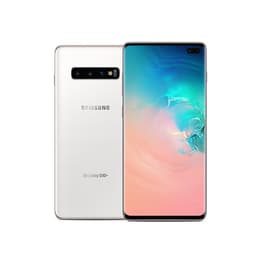


Galaxy S10+ • Unlocked vs Motorola Moto G (2022) • Unlocked

Galaxy S10+ • Unlocked
Starting at

Refurbished price:$165.00

Versus $719.00 new

See options
Motorola Moto G (2022) • Unlocked
Starting at

Refurbished price:$92.00

Versus $180.99 new

See options

Ratings

The Samsung Galaxy S10 Plus, released in March 2019, and the Motorola Moto G 2022, launched in April 2022, represent distinct approaches to smartphone design and functionality. While the Galaxy S10 Plus was a premium flagship device at its release, the Moto G 2022 focuses on delivering essential features with an emphasis on battery longevity. Both devices operate on the Android platform, though they differ significantly in their hardware capabilities and software support timelines.

Scores

Durability

The practical lifespan of a smartphone is influenced by its initial build quality, ongoing software support, and ease of repair. These two devices offer different trajectories in these areas.

  • Release Timeline and Age: The Galaxy S10 Plus was released in March 2019, making it an older device compared to the Moto G 2022, which launched in April 2022. This age difference directly impacts their current software support status and expected future longevity.
  • OS Support Duration: The Galaxy S10 Plus launched with Android 9 and received major operating system updates up to Android 12. Samsung officially ended software support for the S10 series around March/April 2023, meaning it no longer receives security updates. The Moto G 2022 launched with Android 12, and Motorola typically provides one major OS update, extending its software relevance slightly longer than the S10 Plus from the current date.
  • Repairability: The Galaxy S10 Plus received a low repairability score of 3 out of 10 from iFixit, indicating it is difficult to repair due to extensive use of adhesive and a complex internal layout. While a specific iFixit score for the Moto G 2022 is not readily available, budget-oriented devices often feature simpler constructions that can sometimes facilitate easier repairs, though this can vary.

Release Year

2019

2022

Last OS Compatibility

No

No

OS

Android

Android

Foldable

No

No

Performance

Performance in smartphones is determined by the underlying hardware and its optimization for daily tasks, affecting everything from app responsiveness to multitasking capabilities.

  • Processor Capabilities: The Galaxy S10 Plus features a processor that, at its release, was designed for high-end performance, enabling smooth operation for demanding applications and complex multitasking. The Moto G 2022 is equipped with a processor suited for everyday tasks and general smartphone use, providing adequate performance for common apps and light gaming.
  • Multitasking and Responsiveness: Users of the Galaxy S10 Plus generally report a fluid experience, even years after its release, with smooth animations and efficient handling of multiple applications simultaneously. The Moto G 2022, while capable, may exhibit occasional slowdowns or lag when handling more intensive applications or extensive multitasking, as noted by some users.
  • Battery Behavior: The Galaxy S10 Plus, with its 4100 mAh battery, was known for solid battery life, often lasting a full day of heavy use or more for moderate users. The Moto G 2022, featuring a larger 5000 mAh battery, is designed for extended endurance, frequently delivering two to three days of use on a single charge for many users.

Memory (GB)

8 GB

4 GB

Screen quality

The display is a primary interface for smartphone interaction, and differences in technology, resolution, and brightness significantly impact the visual experience.

  • Display Technology and Resolution: The Galaxy S10 Plus features a 6.4-inch Dynamic AMOLED display with a high resolution of 3040x1440 pixels, resulting in sharp images and vibrant colors with deep blacks. The Moto G 2022 utilizes a 6.5-inch IPS LCD panel with a resolution of 1600x720 pixels, offering a larger screen size but with less pixel density and color vibrancy compared to the S10 Plus.
  • Brightness and Clarity: The AMOLED screen on the Galaxy S10 Plus provides excellent brightness levels, making it suitable for outdoor visibility and offering good clarity for detailed content. The Moto G 2022's LCD screen offers adequate brightness for typical indoor and outdoor use, though it may not perform as well in direct sunlight or offer the same level of contrast as an AMOLED panel.
  • Refresh Rate: The Galaxy S10 Plus has a standard 60Hz refresh rate. The Moto G 2022 features a 90Hz refresh rate, which can result in smoother scrolling and a more fluid visual experience during navigation and supported content.

Resolution

1440 x 3040

720 x 1600

Screen type

Dynamic AMOLED

IPS LCD

Audiovisual

Camera systems are a key differentiator, with varying capabilities for capturing photos and videos in diverse conditions.

  • Rear Camera System: The Galaxy S10 Plus boasts a versatile triple-camera setup, including a 12MP main sensor with variable aperture and optical image stabilization, a 12MP telephoto lens for 2x optical zoom, and a 16MP ultrawide lens. This configuration allows for a range of photographic styles. The Moto G 2022 also has a triple-camera system, featuring a 50MP main sensor, a 2MP macro lens, and a 2MP depth sensor. The 50MP main sensor typically outputs 12.5MP photos through pixel binning.
  • Photography Performance: The Galaxy S10 Plus is known for producing detailed images with vibrant colors and good dynamic range in various lighting conditions. Its Live Focus (portrait) mode is effective, and low-light performance is generally competent. The Moto G 2022 performs adequately in good lighting, but some users report colors can appear muted or washed out, and low-light photography is a weaker point.
  • Video and Front Camera: The S10 Plus supports 4K video recording from both its rear and dual front cameras (10MP main, 8MP depth), offering high-resolution options for content creation. The Moto G 2022 records video at 1080p 30fps and features a 13MP front camera, which is suitable for video calls and casual selfies.

Main camera

12 megapixels

50 megapixels

Front camera

10 megapixels

13 megapixels

Miscellaneous

Beyond core specifications, several practical elements contribute to the overall user experience and daily convenience.

  • Connectivity: The Galaxy S10 Plus supports 4G LTE, Wi-Fi 6, and Bluetooth 5.0. The Moto G 2022 offers 5G connectivity, along with Wi-Fi 5 (802.11ac) and Bluetooth 5.1, providing access to newer, faster cellular networks where available.
  • Ports and Sensors: Both devices include a 3.5mm headphone jack, a feature appreciated by users who prefer wired audio. The Galaxy S10 Plus uses a USB-C port and features an ultrasonic in-display fingerprint sensor and facial recognition. The Moto G 2022 also uses a USB-C port and incorporates a side-mounted fingerprint sensor.
  • Build Materials and Handling: The S10 Plus features a premium construction with Gorilla Glass 6 on the front and Gorilla Glass 5 on the back, framed by aluminum, giving it a refined feel. It weighs 175g. The Moto G 2022 has a water-repellent design and weighs 204g, offering a more robust, though less premium, build.

Weight

6 oz

7 oz

Width

2.92 in

2.980 in

Height

6.20 in

6.510 in

Depth

0.31 in

0,370 in

Screen size (inches)

6.4

6.5

Network

LTE

5G

SIM card

Physical SIM

Physical SIM

Carrier compatibility

Unlocked

Unlocked

Connector

USB-C + Jack 3.5mm

USB-C

The Samsung Galaxy S10 Plus and Motorola Moto G 2022 cater to different user priorities, reflecting their respective market positions and release timelines. The Galaxy S10 Plus, despite being an older flagship, is still praised by many users for its vibrant AMOLED display, capable camera system, and overall smooth performance. Common criticisms for the S10 Plus in its current state often revolve around its discontinued software support, which means no further Android version upgrades or security patches, and its relatively lower battery capacity compared to newer devices.

Conversely, the Motorola Moto G 2022 is frequently lauded for its exceptional battery life, often lasting multiple days on a single charge, making it a strong contender for users who prioritize endurance. However, user feedback often points to its less impressive display resolution, modest camera performance, and occasional lags in system responsiveness as areas where it falls short.

Users prioritizing a high-quality visual experience, a more versatile camera, and a premium build may find the Galaxy S10 Plus better suited to their needs, provided they are comfortable with an older device no longer receiving software updates. For those who value extended battery life, 5G connectivity, and a more recent software baseline, the Moto G 2022 could be the preferred choice. Both devices offer a practical alternative to purchasing new, and opting for a quality-assured refurbished option can be an eco-friendly alternative for consumers.


See all articles

Our recent comparisons