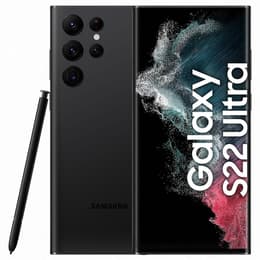
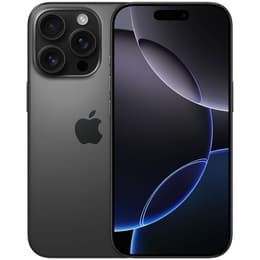
Galaxy S22 Ultra 5G • Unlocked vs iPhone 16 Pro • Unlocked

Galaxy S22 Ultra 5G • Unlocked
Starting at

Refurbished price:$264.99

Versus $1,073.99 new

See options
iPhone 16 Pro • Unlocked
Starting at

Refurbished price:$621.98

Versus $999.00 new

See options

Ratings

The Samsung Galaxy S22 Ultra 5G, released in February 2022, and the Apple iPhone 16 Pro, launched in September 2024, represent distinct approaches to high-end smartphone design and functionality. While both devices offer premium experiences, they cater to different user ecosystems and priorities. The Galaxy S22 Ultra integrates a stylus and runs on the Android operating system, emphasizing versatility and customization. In contrast, the iPhone 16 Pro operates on iOS, focusing on a streamlined user experience, advanced computational photography, and a robust app ecosystem. These two models showcase a generational gap, with the iPhone 16 Pro benefiting from two additional years of technological advancements.

Scores

Durability

When considering the long-term usability of these devices, their release timelines and software support policies are key differentiators.

  • Release Timeline: The Samsung Galaxy S22 Ultra 5G was introduced in February 2022, making it a device that has been on the market for a few years. The iPhone 16 Pro, on the other hand, was released in September 2024, positioning it as a much newer model.
  • Software Longevity: The Galaxy S22 Ultra launched with Android 12 and is expected to receive up to four years of major OS updates and five years of security updates, meaning its software support cycle is nearing its end. The iPhone 16 Pro, launching with iOS 18, is anticipated to receive software updates for approximately five to six years from its release, offering a significantly longer period of current operating system features and security patches.
  • Physical Durability: Both devices feature robust construction. The Galaxy S22 Ultra utilizes Corning Gorilla Glass Victus+ for its front and back, complemented by an aluminum frame and an IP68 rating for dust and water resistance (up to 1.5 meters for 30 minutes). The iPhone 16 Pro incorporates a Ceramic Shield front, a textured matte glass back, and a titanium frame, also boasting an IP68 rating for dust and water resistance (up to 6 meters for 30 minutes). While the iPhone 16 Pro's newer Ceramic Shield is designed for enhanced toughness, some durability tests suggest that its ultra-thin bezels might make the display more susceptible to damage from corner impacts, despite overall improved resilience compared to its predecessor.

Release Year

2022

2024

Last OS Compatibility

Yes

Yes

Foldable

No

No

Performance

The performance capabilities of these two smartphones reflect their respective generations, impacting how smoothly they handle demanding applications and multitasking.

  • Processing Power: The Galaxy S22 Ultra is powered by either the Qualcomm Snapdragon 8 Gen 1 or the Exynos 2200, depending on the region. While these processors delivered strong performance at their release, enabling smooth operation for most tasks and gaming, some users reported occasional thermal throttling under heavy load. The iPhone 16 Pro features Apple's A18 Pro chip, which offers substantial improvements in processing speed and graphical rendering, designed to handle intensive applications, advanced AI features, and high-fidelity gaming with greater efficiency and sustained performance.
  • Multitasking and Responsiveness: The Galaxy S22 Ultra typically comes with 8GB or 12GB of RAM, providing ample capacity for running multiple apps simultaneously. The iPhone 16 Pro is equipped with 8GB of RAM, optimized by iOS to deliver fluid multitasking and rapid app switching, ensuring a highly responsive user experience.
  • Battery Behavior: The Galaxy S22 Ultra houses a 5000 mAh battery, generally providing a full day of use for moderate users, though heavy usage, especially with 5G connectivity, can lead to more frequent charging. The iPhone 16 Pro, with a 3582 mAh battery, has shown significant advancements in power efficiency, with user reports indicating it can comfortably last through a full day of heavy use or travel, and offers up to 27 hours of video playback.

Memory (GB)

8 GB

8 GB

Screen quality

Both devices offer high-quality displays, but there are differences in size, technology nuances, and overall viewing experience.

  • Display Technology and Clarity: The Galaxy S22 Ultra features a 6.8-inch Dynamic AMOLED 2X display with a resolution of 1440 x 3088 pixels, resulting in a pixel density of approximately 500 ppi. This display delivers vibrant colors and deep blacks. The iPhone 16 Pro comes with a slightly smaller 6.3-inch Super Retina XDR OLED display, offering a resolution of 2622 x 1206 pixels and a pixel density of around 460 ppi. Both OLED panels provide excellent contrast and color accuracy.
  • Brightness and Refresh Rate: The Galaxy S22 Ultra can reach a peak brightness of 1750 nits, ensuring good visibility even in bright outdoor conditions, and features a 120Hz adaptive refresh rate for smooth scrolling and animations. The iPhone 16 Pro also supports an adaptive refresh rate up to 120Hz with ProMotion technology and offers high brightness levels, contributing to a fluid and clear viewing experience across various lighting environments.
  • Screen Size and Viewing Experience: The larger 6.8-inch display of the Galaxy S22 Ultra provides an expansive canvas, which can be particularly beneficial for media consumption, productivity with the integrated S Pen, and split-screen multitasking. The iPhone 16 Pro's 6.3-inch display, while smaller, offers a comfortable viewing area for most users, with its high clarity and smooth refresh rate enhancing the overall visual experience.

Resolution

1440 x 3088

1206 x 2622

Screen type

Dynamic AMOLED 2X

LTPO Super Retina XDR OLED

Audiovisual

Both smartphones are equipped with advanced camera systems designed to capture high-quality photos and videos, though they differ in their specific configurations and capabilities.

  • Rear Camera Systems: The Galaxy S22 Ultra features a versatile quad-camera setup, including a 108 MP wide lens, a 12 MP ultrawide lens with a 120-degree field of view, a 10 MP telephoto lens with 3x optical zoom, and a 10 MP periscope telephoto lens offering an impressive 10x optical zoom. This setup is praised for its strong daylight performance, sharp focus, and exceptional zoom capabilities. The iPhone 16 Pro comes with a triple-camera system, featuring a 48 MP wide lens with a second-generation quad-pixel sensor, a new 48 MP ultrawide lens, and a 12 MP telephoto lens that now includes 5x optical zoom via tetraprism technology. The upgraded ultrawide camera is designed for improved low-light performance and detail.
  • Low-Light and Video Performance: The Galaxy S22 Ultra delivers good low-light photos, and its video recording capabilities extend to 8K at 24fps and 4K at 30/60fps. The iPhone 16 Pro excels in low-light conditions with its advanced sensors and computational photography. It offers extensive video recording options, including 4K at up to 120fps with Dolby Vision, ProRes video, and new 3D (spatial) video/audio recording features.
  • Front Camera and Audio: For selfies, the Galaxy S22 Ultra is equipped with a 40 MP front camera. The iPhone 16 Pro features a 12 MP front camera with OIS. Both devices provide stereo speakers for media consumption, and the iPhone 16 Pro includes four studio-quality microphones for enhanced audio recording.

Main camera

108 megapixels

48 megapixels

Front camera

40 megapixels

12 megapixels

Miscellaneous

Beyond core performance and display, several practical features contribute to the overall user experience of these smartphones.

  • Connectivity and Ports: Both devices support 5G connectivity for fast mobile data. The Galaxy S22 Ultra includes Wi-Fi 6E and Bluetooth 5.2. The iPhone 16 Pro features newer Wi-Fi 7 and Bluetooth 5.3 standards, offering potentially faster and more stable wireless connections. Both utilize a USB-C port for charging and data transfer.
  • Biometric Security and Sensors: The Galaxy S22 Ultra incorporates an ultrasonic under-display fingerprint sensor for secure unlocking. The iPhone 16 Pro relies on Face ID for facial recognition. Both devices include a standard suite of sensors such as accelerometers, gyroscopes, and compasses.
  • Design and Handling: The Galaxy S22 Ultra has dimensions of 163.3 x 77.9 x 8.9 mm and weighs around 228-229 grams, featuring a more angular design reminiscent of the Note series and an integrated S Pen stylus. The iPhone 16 Pro is more compact at 149.6 x 71.5 x 8.25 mm and weighs 199 grams, with a titanium frame that contributes to its lighter feel. The S Pen on the S22 Ultra offers precise input for note-taking and drawing. The iPhone 16 Pro introduces a new Camera Control button for quick access to camera functions.

Weight

8 oz

7030 oz

Screen size (inches)

6.8

6.3

Network

5G

5G

SIM card

Physical SIM + eSIM

eSIM

Carrier compatibility

Unlocked

Unlocked

Connector

USB-C

USB-C (USB 3)

User sentiment for the Samsung Galaxy S22 Ultra often highlights its exceptional camera zoom capabilities and the integrated S Pen as standout features, making it a strong choice for those who value versatility and productivity. Its large, vibrant display is also frequently praised. However, some users have noted that its battery life, while generally sufficient for a day, can be inconsistent, particularly with heavy 5G use, and some have reported performance degradation or camera lag over extended periods.

The iPhone 16 Pro, being a newer device, receives praise for its significant advancements in battery life, with many users reporting it comfortably lasts through demanding days. Its upgraded camera system, particularly the improved ultrawide lens and the inclusion of 5x optical zoom on the Pro model, is also a key highlight, alongside its powerful processor for smooth performance. Potential concerns, though less frequent, might revolve around the display's fragility on corner impacts due to thinner bezels, despite overall improved durability.

Users prioritizing a large display, an integrated stylus for productivity, and extensive optical zoom capabilities may find the Samsung Galaxy S22 Ultra 5G well-suited to their needs. Conversely, those who value a more compact form factor, a longer software support window, cutting-edge processing power, and advanced video recording features, coupled with significantly improved battery endurance, might lean towards the iPhone 16 Pro. Both devices offer premium experiences, and choosing between them often comes down to individual preferences for operating system, specific features like the S Pen, and the importance of having the latest generational advancements. For those seeking a more sustainable choice, both models are available as quality-assured refurbished options, extending their lifespan and reducing electronic waste.

See all articles

Our recent comparisons